18 May 2026

Share


Fabrizio Mellino, the chef at Quattro Passi (Three MICHELIN Stars), departed the Amalfi Coast, leaving behind the scent of Positano lemons that had accompanied him since childhood. But when he arrived in Córdoba — in Andalusia, on the other side of the Mediterranean — he encountered a scent that transported him back home: the scent of orange blossoms.
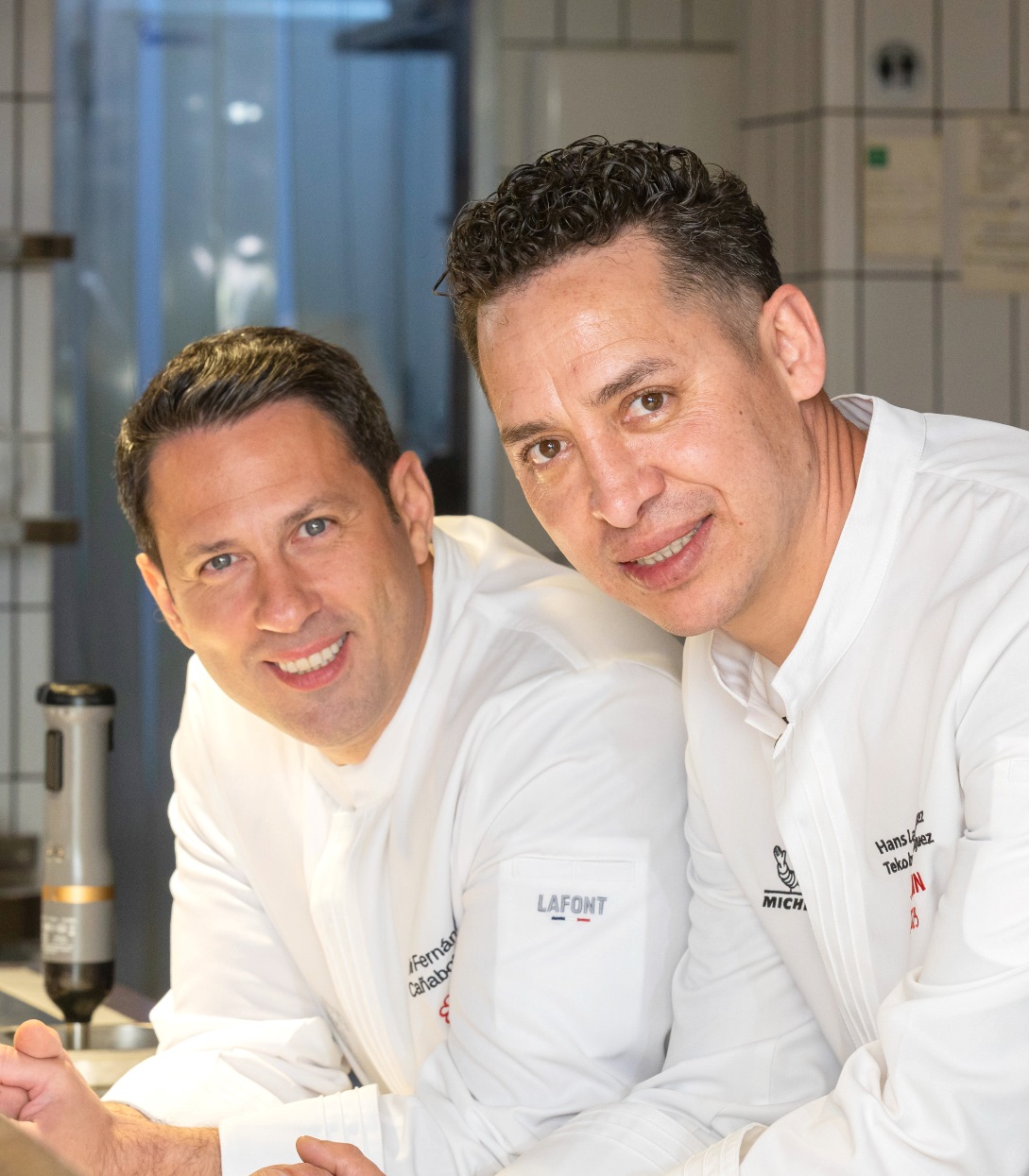
There, he was welcomed by Paco Morales, the chef at Noor (Three MICHELIN Stars), someone with whom Mellino has much in common. Beyond their profession, the number of Stars embroidered on their jackets and the mutual admiration they hold for one another, both share a similar approach to gastronomy: one in which tradition is not a limitation, but a starting point.
The Labyrinth of Andalusian Flavor
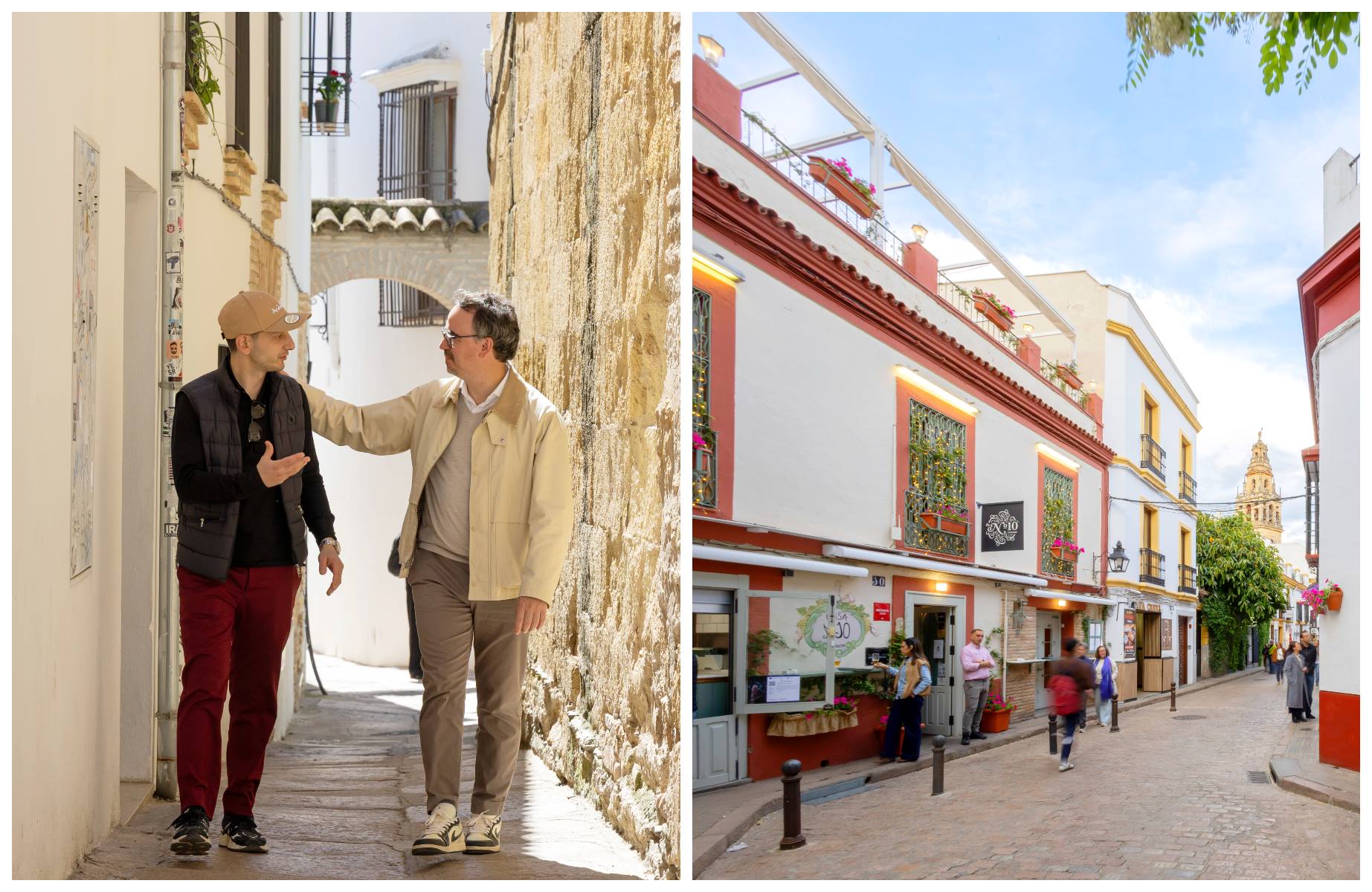
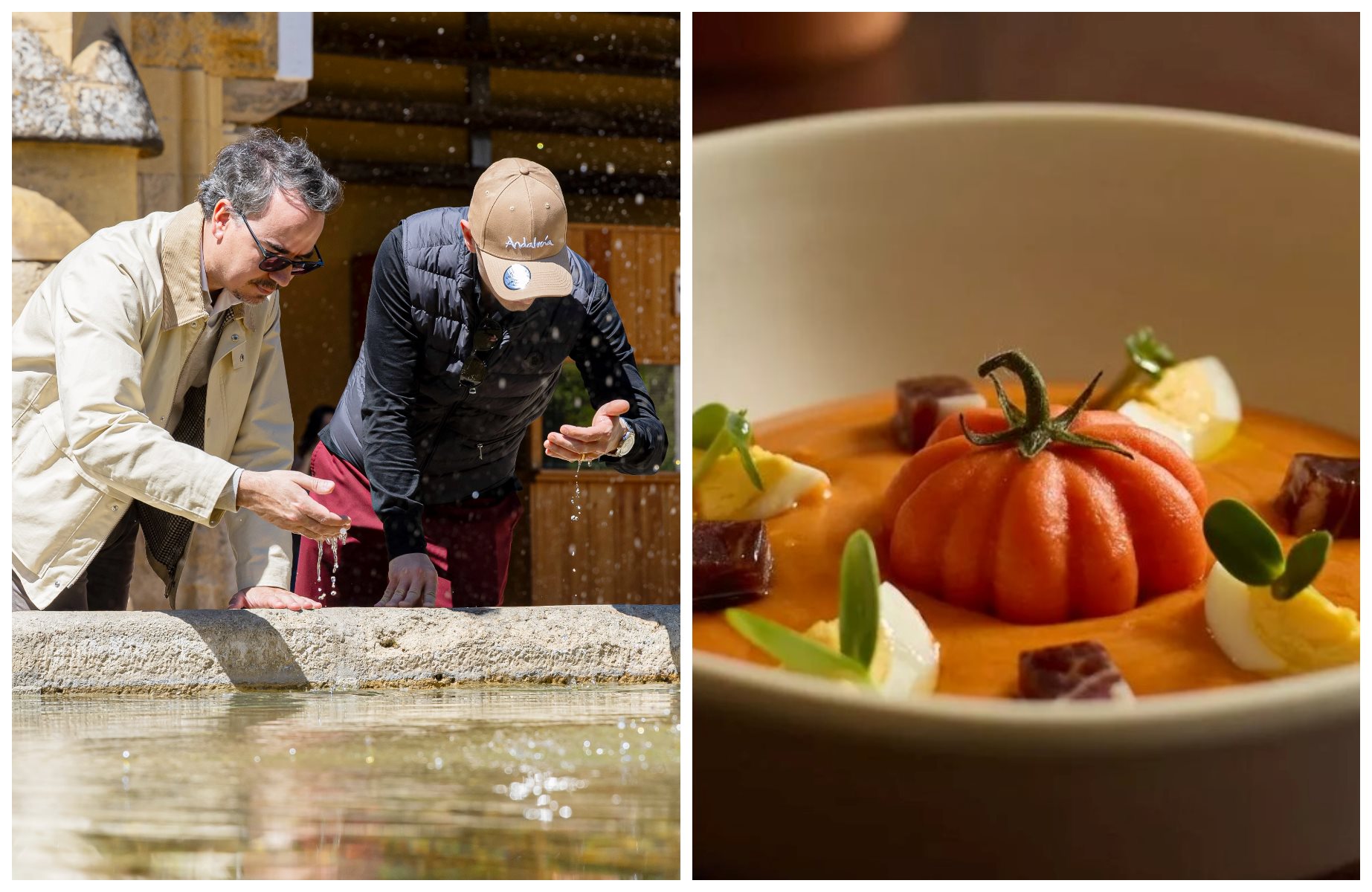
It’s a sunny day in Córdoba. The patios are brimming with color and fragrance, and the city, with its unlikely mix of influences and corners full of flavor and music, is as magical as ever.The terraces are packed. The flamenquines are flying off the menu, along with eggplant with cane honey, oxtail that makes you want to finish off the loaf of bread and, of course, glasses of salmorejo, cold soup with the freshness of tomatoes and a hint of garlic, which are downed in one gulp. That is perhaps the recipe that best describes Cordoba’s identity for Morales — the one that, like Mellino with the lemons, transports him back to his city in a single sip.
An Italian like Mellino can move with complete ease here, as if strolling among his grandmother’s pots and pans. All the customs feel familiar. Southern Spain and southern Italy have much in common, and not just the ingredients in their pantries — tomatoes, eggplant, olive oil, nuts, tuna — but also a shared ritual of eating that is so deeply Mediterranean.
But in Córdoba’s cuisine, there is one element that makes it even more complex: its Arabic heritage. This influence is seen in the sophisticated use of spices — coriander, caraway, cinnamon and saffron — not just for flavor but for balance, and in the combination of honey, dried fruits and citrus that harmonize the sweet, the salty and the tart.
Paco Morales: A Culinary Archaeologist
No one knows Andalusian cuisine better than Morales: its ancestral techniques, such as marinades and escabeches; the use of the mortar and pestle; and of course vinegar, which harmonizes flavors, cuts through fat and adds structure.For years he has been tireless in his quest to reconstruct what people ate here between the 10th and 15th centuries. He is a culinary archaeologist who studies everything that comes his way: from centuries-old manuscripts to agricultural and gastronomic treatises, as well as books on history, botany and anthropology — and then he brings that knowledge to the table through contemporary interpretations.
Morales doesn’t use the city as a backdrop, but as a source of learning. That’s why he’s the best guide you could ask for if you want to discover the real Córdoba — the story behind its buildings, its layout and its customs.
The City as an Archive
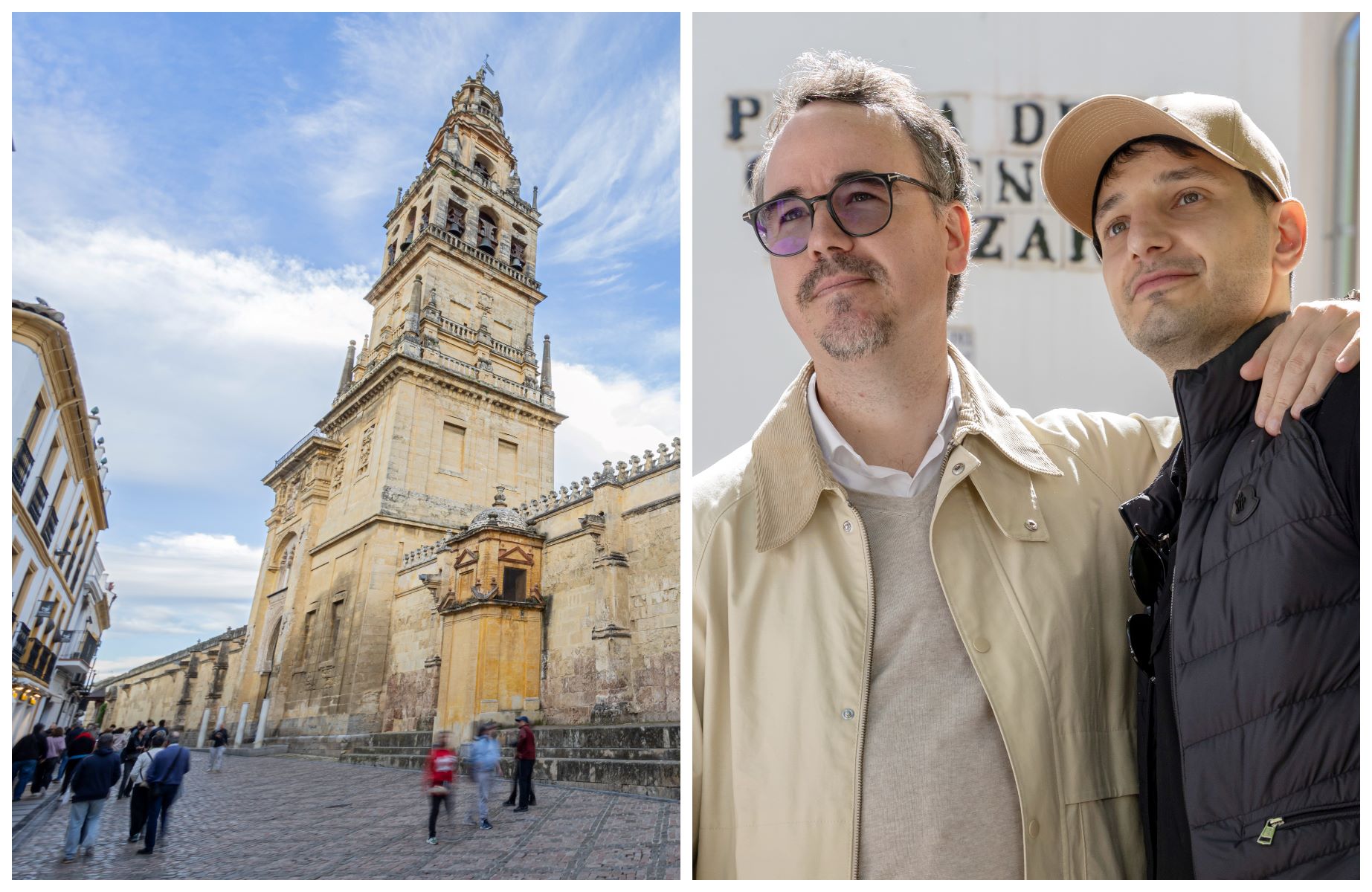
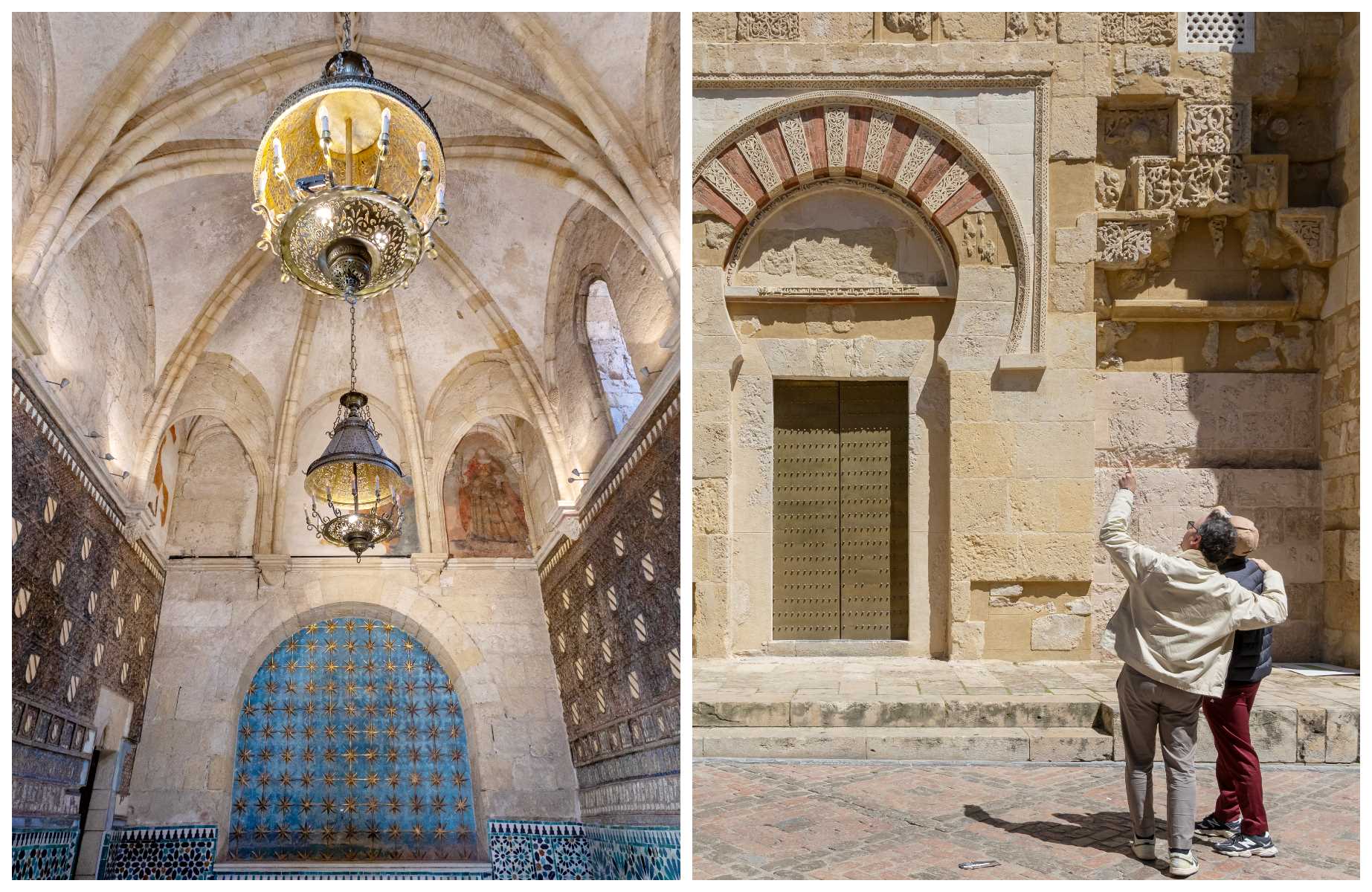
The Mosque-Cathedral may be an obligatory tourist stop, but no visit to Córdoba is complete without it. Like no other place, it showcases the layering of peoples, cultures and religions — Muslim, Jewish and Christian — that have shaped the city’s identity.The citrus trees, carefully arranged in rows in the Patio de los Naranjos (Courtyard of the Orange Trees), are a metaphor for order and peace. They contrast with the intricate labyrinth of alleyways in the Jewish Quarter, where the sound of water flowing through the irrigation channels provides the soundtrack. It’s a verdant oasis, a refuge from the summer heat.
Nearby, the Chapel of San Bartolomé is one of the finest examples of Mudéjar art. While the Mosque-Cathedral reveals layers of history one upon another, this temple reflects how different cultures merged into a unique style.
Something similar happens in Morales’ kitchen, which combines the past with a contemporary perspective. “Walking through Córdoba with Paco is incredible because he knows the city’s history so well, and this is reflected in all his dishes,” explains Mellino.
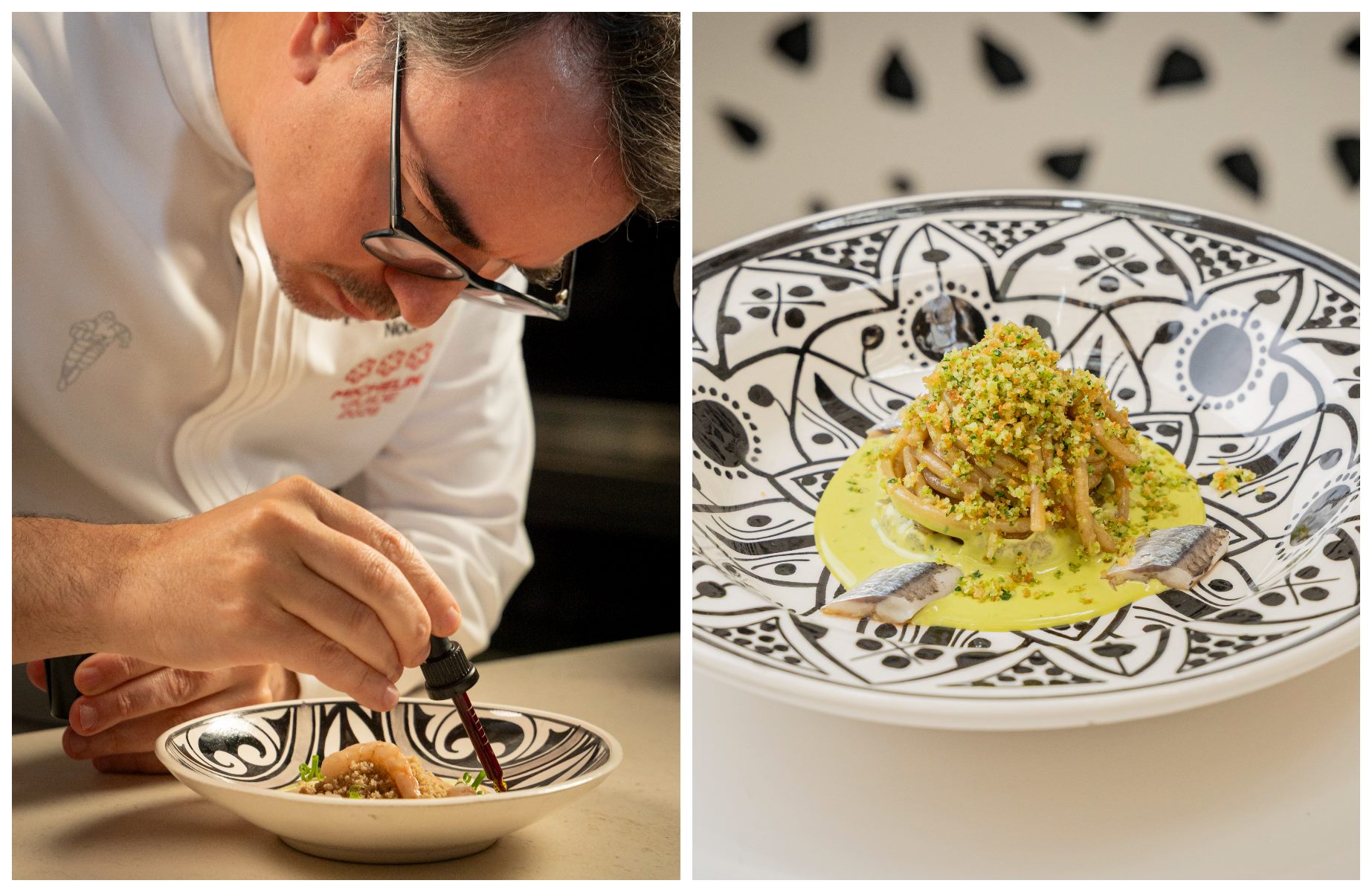
Of all the dishes Morales prepared that Mellino tasted, the one that most captured his attention was one with eggplant. “It really stuck with me. I was already familiar with it, but I was in Jordan recently and it took me straight back there. It made me realize that if that eggplant cooked that way made its way here and also to Italy, and Jordanian olives did the same, the Romans really did something incredible with our culinary heritage.”
Morales’ recipe illustrates three fundamental truths: that cooking is a round-trip journey; that a single bite can connect us to other times and places in the Mediterranean; and that a dish can bear witness to centuries of trade, conquests and shared culture. As a Neapolitan, Mellino knows this well.
Where Morales Sits Down to Eat
Morales casts this same gaze, capable of deciphering the layers of time in stone, upon the living map of his city when he shows Mellino his everyday culinary havens. They are places that have something in common: respect for the ingredients and the honesty with which they are prepared.Such is the case with Regadera, where Chef Adrián Caballero creates artisanal, fresh and market-driven cuisine. “I love his seasonal dishes,” Morales explains, “especially the vegetables prepared with contemporary techniques — particularly when paired with creams, fermented elements or delicate stocks.”
And when he’s in the mood for well-executed neighborhood cuisine, Morales visits La Cuchara de San Lorenzo. “I like it because it doesn’t try to be anything else: ingredients, stews, stocks and authenticity. People come here to eat well, to enjoy the familiar flavors with that touch of love that only comes when you cook for your neighbors.”
Vinegar, the Star of the Show
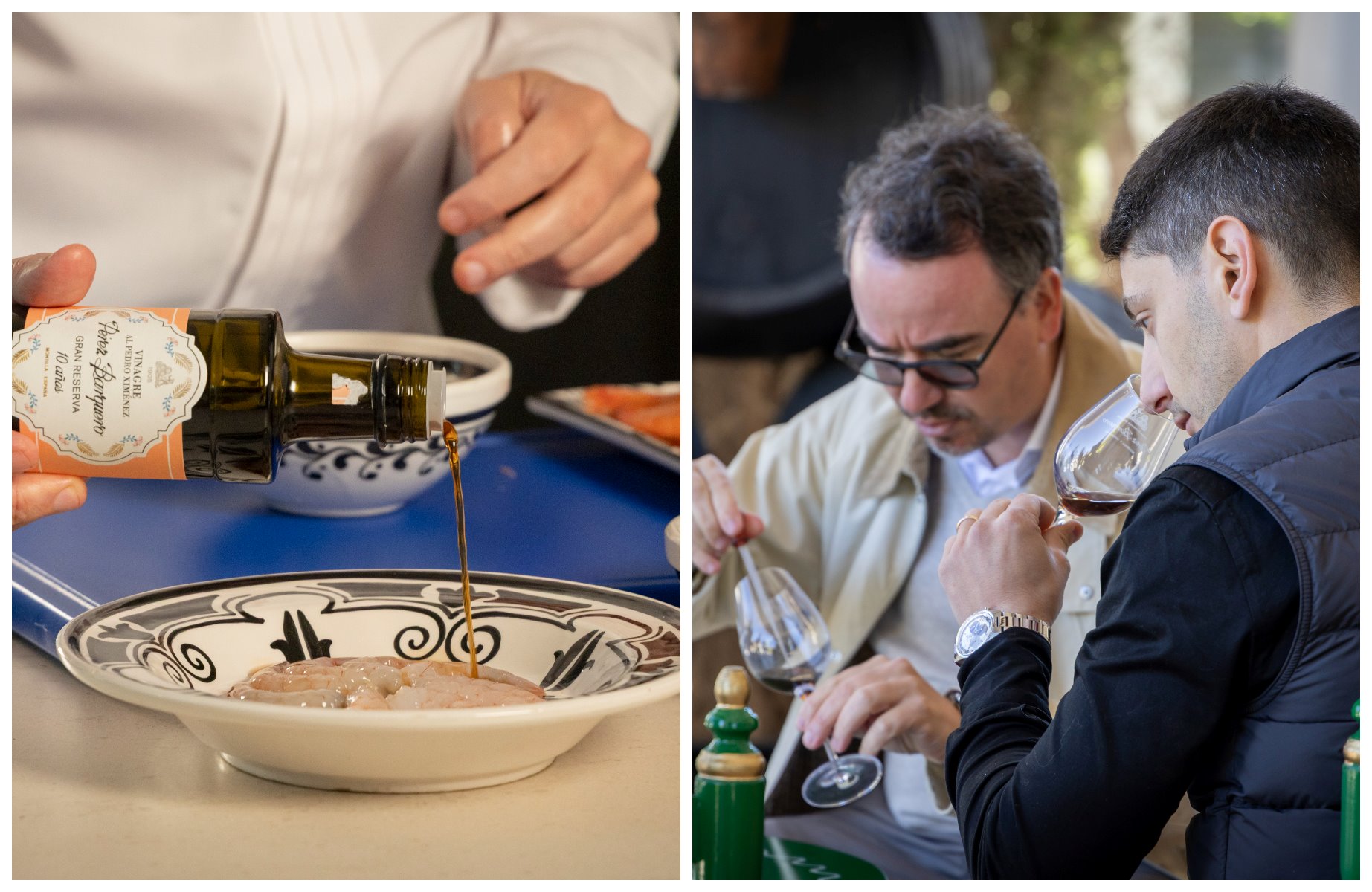
Morales describes his cuisine as “memory, light, fusion and precision” — and vinegar contributes a little to each of these qualities. It’s essential to building his culinary narrative. That’s why he wanted to take Mellino to discover the exclusive Pedro Ximénez vinegars of the Montilla-Moriles D.O., produced since 1905 at the Pérez Barquero winery, located outside the city but still within the province of Córdoba.
For Morales, vinegar isn’t a supporting player; it’s as powerful as olive oil or tomatoes. “It cuts through fat, cleanses the palate and adds that sharp note that other ingredients can’t offer. It’s not just acidity: it’s memory, that sensation that awakens something that has already happened but remains alive,” he explains. “A white prawn, briefly marinated in Pérez Barquero’s Pedro Ximénez vinegar, transports us to flavors of the past with the aromas of today — without forgetting the historical and emotional weight that this gesture carries.”
For him, using this ingredient makes more sense today than ever before. “We come from a culinary tradition where fat, intensity or sweetness took center stage, and now we seek precision. Vinegar, when used correctly, doesn’t mask; it reveals. Using it to elevate, not to correct, is almost a sign of maturity. When you work with historic or well-crafted vinegars, a depth emerges that isn’t immediate. It’s slow, complex and elegant. And that connects perfectly with a gastronomy that no longer seeks to impress, but to move us with truth.”
Mellino sniffs it. He tastes it. And he perceives the differences between this vinegar and typical Italian balsamic vinegars, which are creamier, less wine-like or woody. He then begins to imagine how to use it when he returns to Italy, maybe “as a quick marinade for a fish dish, to add that acidic note to a light wild peach salad.”
Two Perspectives, One Direction
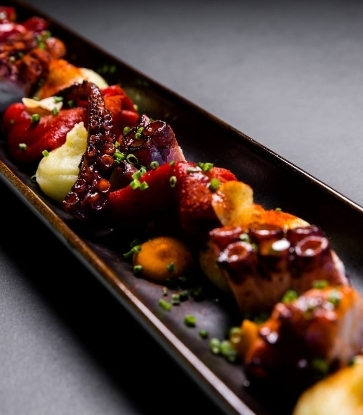
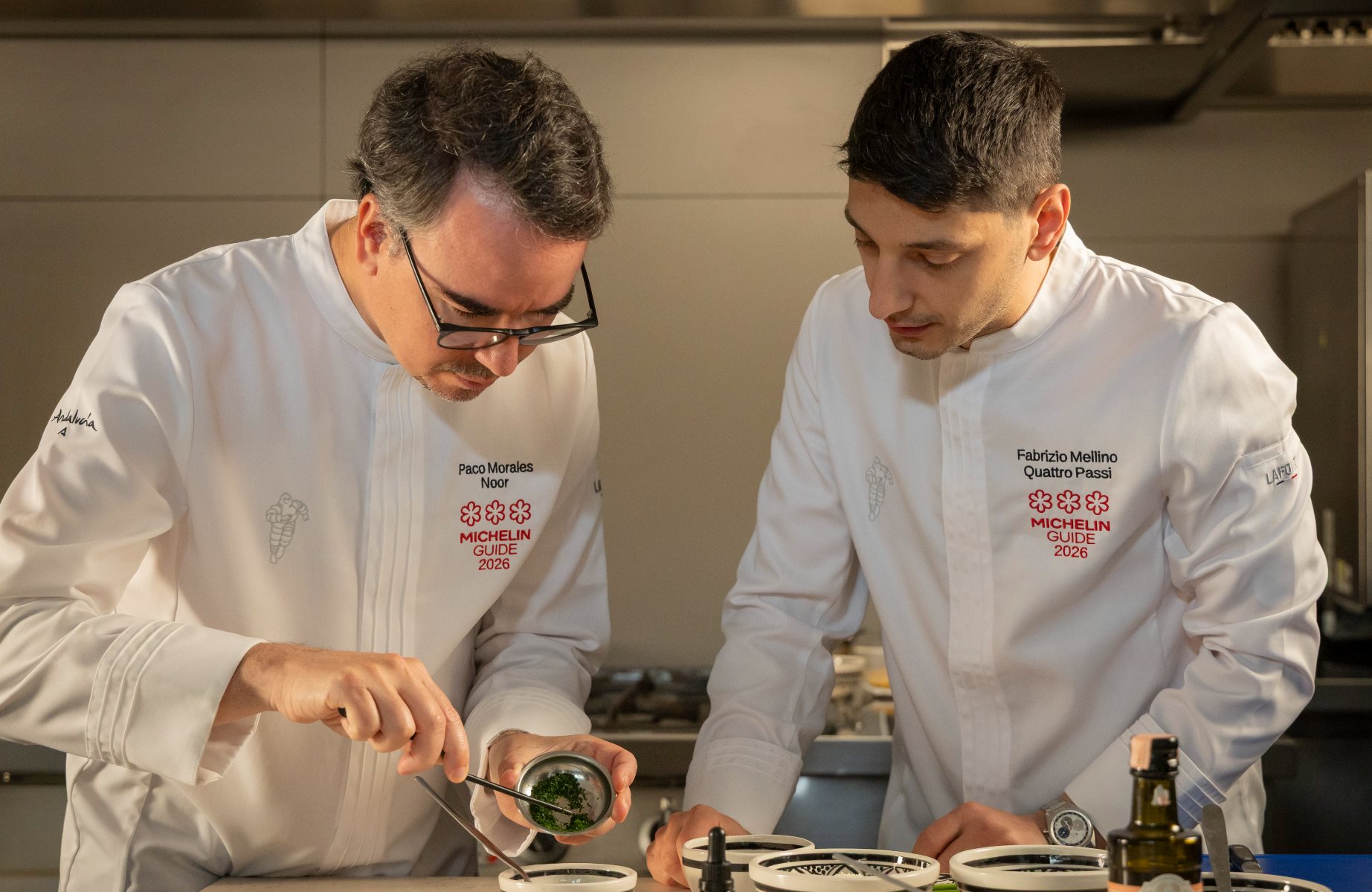
It’s no coincidence the chefs have found such common ground. Although they come from different places, Morales and Mellino share the same roots and are moving in the same direction — with a love for the product and “respect for the gesture,” something the Italian chef considers fundamental.They discuss this as they cook together at Noor. Morales prepares a pistachio curd with praline, white shrimp, curly chives and garum, a fermented fish sauce. Mellino crafts a pasta dish with Andalusian anchovy sauce, white garlic, pistachios and smoked eggplant. “Let’s just say that our two regions have been subject to various conquests and have been influenced by many peoples,” he remarks.
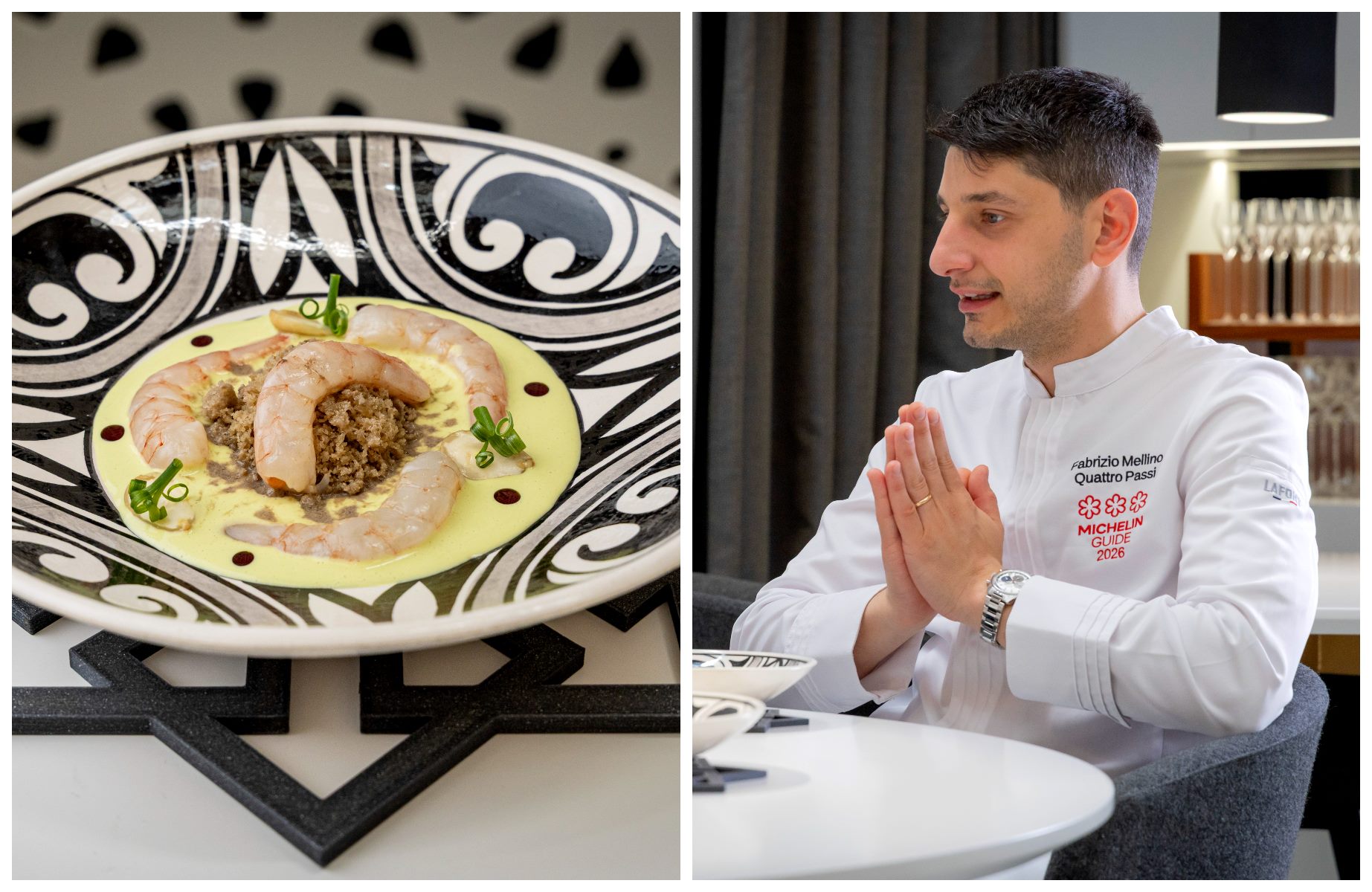
While Morales revives historic Andalusian cuisine and reinterprets it with contemporary techniques, Mellino seeks out the DNA of the Amalfi Coast. He took the reins of his father’s restaurant at a very young age, but he didn’t simply inherit it: He made it evolve. His recipes are born from a rugged landscape, from his own garden, and they are deeply marked by the Mediterranean and its seafaring tradition.
“We don’t create; we transform. Tradition is everything in haute cuisine,” says Mellino, who believes that when one is “in the Olympus” of gastronomy, one acquires an obligation and a commitment to the land and its products.
“It’s not about inventing something new, but about taking a closer look at what already exists,” adds Morales. And his region, he assures us, is on the right track: “Córdoba and its province are experiencing a period of quiet maturity; they no longer need to constantly assert themselves. They have an identity, a cuisine, and are beginning to develop their own narrative. Several layers coexist: a vibrant, authentic traditional cuisine alongside new perspectives that reinterpret it,” he says. “The challenge now isn’t to grow more, but to grow better.”
Related Articles:
Hero image: Fabrizio Mellino, chef at Quattro Passi, alongside Paco Morales of Noor, during the “four-handed” dinner they hosted in Córdoba. © Michelin Guide