01 May 2026


Share


The best of Rome’s hotel bars have long been the spots where city-dwellers and international visitors mingle. That cosmopolitan charm and frisson of intrigue are still in the air at old-guard meeting spots, but Roman opulence today means more than Murano glass chandeliers. At the newcomers, contemporary design by beloved film directors and architects updates the capital’s sparkling legacy of glamorous sips for a new era.
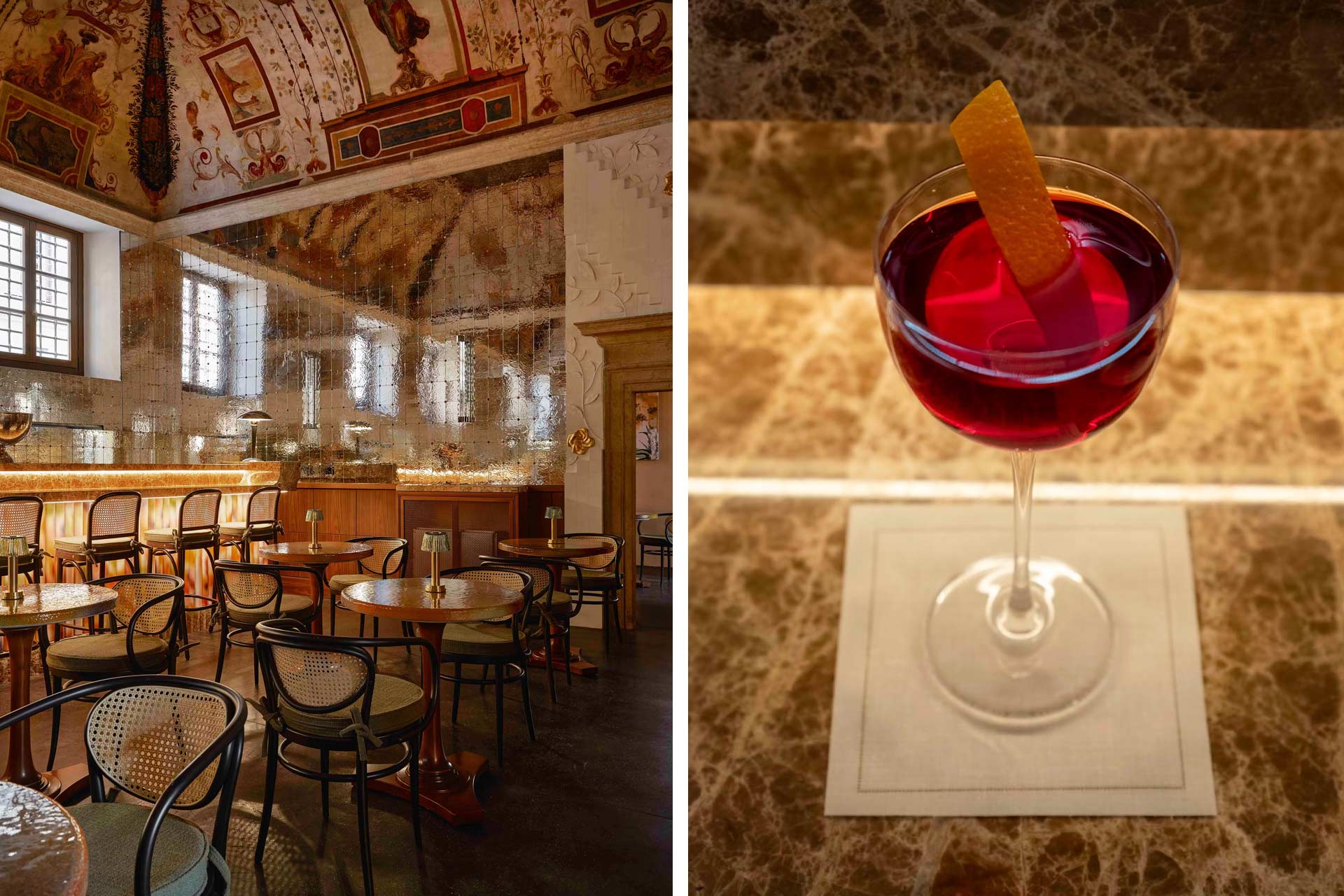
Palazzo Talìa — Bar della Musa
What it’s all about: This film-worthy haunt — located at the heart of a Two-Key hotel in Centro Storico — teems with eye-catching details for a young, designer-dressed, in-the-know crowd.A serene oasis off a busy thoroughfare in Rome’s center, Palazzo Talìa is set within a 16th-century palazzo that was later turned into a 17th-century (and Rome’s oldest) schoolhouse. Now a hotel, the public spaces and a single suite were conceived by Luca Guadagnino, the Italian director with a much-admired design streak, whose exuberant sense of sumptuous materials and colors is on full display at the stunning Bar della Musa.
Much of what’s inside has been custom-created by his design studio — like the kaleidoscopic marble bar, bent-wood rattan chairs, and smoked mirror panels that cover an entire wall, casting dreamlike reflections around the room.
Beneath the grotesques on the palazzo’s painted ceiling, the bar feels as cinematic as a film set. For a particularly indulgent aperitivo, stop by for the oyster happy hour held every Thursday through Saturday.
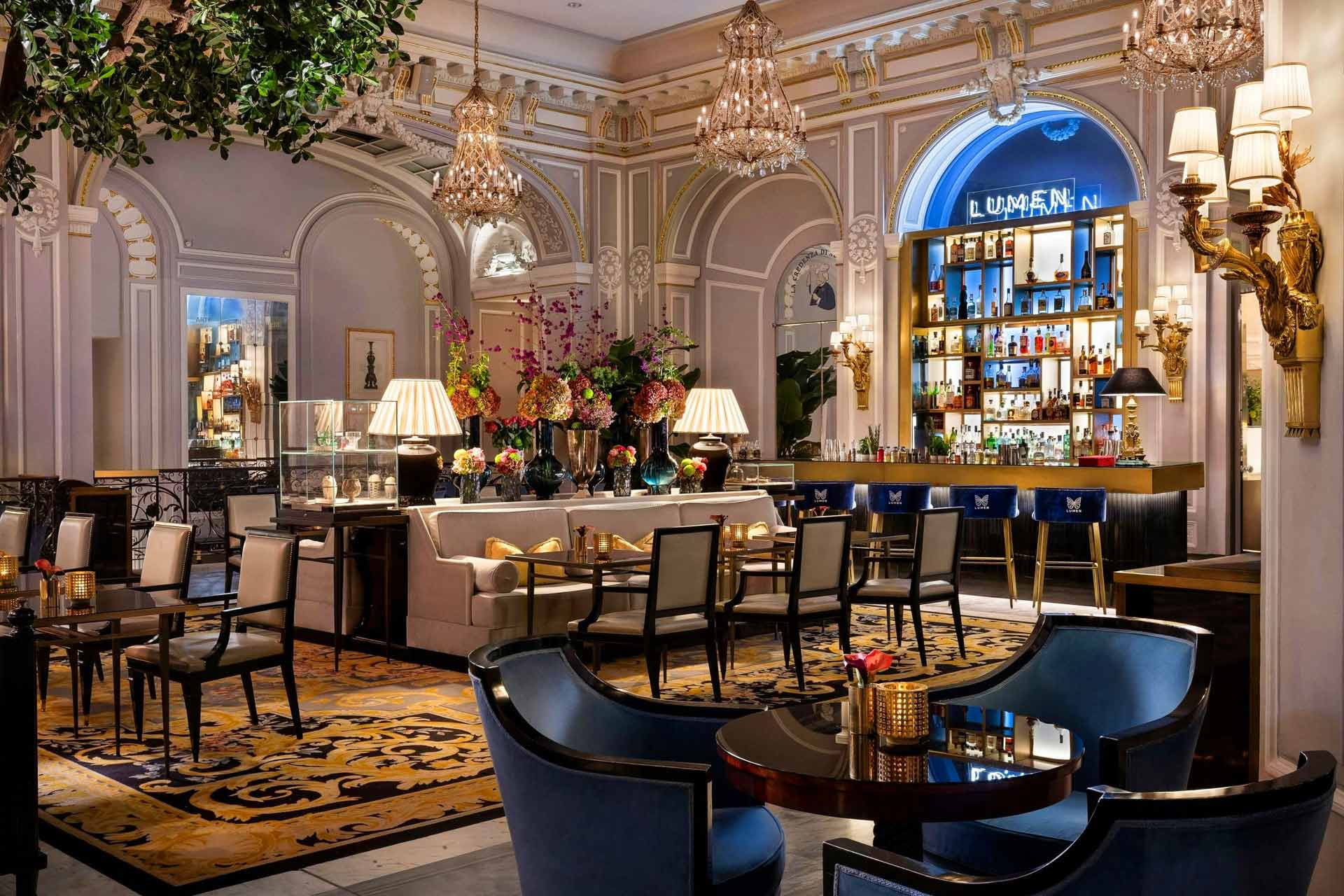
The St. Regis Rome — Lumen Bar
What it’s all about: This classic venue with a modern twist is part of one of the city’s most historic Two-Key stays. Next to Termini Station, it’s a favorite among international royalty and heads of state.Inaugurated in 1894 by the legendary hotelier César Ritz, the St. Regis remains one of Rome’s landmark grand hotels and it’s synonymous with the city’s historic splendor. The Lumen Bar embodies that globetrotting old-world elegance with Murano glass chandeliers, frescoed ceilings and velvet banquettes, now punctuated by contemporary artworks thanks to a collaboration with Galleria Continua, which has a space within the hotel’s palazzo.
Cocktails are classic with a twist, such as the Red Admiral — a bloody mary made with Venetian grappa, white vermouth and capers.
Even the glassware is artfully designed, with custom pieces by creatives like Nico Vascellari and Patricia Urquiola. Evenings begin with the St. Regis’ signature Champagne sabrage, often accompanied by live piano and the occasional full orchestra.
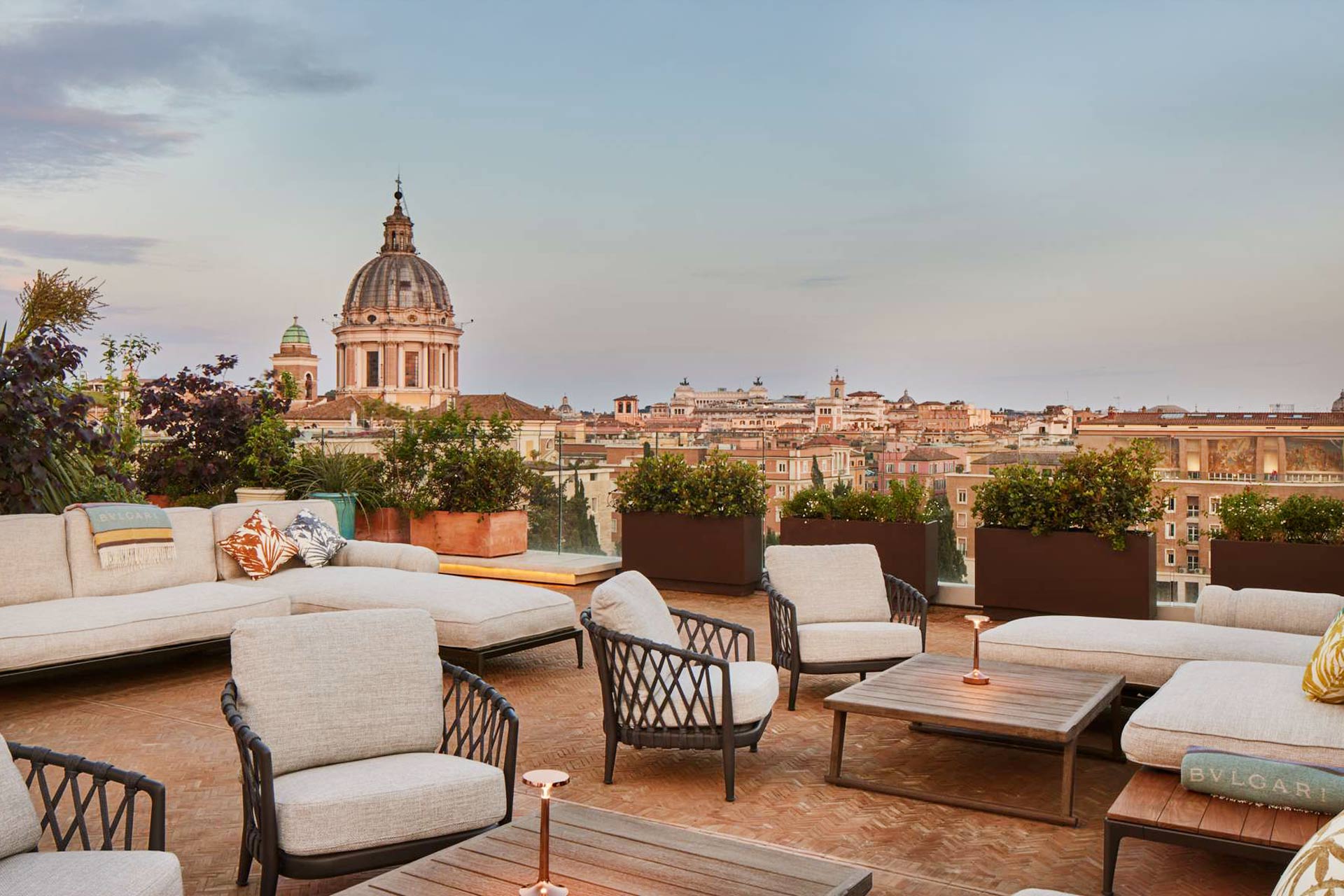
Bvlgari Hotel Roma — Bar Bvlgari
What it’s all about: A delightfully over-the-top rooftop gem in Campo Marzio where they’ve clearly never heard a thing about quiet luxury.The Bvlgari occupies a Rationalist 1938 landmark building by Vittorio Ballio Morpurgo, which faces the Mausoleum of Augustus and the Ara Pacis. On its rooftop, Bar Bvlgari is one of the city’s prime terraces to take in the magnificent skyline — along with some of Rome’s most dazzling nighttime denizens. The clientele is sleek, primped and, of course, heavily bejeweled. Exactly the vibe one expects from the bar of Rome’s only Three-Key retreat.
The hotel’s interiors were designed by Antonio Citterio and Patricia Viel, including the bar, where the large, illuminated drinks counter is topped with curvy black marble — in keeping with a monumental style quite befitting the grandeur of the view. The restaurant’s menu has been devised by Niko Romito, the acclaimed chef, and even the bar’s small plates and inventive cocktails reflect the chef’s creative imprint.
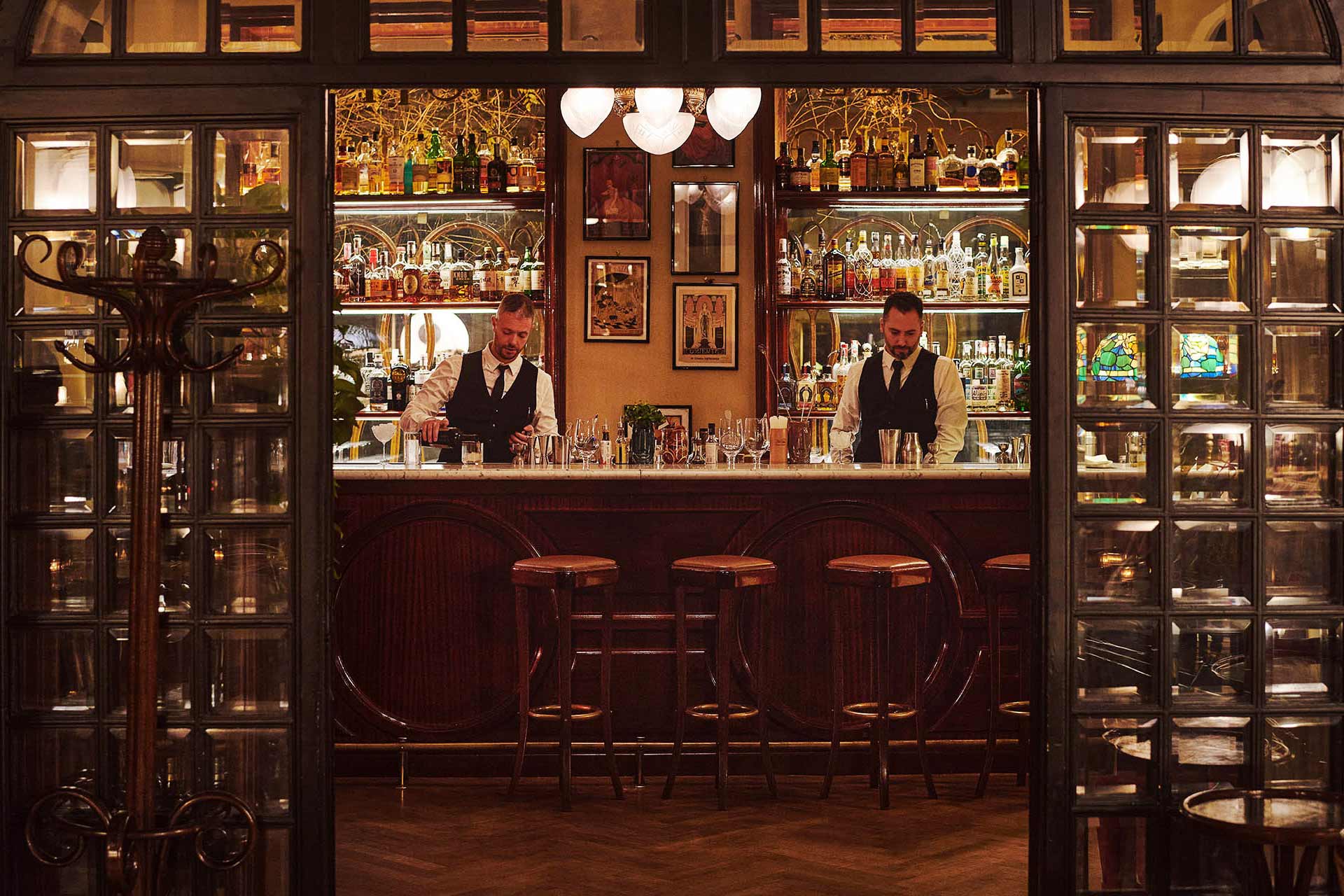
Hotel Locarno — Locarno Bar
What it’s all about: The fashion-forward congregate at this haute watering hole with a gorgeous courtyard, set in an iconic One-Key haven right off Piazza del Popolo.A grande dame of Rome’s aperitivo scene, this art nouveau bar conjures the wistful allure of a black-and-white photo. In the warmer months, its verdant courtyard garden becomes a prime attraction, blooming with wisteria vines.
Long a magnet for the city’s best-dressed crowds, the Locarno has been a haunt of Cinecittà actors and directors since the era of Fellini and La Dolce Vita, and it’s a hit with the current Hollywood set when in town. Wes Anderson spent months at the hotel while writing The Grand Budapest Hotel, and there are frequent sightings of actors grabbing cocktails at the carved dark-wood bar from 1925.
Rocco Forte Hotel de Russie — Stravinskij Bar
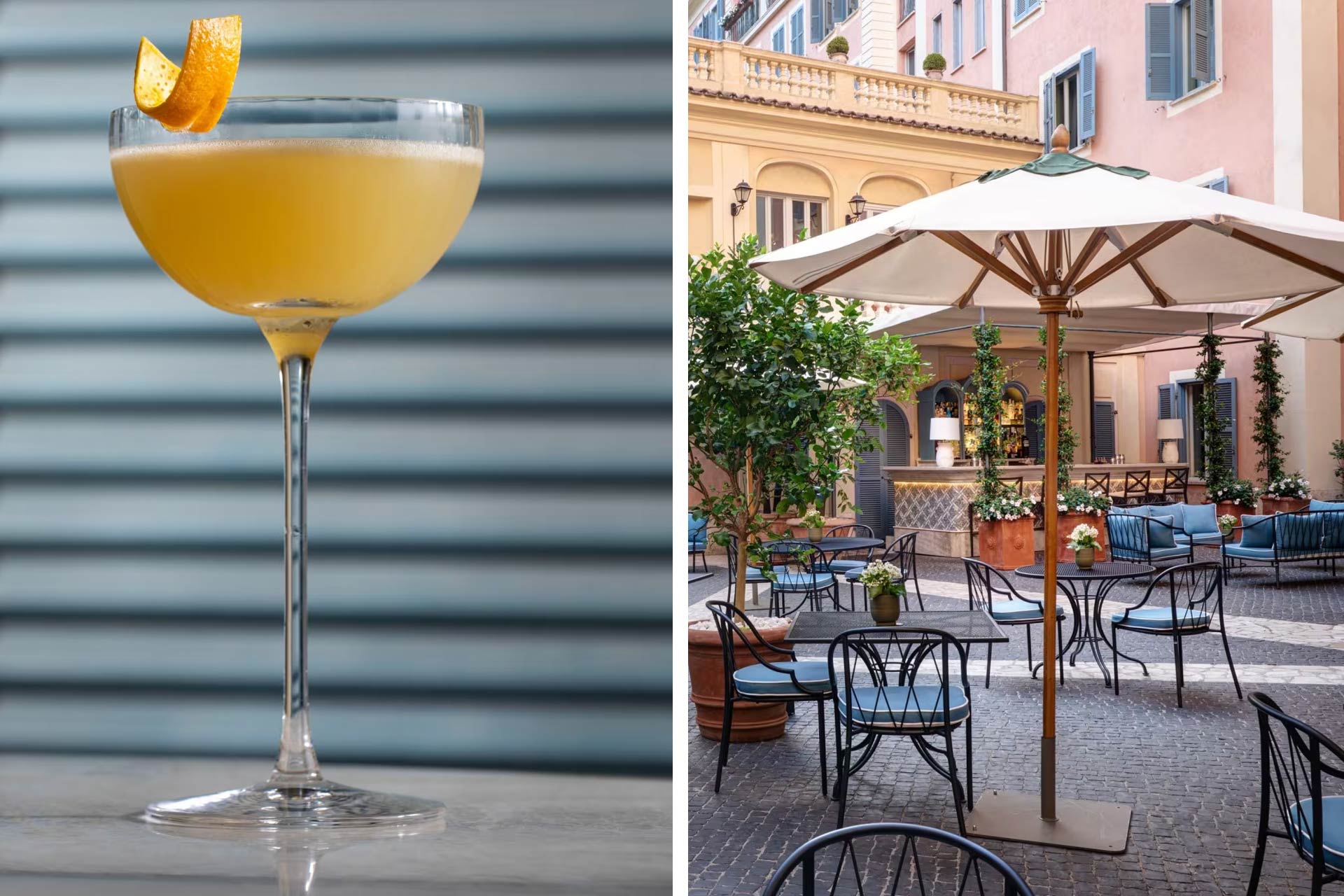
What it’s all about: Well-heeled art lovers and romantics alike will be captivated by this poetic hot spot hidden away in the secret garden of a Two-Key sanctuary next to Piazza del Popolo.Named for composer Igor Stravinsky, an honored former guest of the hotel, this bar possesses a heritage of illustrious visitors, including Pablo Picasso and Jean Cocteau (who declared Hotel De Russie “paradise on Earth”). Guests are drawn by one of the lushest interior gardens in the city, an oasis of palm trees and precision-cut topiary. At the bar they enjoy a dozen varieties of martinis, the signature Stravinskij cocktail, flavored with saffron and passionfruit, and classic club sandwiches, alongside a full menu by Fulvio Pierangelini, an acclaimed chef now overseeing the hotel cuisine.
People-watching is a central pastime here, and the bar has long held a reputation as a stage for romantic encounters.
Orient Express La Minerva — La Minerva Bar
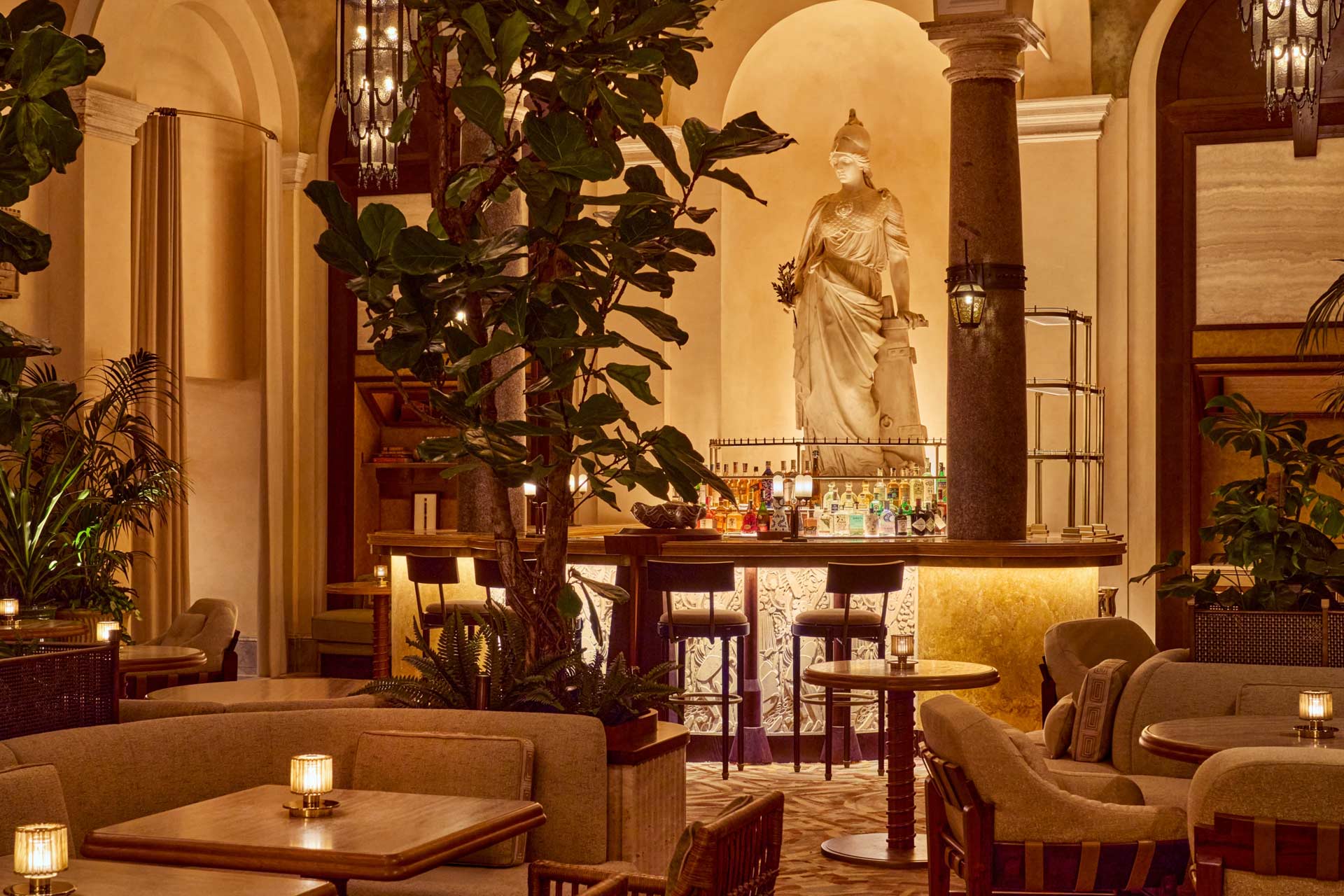
What it’s all about: A handsome venue set beneath the historic skylight of a recently opened Two-Key haven next to Piazza Navona and the Pantheon.One of Rome’s newest luxury hotels, the Orient Express channels the glory days of travel in its revival of the storied Grand Hotel de la Minerve — a 19th-century destination once favored by writers and intellectuals, including Stendhal, Herman Melville and George Sand. The noble palazzo, dating to 1620, has been entirely redesigned by Mexican-French architect Hugo Toro, whose contemporary interiors combine art deco inspiration with the majesty of ancient Rome.
La Minerva Bar is a dramatic setting for evening cocktails, where soft lights and sepia tones summon the allure of a bygone era. In a wall alcove, a commanding statue of Minerva, sculpted by a student of Antonio Canova, presides as a fitting emblem of the hotel’s Roman spirit.
Related articles:
Hero Image: The terrace at the Rocco Forte Hotel de Russie's Stravinskij Bar. © Rocco Forte Hotel de Russie