27 April 2026


Share


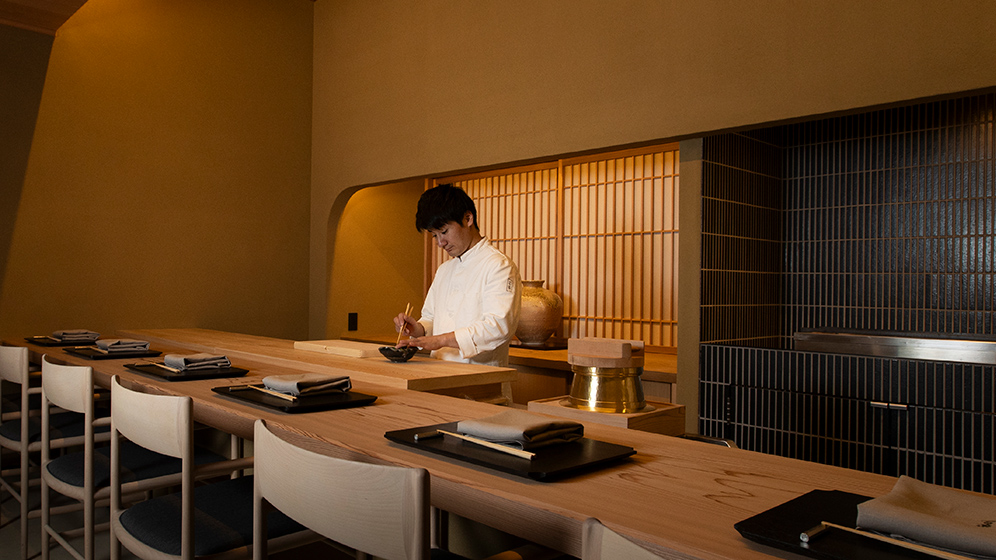
Longevity and good health have fascinated humanity since ancient times. In 2024, a new complex, THE HUNDRED Longevity House, devoted to the idea of “living well for a hundred years,” opened its doors in Tokyo. Within this building — home to advanced medical clinics and a spa — Hyakuyaku by Tokuyamazushi explores health through food. The restaurant is supervised by Hiroaki Tokuyama of Tokuyamazushi, the celebrated fermentation restaurant in Shiga. Here, guests can experience narezushi, the fermented fish-and-rice dish regarded as the ancestor of modern sushi, embracing the power of fermentation. Another highlight is the cooking of young Chef Hitoshi Sato, who focuses on the vitality of natural ingredients as he works in the kitchen every day.
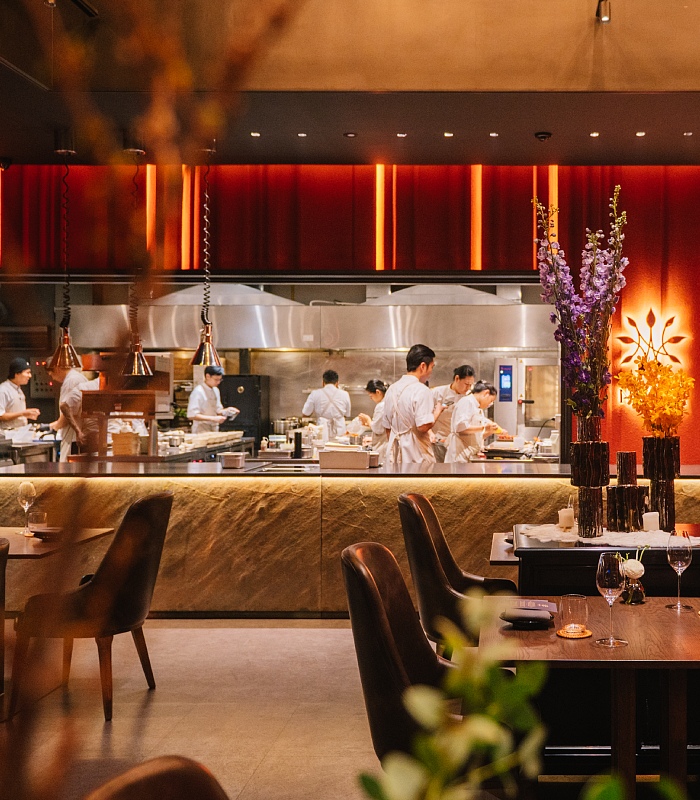
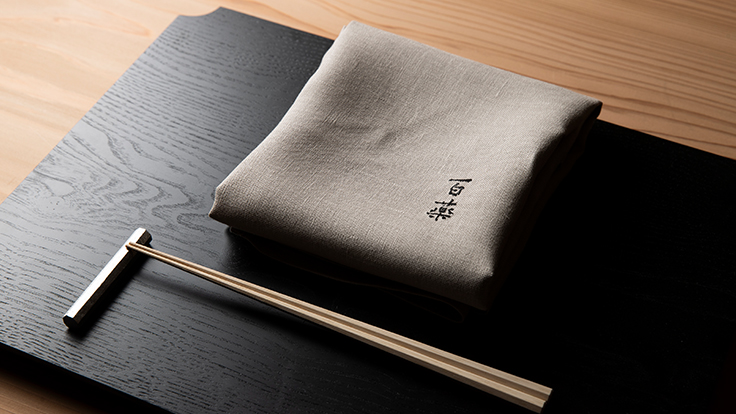
The restaurant occupies the ninth floor, at the top of the building. Designed by Fumihiko Sano — who studied under the Kyoto master of sukiya-style architecture, Sotoji Nakamura — the space is minimal yet warm, with natural wood and Juraku clay walls lending it a gentle atmosphere. Many of the plates used to present the dishes are earthy ceramics, including works by Jun Isezaki, a Living National Treasure of Bizen ware. Together they express the character of Japan’s land and culture. In this setting shaped by Japanese aesthetics, Sato devotes himself daily to his craft.
A Quest for Natural Ingredients Driven by a Longing for the Unknown
Sato was born in a small mountain town in Fukushima Prefecture, where the hills and forests were his playground from childhood. The family refrigerator was always stocked with wild plants his father had gathered and game shared by local hunters. Helping his busy parents, he began cooking with these familiar ingredients from a young age — an experience that would later guide him toward a culinary career. Behind it all lay an insatiable curiosity.
After graduating from high school, Sato moved to Tokyo at 18, drawn by dreams of city life and of making his debut as the drummer of a rock band formed with his school friends. He found work at an izakaya to support himself, and there his long-standing love of eating was rekindled.
Driven by a desire to discover rare ingredients he had never seen before, band rehearsals and live shows soon gave way to trips into the mountains and rivers, gathering wild foods or casting a line in search of fish. Determined to try matsutake mushrooms — something he had never found in the mountains of his hometown — he made nearly a hundred phone calls before finally finding someone willing to take him mushroom hunting in Yamanashi. He lit a fire on the spot and grilled the mushrooms he had gathered, moved by their unforgettable aroma and flavor. Back at the izakaya, he cooked and served the matsutake he had brought home. Seeing guests astonished that such mushrooms appeared in a casual izakaya filled him with quiet joy.
Yet over time the work shifted toward simply plating foods that had been processed in factories. Machines could do what he was doing now, he realized — and with that came a growing desire to truly cook.
Rediscovering the Flavor of Natural Ingredients and the Road to Japanese Cuisine
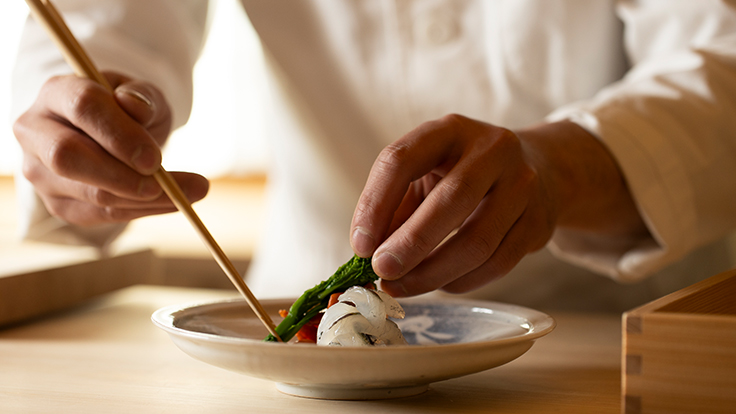
Around that time, during a visit home, his mother prepared udo (Japanese spikenard) dressed with sesame sauce. The mountain vegetable, gathered nearby, had been an ordinary sight on the family table every spring since his childhood. But after time away, the flavor struck him differently. It carried the strength of life shaped by the wild, and it moved him to tears. “Natural ingredients have the power to move people,” he thought. “I want to create dishes where you can feel the life within them.”
At 25 he knocked on the door of the Japanese restaurant Ichita (now Oryori Taichi). There he took on responsibilities including sourcing ingredients, and he eventually became head chef. Whenever he encountered a remarkable ingredient through suppliers, Sato would spend his days off visiting the producer in person. Because they came from nature, he believed that understanding an ingredient required knowing the land where it was born. When he found an ingredient he believed in, distance never mattered — he would travel straight to its source. Moving across Japan in search of hidden flavors, he formed relationships with producers who remain treasured partners to this day.
Creating a Dining Experience That Connects People With Nature and Life
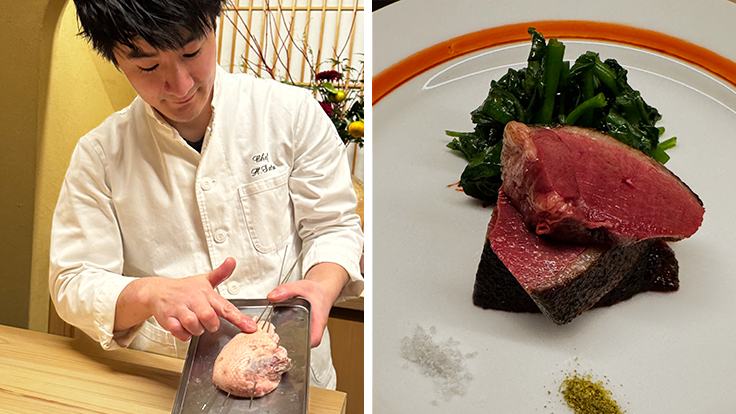
Just as he was considering opening a restaurant devoted to expressing the strength of natural ingredients, an unexpected offer arrived — to become the head chef of Hyakuyaku. While shaping his cuisine, Sato often recalls the words of a hunter who practices the traditional sakaami method of capturing wild ducks: “A duck cannot choose who will eat it. I want it to reach someone who truly wishes to savor it.” Sakaami hunting, a centuries‑old hunting method, is a serious contest between humans and wild ducks. At its heart lies respect for the lives taken so that others may live.
Perhaps for that reason, Sato prefers not to add anything unnecessary. With truly fine ingredients, he believes even a pinch of salt can be enough. To face an ingredient and taste nature as it is can remind us of something easily forgotten in the city — that humans, too, once lived simply as part of the natural world. Nature cannot be controlled by people. Even so, he has resolved never to compromise when it comes to ingredients. He expresses deep gratitude to producers, yet speaks honestly with them about quality and price. Such candor, he believes, nurtures stronger trust — and that trust ultimately shapes the food itself.
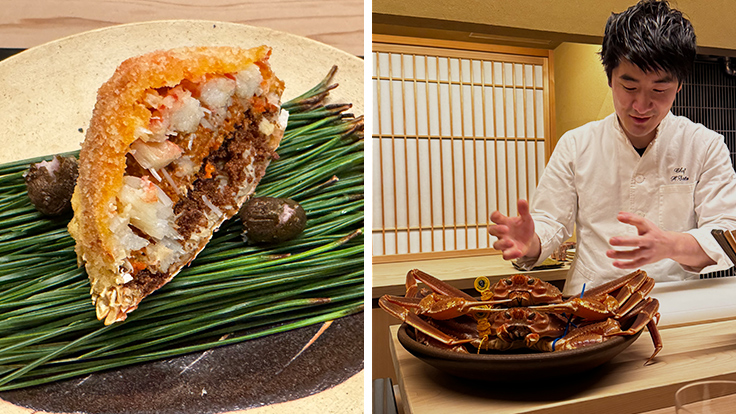
What he hopes to create here is a dining experience that conveys the connection to nature he senses in conversations with producers. After all, take too much from nature and it disappears. Natural ingredients — many now becoming scarce — may help people in the city rediscover the quiet virtue of moderation. At this counter, he hopes guests will pause to reflect on the lives behind each dish and receive them with gratitude. In doing so, time spent contemplating nature may nourish not only the body but also the mind, creating a beautiful cycle in which people and nature resonate together.
Related articles:
Highlights from the MICHELIN Guide Tokyo 2026
Dessert as the Destination: Six Must-Visit Tokyo Restaurants that Make Sweets the Star
Two Chefs, Two Stars: Chefs Ensui and Hakuun on their Shared Success
All the Key Hotels in Japan
Header image:Born in 1993, Hitoshi Sato spends his days searching for ingredients or visiting antique shops to study vintage tableware. (© Hyakuyaku by Tokuyamazushi)