22 April 2026


Share


MUBE opened in the summer of 2025 and earned its first star within a year. Owner-chef Takatomo Izumi was born and raised in Nagahama, Shiga Prefecture, on the northern shore of Lake Biwa—a region blanketed in snow each winter. To sustain households through the cold season, preserved food and a culture of fermentation took root in Nagahama.
As a child, the chef helped his grandparents prepare fermented foods from local ingredients like sweetfish and crucian carp from Lake Biwa. The taste of narezushi, a traditional ferment of fish, salt, and rice, and a precursor to modern sushi made by his grandmother remains among his most cherished memories. Drawing on Japan's fermentation traditions and the techniques he honed at a kappo restaurant, he has forged a cuisine that is entirely his own. Here, we share what one MICHELIN Guide Inspector encountered on their visit.
Location and Name
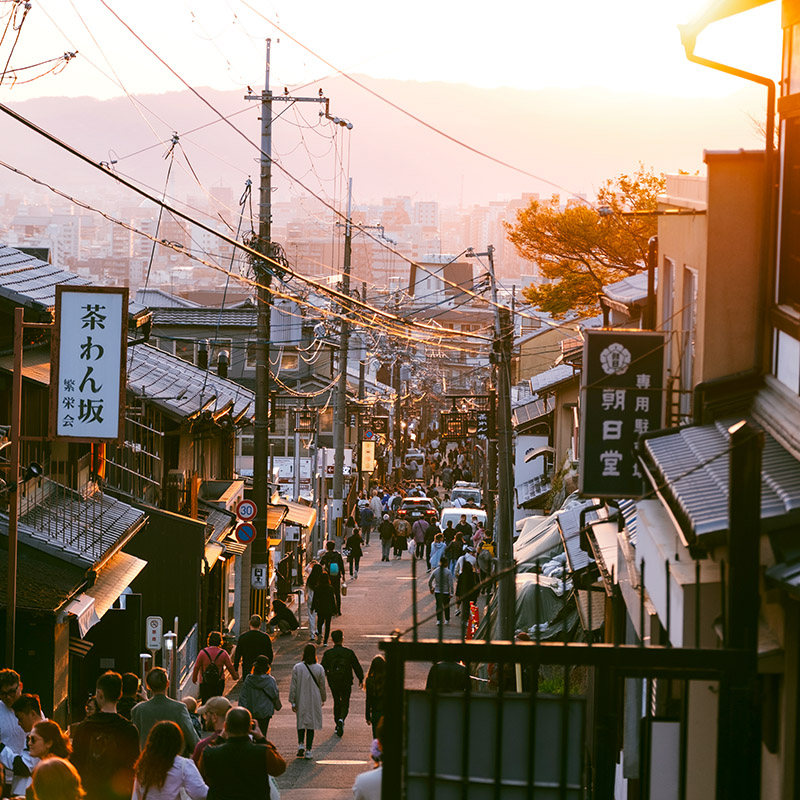
The restaurant is situated in Gentaku, a quiet neighborhood removed from the bustle of Kyoto. The district takes its name from Gentaku Noma, an Edo-period physician who established a medicinal herb garden there to heal the local community. The ethos of this gardenresonates with the chef's own philosophy of offering food that nurtures the body.
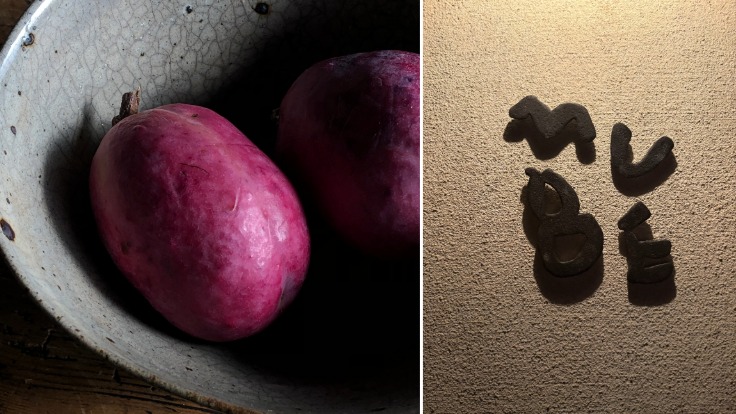
MUBE was inspired by an encounter with a Japanese staunton vine, mube, growing on the property. The mube vine is an evergreen associated with longevity and good fortune. The plant also has important ties to Shiga Prefecture folklore, lending it personal significance for a chef who hails from that region. The nameplate was lettered by the chef's daughter, whose soft brushwork,evoking the oval form of the mube fruit,he found irresistible. Hearing this story brought a smile to the Inspector's face.
Interior and Hospitality
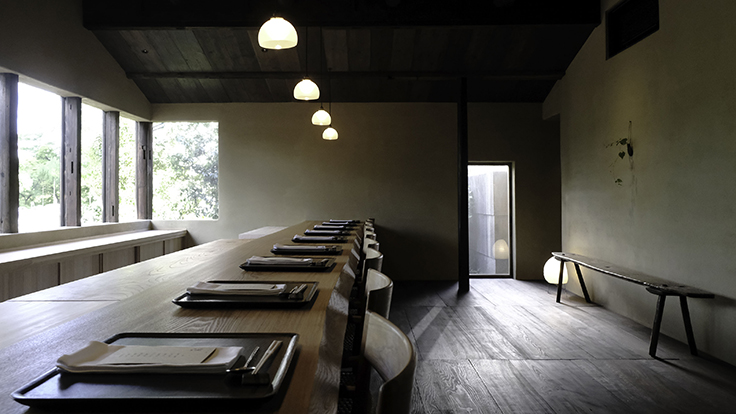
Guests enter through a bamboo-fenced gate and ascend a stone-paved staircase. The building is a renovated traditional Japanese townhouse whose reclaimed timbers lend the interior a warm sense of history. On the way to one’s seat, rows of jars filled with handmade fermented foods and condiments catch the diner’s eye. One finds themself wondering how each will feature in the meal.
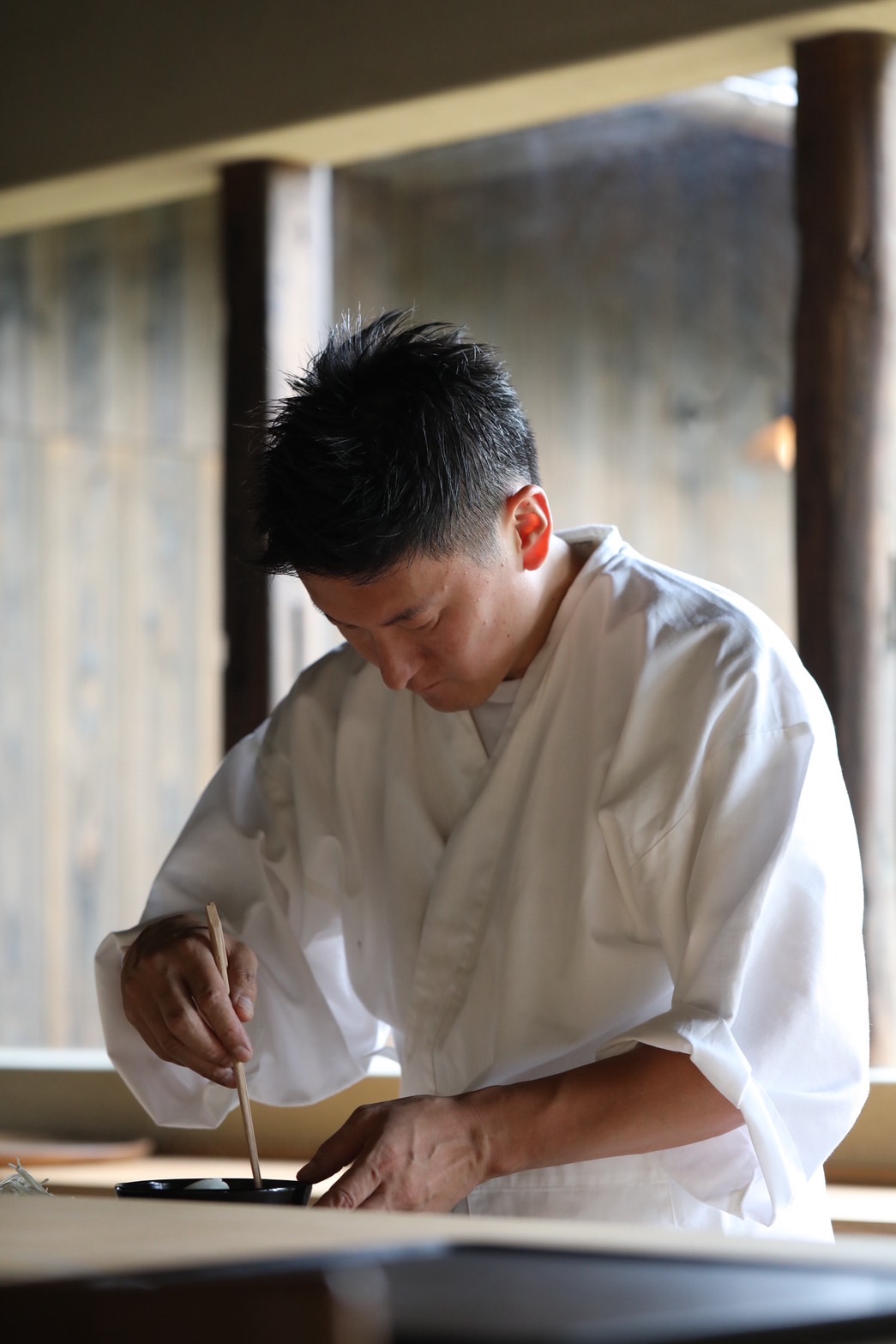
From the counter, the view opens onto a tranquil garden. Among the cooks working alongside Chef Takamoto are individuals who have come from abroad to train here. Dishes are finished in full view of the guest, inviting the eye into the details of the craft. Throughout the evening, the chef shares stories of his hometown and his relationship with fermentation, conveying the spirit behind every plate.
Related: What is a MICHELIN Star?
The Dishes
The guiding principle here is nourishing cuisine—food that is gentle on the body. Fermentation, driven by the action of yeasts and koji molds, amplifies the umami and nutritional value of ingredients. As the chef deepened his study of Japanese cuisine, he came to a renewed understanding of how eating fermented foods sustains health and supports the body's natural rhythms.
Everything is made from scratch: miso, pickles, fish sauce and narezushi alike. The beverage pairings follow the same philosophy. Sake is sourced from breweries that rely on naturally occurring yeasts, and wines are selected from natural producers. Even the non-alcoholic pairings incorporate fermentation, offering guests an experience that could only exist here.
Sashimi
At the central cutting board behind the counter, the chef slices grey large-eye bream, whose umami has been deepened through careful aging. The milky-white sashimi is served with a shio koji sauce seasoned with ume vinegar (Japanese plum vinegar) and minced wasabi leaf. Tartness from the plum and the fresh, herbaceous note of the wasabi leaf unfold together on the palate. The distinctive presentation is a mark of the chef’s individuality.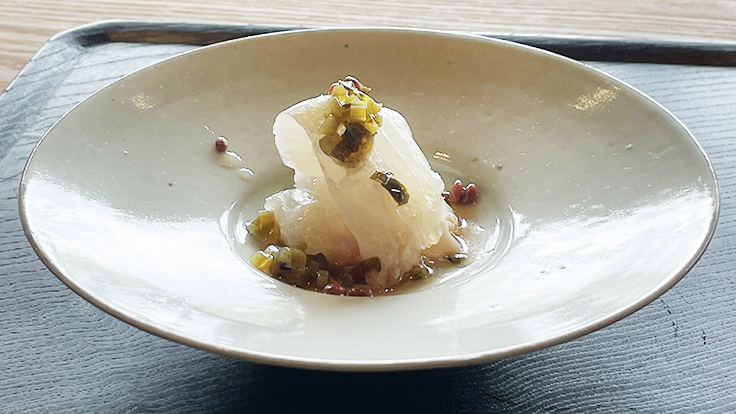
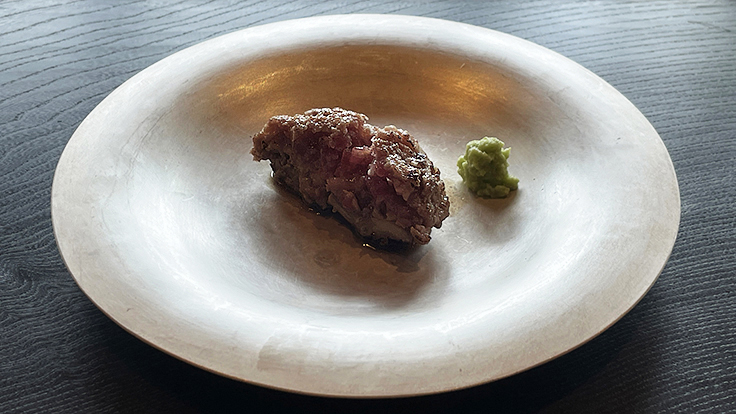
Shiitake
Inspired by the beloved home-cooking staple of stuffed shiitake mushrooms, the chef fills a generously sized shiitake cap with minced lean tuna and grills it over charcoal. The juices released by the shiitake meld with the tuna, creating a rich, layered flavor. The dish is served with wasabi and seasoned with a mushroom soy sauce fermented from shiitake. The combination of ingredients is unexpected, withfermented flavor bridging the two.
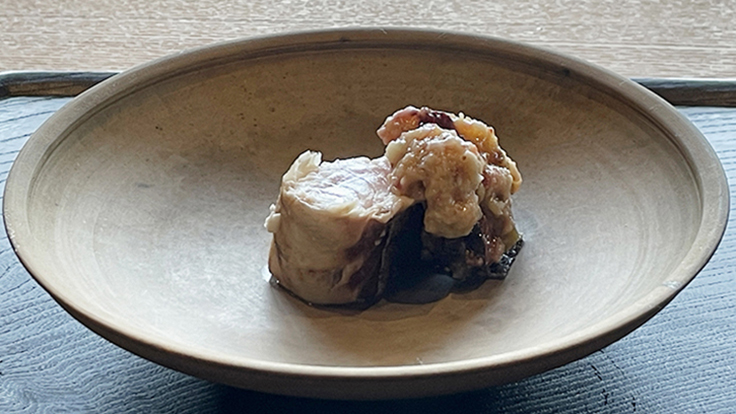
Sawara Narezushi
Narezushi is made by layering salted fish with rice and allowing it to undergo lactic acid fermentation. Considered the ancient precursor of sushi, it was long used as a method of preserving fish.
Here, sawara, Japanese Spanish mackerel, is marinated within a narezushi bed of salted watermelon rind and vegetables. As the fish rests, itabsorbs their complex, fermented character. The fish is then grilled over charcoal and paired with the vegetable narezushi. Using vegetables rather than fish to prepare the narezushi itself allows the chef to moderate its characteristically pungent flavor. A garnish of fig adds a touch of natural sweetness, a small but effective refinement that makes the dish more approachable.
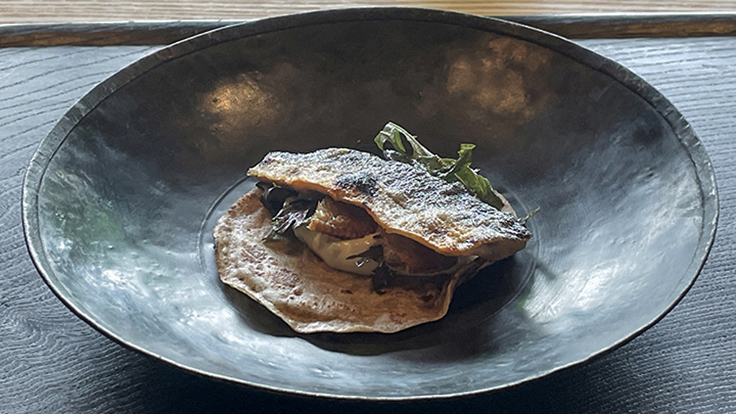
Ayu Soba
Described by the chef as a “sweetfish taco,” this dish features a paper-thin crepe made from buckwheat soba flour in place of a tortilla. Sweetfish, called ayu in Japanese, is filleted, then grilled while being basted with a house-made sweetfish fish sauce. Leafy vegetables and tofu dressed with tade (Japanese water pepper) leaves are tucked inside, and the guest wraps the crepe by hand to eat. The dish reflects a spirit of invention that transcends the conventions of traditional Japanese cuisine.
Conclusion
The cuisine at MUBE is infused with gratitude for the gifts of nature and a heartfelt wish to nourish those who eat it. Guided by his grandmother's words—"Do what makes others happy; live for others"—the chef devotes himself entirely to the well-being of every guest. Plans are underway to cultivate a garden on the property and plant more trees; the day when home-grown produce graces the menu cannot be far off.
Fermentation is a cornerstone of Japanese food culture, born of a rice-centered diet and a climate of abundant humidity. Miso, soy sauce and pickles: these fermented staples are the foundation of washoku. At MUBE, this ancient tradition is the springboard for a new Japanese cuisine. By the time the meal was over, the Inspector felt a quiet, natural vitality rising from within—the truest measure of food that heals.
Related articles:
Top Image: © Ryo Suzuki/MUBE