30 January 2026

Share


You may know the spicy Sichuan and Chongqing styles, the savory Japanese shabu-shabu and sukiyaki, and the hearty Korean jeongol. But since its arrival in Vietnam, this sizzling bowl of deliciousness has been thoroughly localized, becoming a mirror of the country’s culinary mindset: a deep respect for harmony, a fondness for clean, delicate flavors, and a culture of togetherness.
We meet Tu Dang, founder and owner of Nhà Tú, to unravel the story of Vietnamese hotpot — its history and its flavors — told slowly, thoughtfully, and with great affection.
What makes Vietnamese hotpot special?
“Abundant, refined and natural,” Dang answers when asked to describe hotpot in just three words. “Abundant in ingredients, refined in seasoning, and natural in the way the broth is prepared.”There is no precise record of when hotpot (lau) first made its way into Vietnam. By the 1960s, however, steaming pots had begun appearing on the banquet tables of several prominent restaurants in Ho Chi Minh City.
Southern diners quickly embraced the dish and made it their own, giving rise to variations such as fermented fish hotpot, mixed hotpot, oxtail hotpot and even snake hotpot.
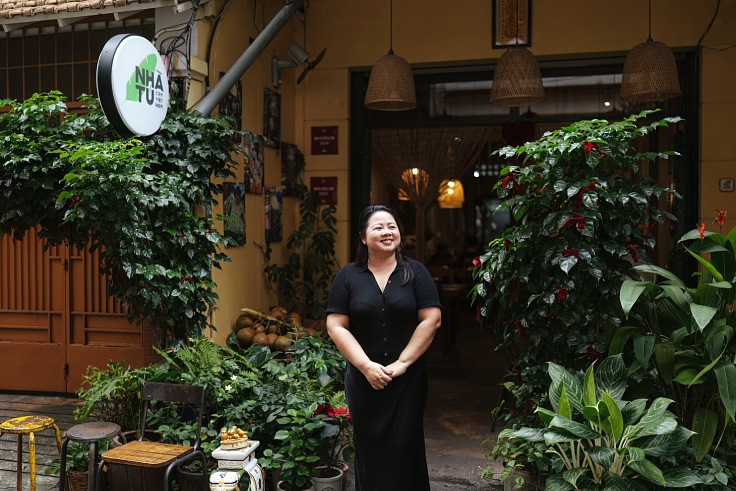
“Vietnamese hotpot honors the natural purity of each ingredient. For that reason, the broth is often kept light and clear, allowing original flavors to shine while being gently refined to achieve balance and elegance.”
By the early 2000s, hotpot had continued its journey northward, becoming part of everyday culinary life in Hanoi and other central and northern provinces. Loved for its flavors, it also gained popularity because it touches something deeply instinctive: the love of gathering and sharing.
More than a dish, hotpot becomes a shared rhythm at the table. Conversations stretch, laughter softens, and time seems to loosen its grip as the pot continues to simmer.
Hotpot also respects individuality. From the same pot of broth, everyone is free to choose what suits them best — some prefer lighter flavors, others richer ones; some focus on vegetables, others on seafood. There is no rushing, no imposition, only a distinctly local sense of harmony, where every personality finds its place within a shared meal.
One country, many flavors
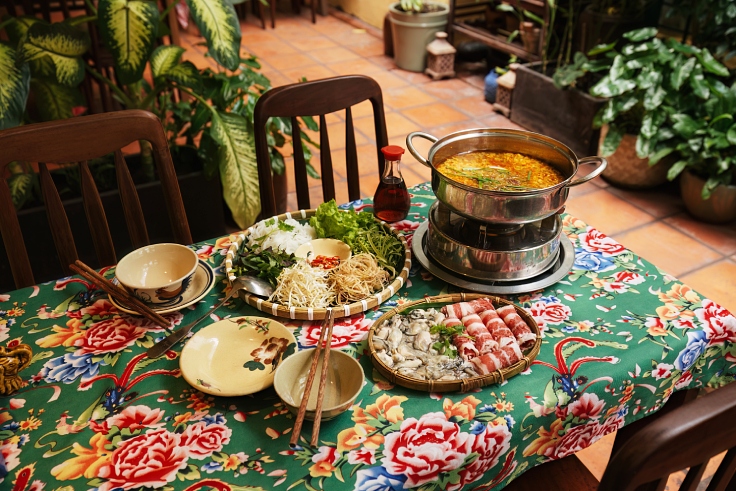
“Hotpot changes from region to region, much like our climate and our accents,” Dang adds.“Where there is the sea, there is seafood hotpot. Where there are forests, there are mushroom hotpots, or chicken cooked with wild leaves. Where there are rivers, there are hotpots with fish and water flowers, or fermented fish. Each region has its own versions that reflect its soul.”
In the North, hotpot is built on a clear, delicately flavored broth. Its gentle sweetness comes from bones and patient simmering rather than heavy seasoning. With four distinct seasons, the colder months naturally call for comforting pots such as chicken hotpot with sour leaves or crab paste hotpot with beef shank.
Where to find Vietnamese hotpot in Vietnam
Nhà Tú
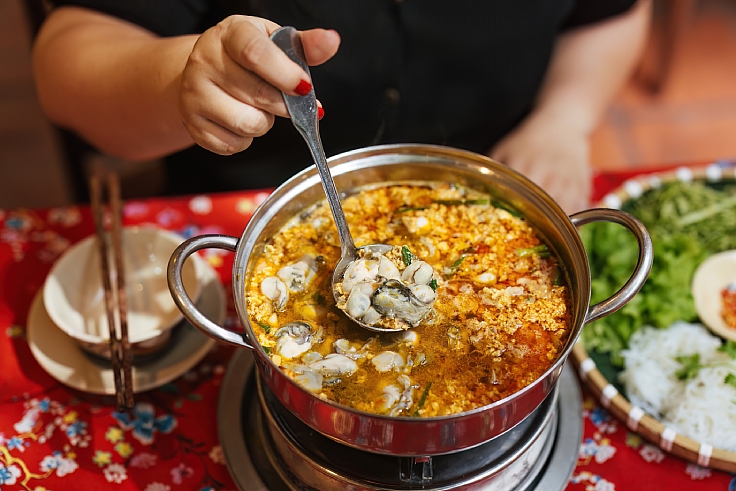
Bib Gourmand, MICHELIN Guide Vietnam 2025From the start, Dang wanted a dish that felt unmistakably Tú — humble yet refined, familiar but personal. That idea came to life in her signature milk oyster hotpot with beef belly. The broth brings together the clarity of the North, the deep savor of coastal Phan Rang, her homeland, the generosity of the South and the cosmopolitan energy of Ho Chi Minh City. Milk oysters add a cool, creamy richness, while beef belly delivers a gentle, lingering umami.
Its earliest fans were Japanese diners, who ate slowly, paying close attention to every shift in aroma and flavor as each oyster slipped into the pot. A signature dish, Dang reflects, is not something you decide; it’s one that quietly finds its place in guests’ hearts. “In the end, what lingers is not just taste, but the shared warmth rising from the pot. It reminds us that in Vietnam, the most enduring dishes are those meant to be eaten together,” she shares.
Address: 129/4 Vo Van Tan Street, Vo Thi Sau Ward, District 3, Ho Chi Minh City, Vietnam.
More places to find Vietnamese hotpot in Vietnam
Hanoi Garden
Selected, MICHELIN Guide Vietnam 2025If you find yourself in Hanoi on a colder day, Hanoi Garden is an ideal stop for a hotpot that captures the sensibility of the North. Central Vietnam brings intensity to the hotpot. Eel hotpot stands as the region’s most iconic. For families in the central provinces, hotpot is also a way to keep warm and stay connected through long, rainy days. The hotpot choices at Hanoi Garden also abound. With over 20 years of experience, the Vietnamese chef reinvents his home country's classics with a modern twist. The food is meticulously prepared and astutely seasoned.
Address: 36 Hang Manh Street, Hang Gai Ward, Hoan Kiem District, Hanoi, Vietnam.
My Hanh Seafood
Selected, MICHELIN Guide Vietnam 2025If you stop by Da Nang, make sure to visit My Hanh Seafood, one of the city’s finest seafood hotpots, defined by the unmistakably bold flavors of central Vietnam, much like the region’s own sun and wind. The terrace with panoramic ocean views is one of the biggest draws of this beachfront restaurant. But the well-crafted seafood is more than equal to the setting.
Address: 3-5 Vo Nguyen Giap Street, Phuoc My Ward, Son Tra District, Da Nang, Vietnam.
Header image: © Mervin Lee/The MICHELIN Guide Vietnam