17 April 2026
Share


For many people, dining out isn’t just about discovering exceptional cuisine: It’s about having an outstanding experience, something that feels truly special and out of the ordinary. Here, we have curated a list of must-visit MICHELIN Guide restaurants in unexpected locations that are all guaranteed to linger long in your memory. Stretching across the globe, each one combines top-notch cooking with an otherworldly setting.
Europe
Under, Lindesnes, Norway
Nestled 18 feet beneath the icy North Sea, Under is Europe’s first, and the world’s largest, underwater restaurant. From the moment you arrive outside the establishment — housed in a striking, half-sunken structure that appears to have slipped off the rocky shoreline — it’s clear this is no ordinary dining experience. Step into the underwater dining room and you’re greeted by a 36-foot panoramic window that serves as a living, marine-themed art installation. Perhaps unsurprisingly, seafood leads the way on the One-MICHELIN-Starred menu.

Alchemist, Copenhagen, Denmark
To call Alchemist simply a restaurant doesn’t do it full justice. Rather, it’s an immersive journey where Chef Rasmus Munk’s cuisine becomes a medium for art, science and social reflection. Dinner unfolds like a theatrical performance, with the technically masterful dishes divided into acts and set across various locations — from a planetarium-like dome to a sterile operating room. Expect a thought-provoking, sometimes challenging experience, complete with themes that explore climate change, ethics and human fragility. It’s a feast for all the senses — and the intellect, too.

Eatrenalin, Rust, Germany
There are many ways to describe the concept behind Eatrenalin, but “futuristic” might be the most fitting. Sign up for the two-hour Eatrenalin Experience and you’ll be guided on floating chairs through a series of themed worlds and rooms. In each, guests sample aperitifs and inventive dishes — featuring ingredients like aniseed, Kampot pepper or moon shoots — that reflect the atmosphere of the space. The tour begins in the lounge and ends in matching style at the bar, with DJ music, champagne and cocktails.

ice Q – Sölden, Austria
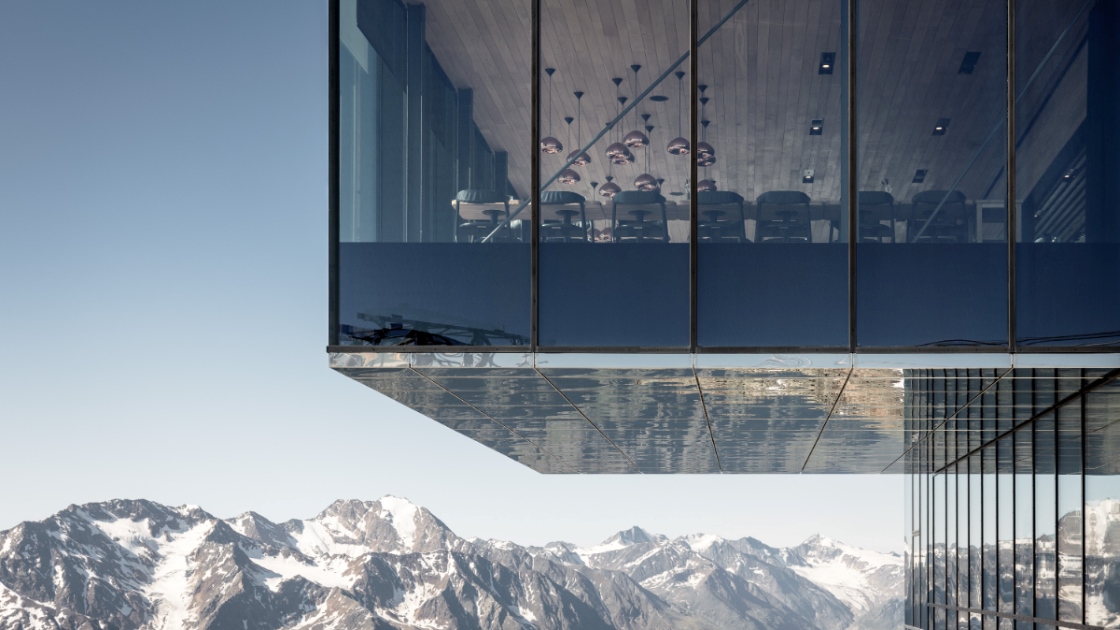
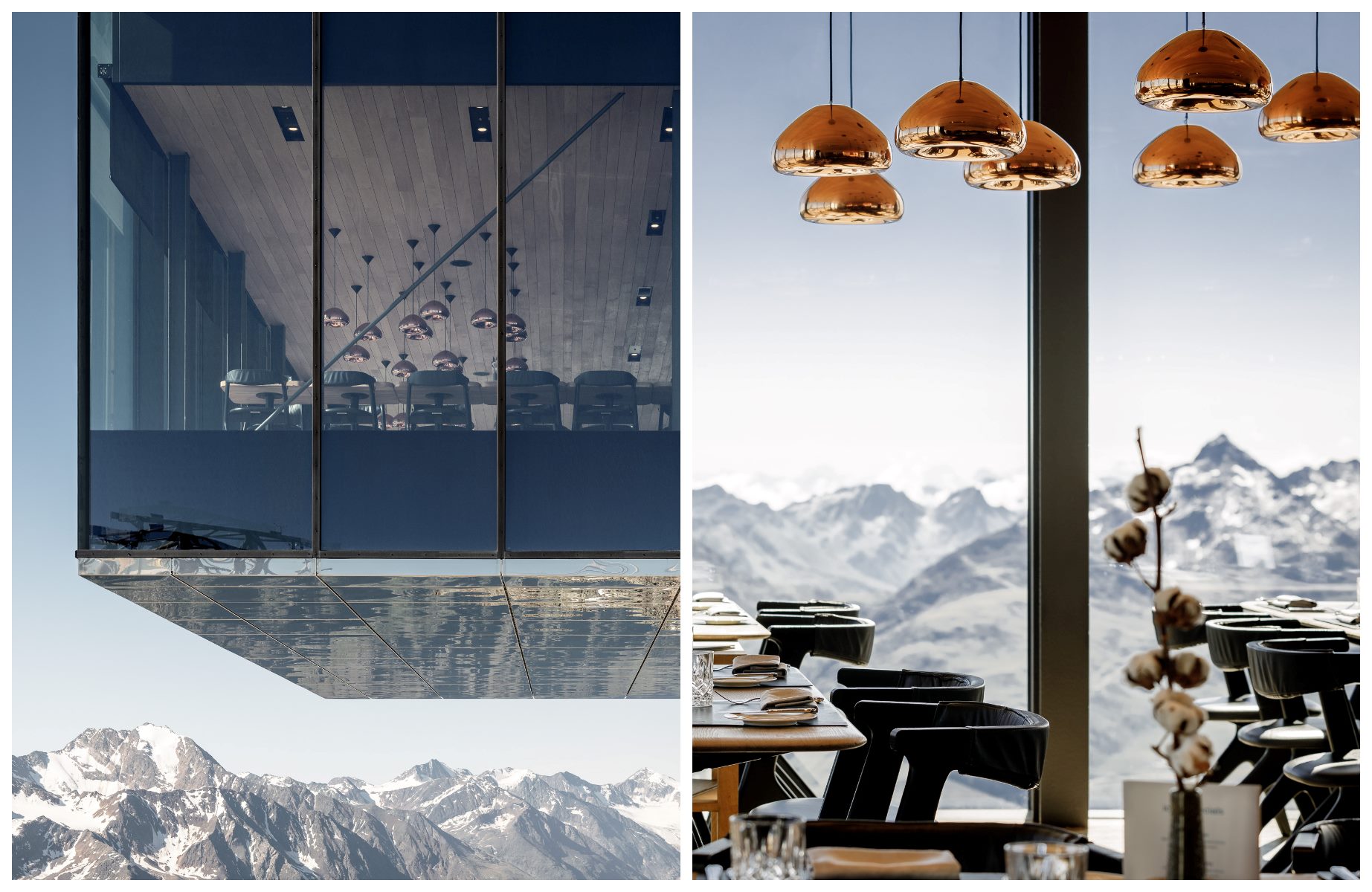
Located at an altitude of over 9,000 feet (3,000 meters) in one of the most majestic mountain ranges of the Eastern Alps, ice Q rises from the snow like a gleaming cube of ice. This striking glass-and-steel structure, opened in 2013, is a masterpiece of contemporary Alpine design. Its bold architecture even caught the attention of Hollywood, serving as a filming location for the James Bond movie Spectre. For fans of the iconic spy, a dedicated cinematic installation inspired by the film remains on display just steps away. The restaurant, which ranks among the world’s highest-altitude dining rooms, offers an unparalleled panoramic experience, with its carefully designed orientation providing awe-inspiring views of glaciers and the Dolomites.
Locanda Don Serafino, Ragusa, Italy
Ibla — the picturesque historic center of Ragusa — is often photographed from above, but dining at the One-MICHELIN-Starred Locanda Don Serafino offers a fresh perspective on this storied Sicilian city: The restaurant is carved into a cave at the foot of the hillside on which the old town rests. Yet despite the dramatic setting, there’s nothing rustic about the experience. The service and tableware are refined, the atmosphere romantic, and the cuisine among the most exciting on the island.

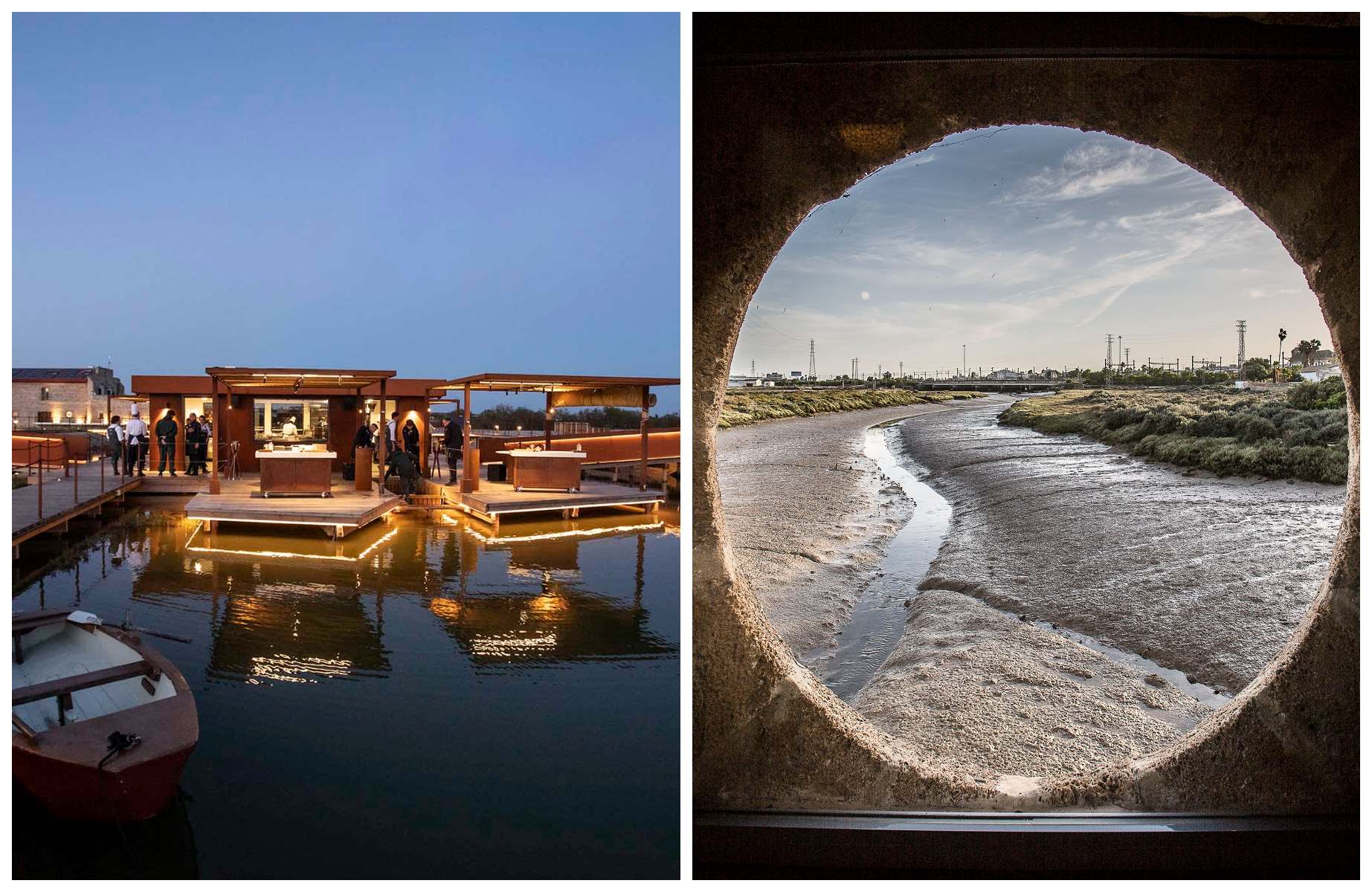
Aponiente, Andalucia, Spain
Ángel León’s project, anchored in a 19th‑century tidal mill and extending into the surrounding marshes, explores ingredients harvested or fished directly outdoors. Crossing wooden boardwalks, guests enter tide-swept creeks, where they may glimpse the team gathering, fishing or preparing ingredients in real time: shrimp, sea bass, blue crabs and marsh plants. The heart of the gastronomic experience unfolds in the marsh, where guests savor a sophisticated tasting menu defined by carefully curated pairings and marked by novel techniques and unusual ingredients, such as bycatch fish, seafood charcuterie, plankton and marine cereals.
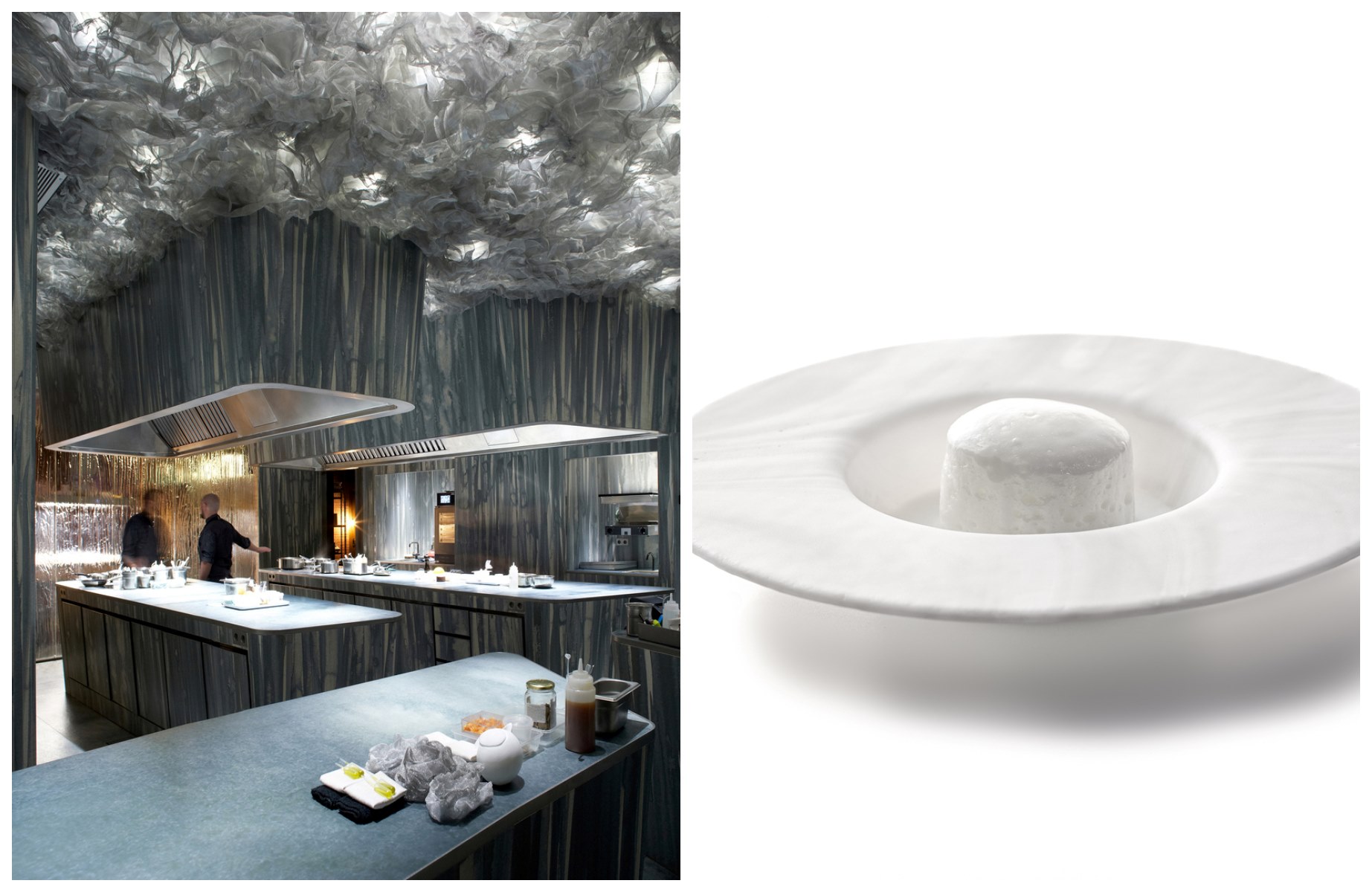
Enigma, Barcelona, Spain
Behind a discreet facade in a central Barcelona neighborhood lies an interior of radical design, with ceilings suspended like grey clouds over silver and transparent modules. In this futuristic setting, Chef Albert Adrià — who has helped shape Spanish and global gastronomy since the 1980s — offers a single tasting menu that pushes the boundaries of gastronomic expression through a range of sophisticated techniques, from freeze-drying to preparation using liquid nitrogen before diners’ eyes.
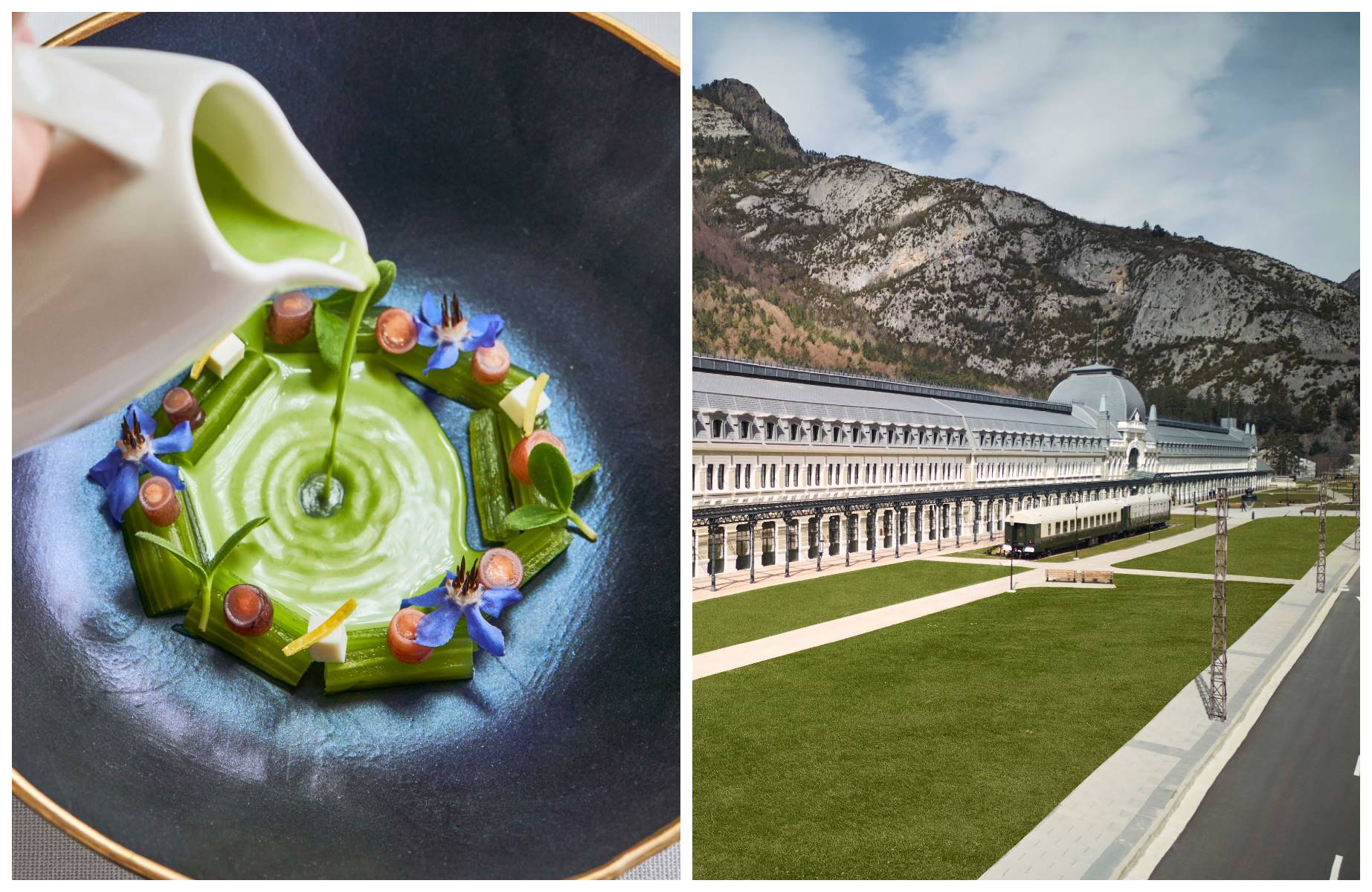
Canfranc Express, Aragon, Spain
Housed within a restored vintage carriage at the historic Canfranc International Station, built in 1928, Canfranc Express recreates the atmosphere of classic European rail dining in an intimate space with just three tables. The experience begins on the platform and continues with an aperitif in the original dining car, where guests learn about the station’s role during the Second World War. In the kitchen, Chef Eduardo Salanova offers a single evolving tasting menu that reinterprets Aragonese traditions with subtle French influences. Elements such as starters presented from a suitcase extend the travel narrative, while every detail, from tableware to uniforms to lighting, is carefully aligned to reflect the setting’s history.
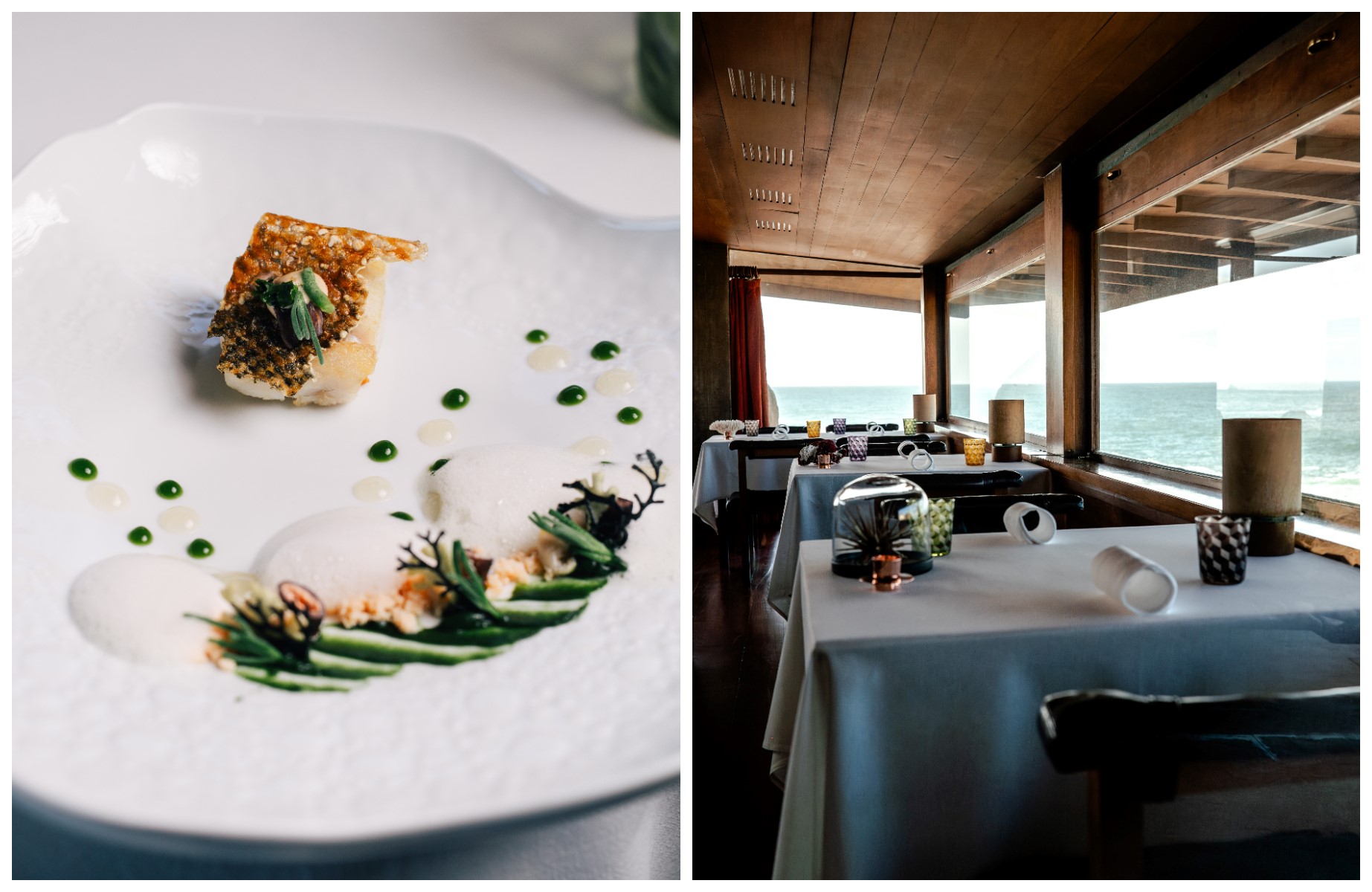
Casa de Chá da Boa Nova, Porto, Portugal
Set on the rocks of Boa Nova Beach in Leça da Palmeira, Casa de Chá da Boa Nova occupies a landmark building designated a national monument. Sliding windows are opened during service, bringing in the sea air and the sound of the Atlantic waves, making the setting an integral part of the experience. In the kitchen, Chefs Rui Paula and Catarina Correia present a seafood-focused approach through a tasting menu of up to 21 courses inspired by Os Lusíadas, an epic poem describing the adventures of Portuguese explorer Vasco da Gama. The dishes draw on modern techniques to highlight the variety and character of Atlantic fish and shellfish.
Le Jules Verne, 2nd Floor of the Eiffel Tower, Paris, France
Perched on the second floor of the Eiffel Tower, Le Jules Verne is a feat of technical ingenuity in more ways than one. First, you experience the engineering marvel of Paris’ most iconic tower up close, alongside breathtaking views from 380 feet above the city. Then comes the challenge of preparing Two-MICHELIN-Starred fare in a kitchen with limited space and storage. The result is an ever-evolving menu — courtesy of Chef Frédéric Anton — that showcases creativity and seasonality at their finest.

North America
Nōksu, New York
Dining in a New York City subway station might sound unlikely, but Nōksu, an innovative seafood-focused Koreatown restaurant led by Chef Dae Kim, turns it into a thrilling experience. Hidden behind a code-locked door beneath Herald Square, Nōksu features an elegant black marble counter where every seat offers a front-row view of the chefs at work. Don’t miss the signature dry-aged squab, prepared table-side in a dramatic, Peking duck-inspired ritual — accompanied by the nostalgic sound of 1980s music.

Asia
Born, Singapore
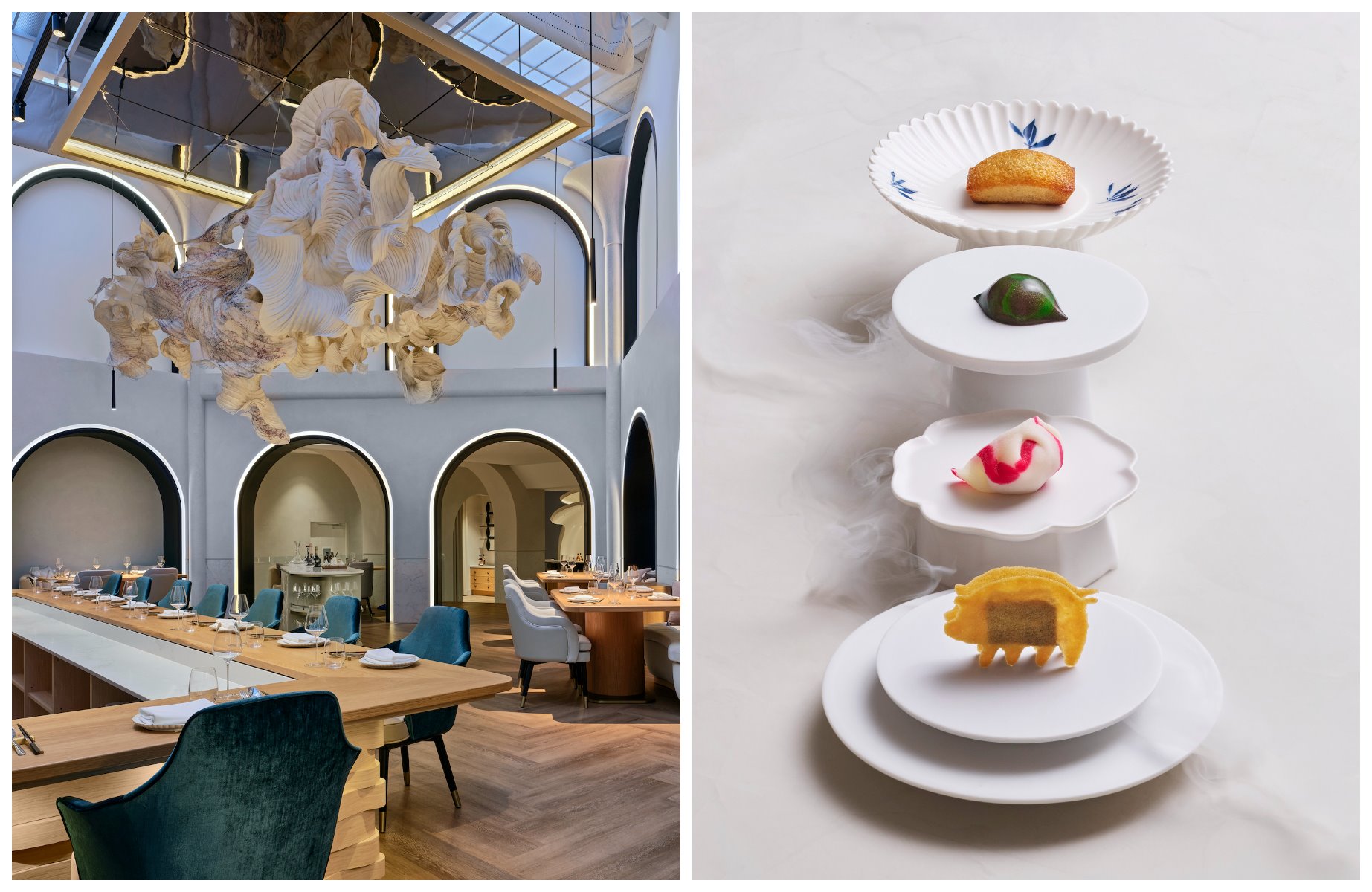
Dining within Singapore’s historic Jinricksha Station is an unexpected setting, yet Born transforms this former 1903 rickshaw hub into a dining room adorned with a free-flowing sculpture suspended from its ceiling. Beneath a high glass roof and framed by sculptural arches, it sets the stage for Chef Tan’s nine-course tasting menu, structured around the Circle of Life, expressed through nine guiding principles: Birth, Roots, Memories, Craft, Relationship, Changes, Time, Progress and Legacy.
Tin Lung Heen, Hong Kong
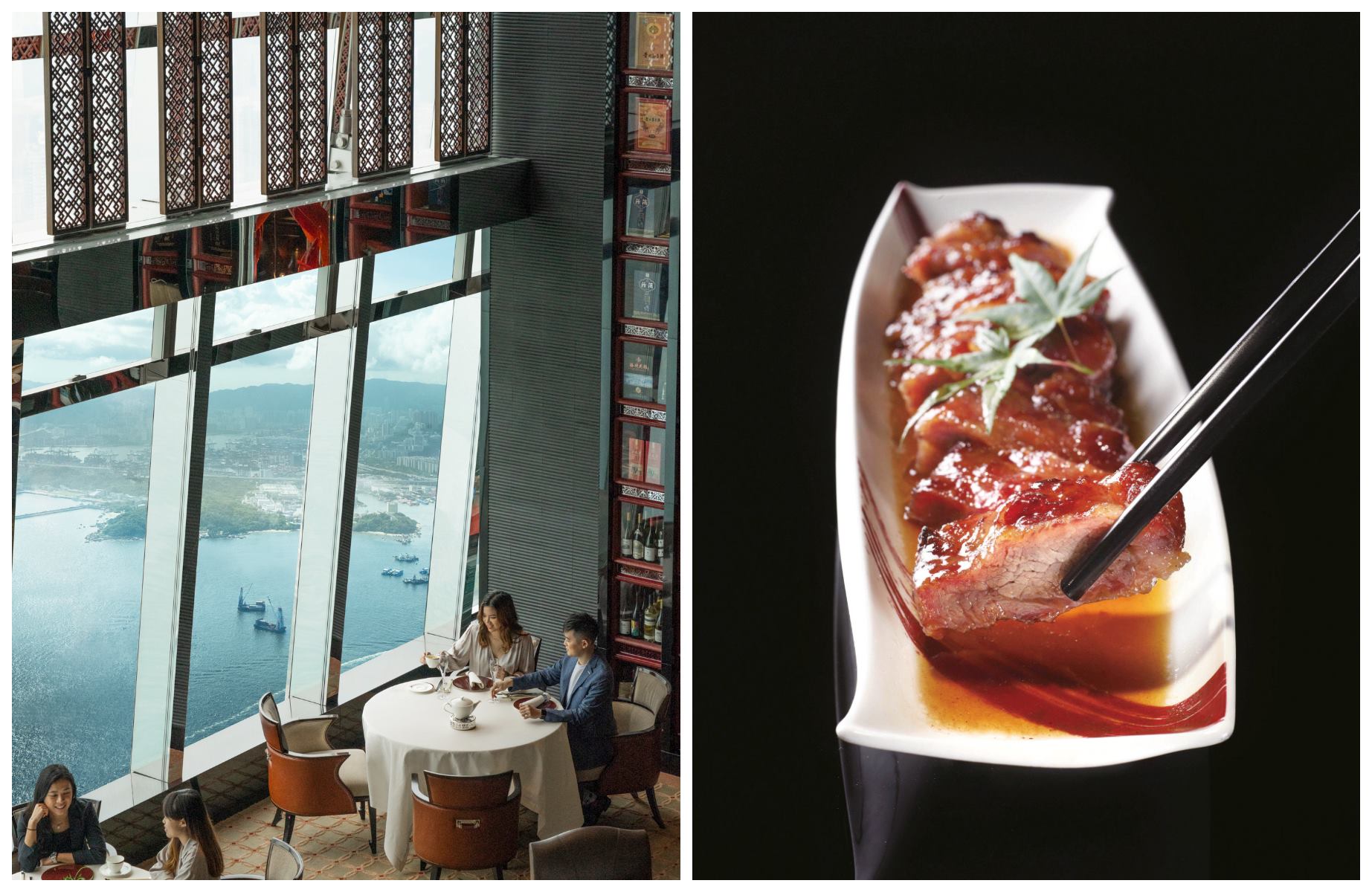
Set high above the city on the 102nd floor of The Ritz-Carlton, Hong Kong, Tin Lung Heen ranks among the world’s tallest restaurants. Its panoramic windows offer unobstructed views of Victoria Harbor and the Hong Kong skyline. Bathed in natural daylight, the dining room — with windows framed in warm redwood finishes and a contemporary Asian aesthetic — transforms after dark to reveal a panorama that is vibrant and timeless. The kitchen honors refined Cantonese classics, featuring specialties such as slow-simmered chicken soup with fish fins in a coconut broth and honey-glazed char siu.
HAJIME, Osaka, Japan
At first glance, little suggests that Hajime Yoneda, chef-owner of the Three-MICHELIN-Starred HAJIME, was once a system engineer. Look a little closer, however, and his previous career reveals itself in the gastronomic journey he crafts for his guests. Centered on the theme of “a dialogue with the Earth,” Yoneda interprets the changing seasons through his unique lens, weaving story-like messages into his cuisine. The house specialty, Chikyu — meaning “the Earth” — tells the tale of nature’s bounty shaped by the cycles of mountain and ocean, all on a single plate.

Shigetsu, Kyoto, Japan
Shigetsu is as close as you can get to dining like a Buddhist monk in a World Heritage-protected site. Located within the Tenryu-ji temple in ancient Kyoto, it serves shojin ryori, a vegetarian cuisine rooted in Buddhist ascetic traditions. Diners kneel or sit cross-legged on tatami mats, with food thoughtfully presented on low tables before them. The serene setting mirrors the deeper purpose of the meal: Shojin ryori is believed to quiet worldly desires, cleanse the soul and inspire spiritual awakening.

Yong, Guangzhou, China
As you might expect from a restaurant set in a heritage building in Guangzhou’s historic Dongshankou neighborhood, Yong boasts a museum-worthy collection of ancient Chinese porcelain and other dining utensils crafted by local artisans. After passing through the impressive stone archway at the entrance, push open the wooden door to discover a gallery of artifacts. The dining room is located on the first floor where the restaurant specializes in Sichuan cuisine: Think handmade golden noodles, thick and refreshing, served in a rich broth made from aged chicken, old duck and ham. The flavor is intensely concentrated, making it a true classic.

Potong, Bangkok, Thailand
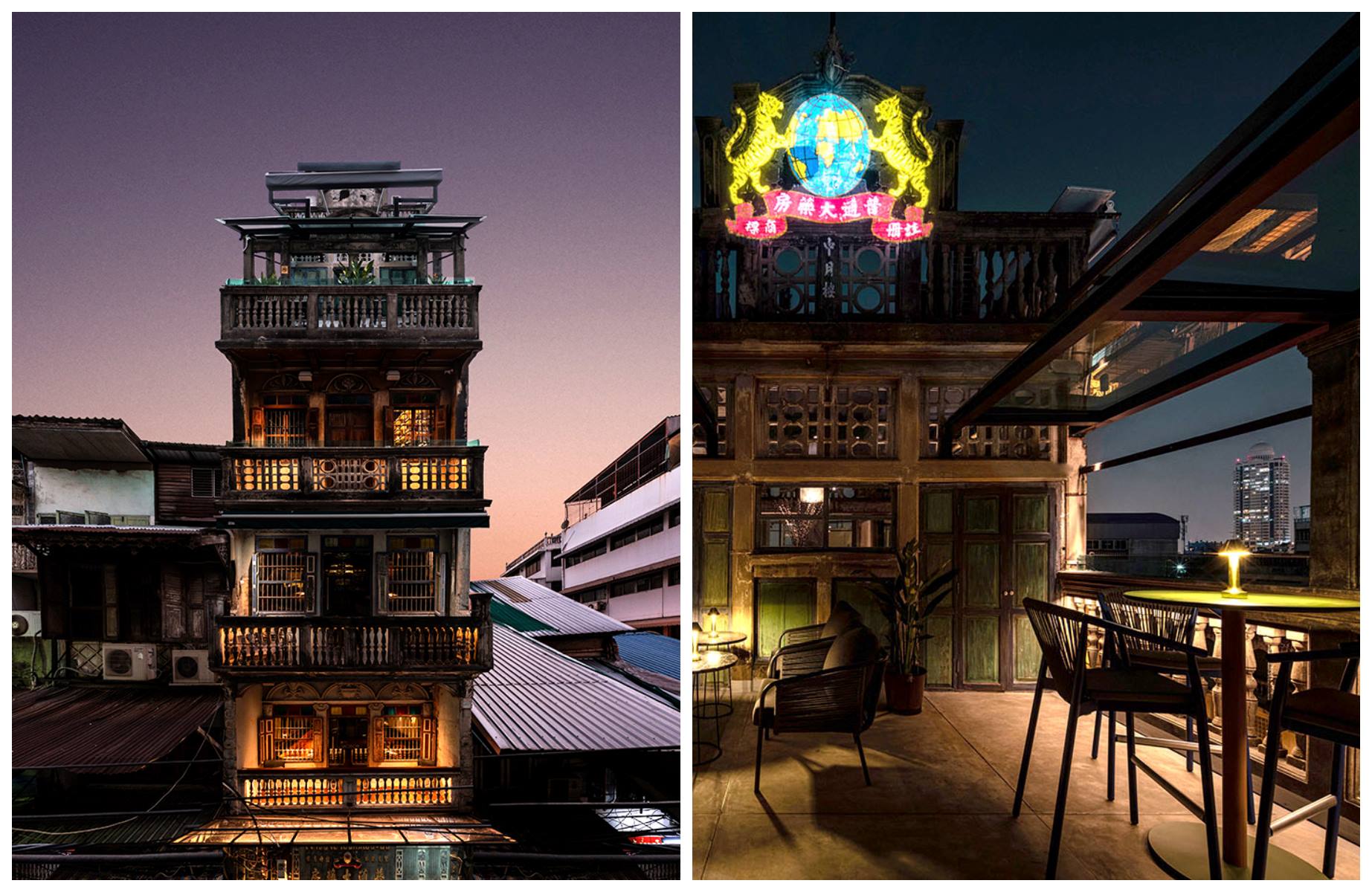
Potong occupies a century-old Sino-Portuguese building in Bangkok’s Chinatown, formerly home to a Sino-Thai pharmacy. Today, reimagined across five levels, it preserves traces of its past: The former apothecary has been transformed into a dining room, and a rooftop bar is accessible by elevator. The renowned tasting menu draws on Chef Pichaya “Pam” Soontornyanakij’s childhood and heritage, and dishes unfold to the rhythm of personal stories. The semi-open kitchen and tiered layout create a sense of movement and continuity throughout the dining experience.
Hero Image: A glass-walled dining room extends over the Alpine peaks, making ice Q notable for its direct connection to the mountain landscape. © Rudi Wyhlidal/ice Q