12 December 2017

Share


Said to have originated from Shinsekai in Osaka, this Japanese dish is bite-sized meat and vegetables skewered, coated in a light batter and fried until golden. Common items on the menu include beef, pork, lotus root and even seasonal fish.
At first glance, kushikatsu might easily be mistaken for a variation of tempura. But the two differ in how the batter is made. The batter in tempura, for instance, is made with water, flour and eggs; with kushikatsu, a stronger flour is used, and breadcrumbs are added to the mix. At new restaurant Ginza Rokukakutei, a light white wine is also added to the batter to alter the aroma of the crisp exterior when cooked.
At first glance, kushikatsu might easily be mistaken for a variation of tempura. But the two differ in how the batter is made. The batter in tempura, for instance, is made with water, flour and eggs; with kushikatsu, a stronger flour is used, and breadcrumbs are added to the mix. At new restaurant Ginza Rokukakutei, a light white wine is also added to the batter to alter the aroma of the crisp exterior when cooked.
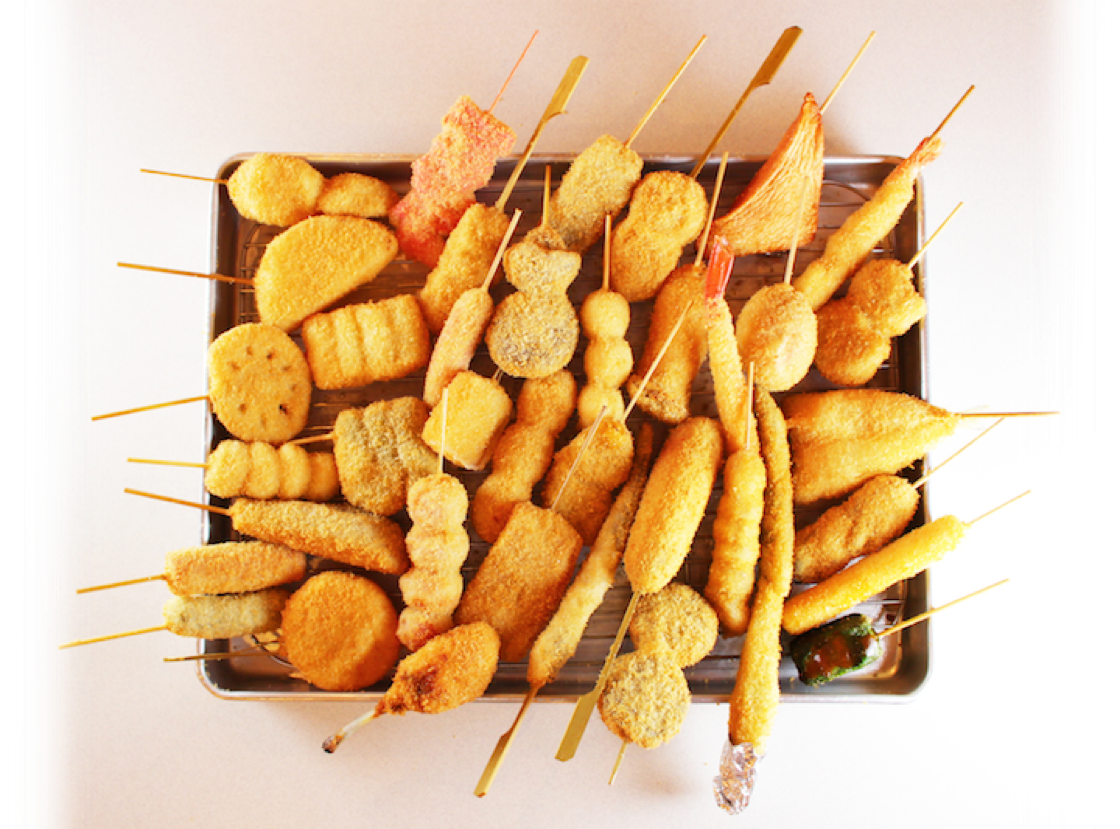
When eating kushikatsu, the deep-fried skewers are served with a dipping sauce and on a piece of bread (to absorb the oils from the fried items). On the side is also a plate of thick-cut fermented cabbage strips, which serves to cleanse your palate during the meal.
Watch our video to find out more:
Watch our video to find out more: