17 February 2026
Share


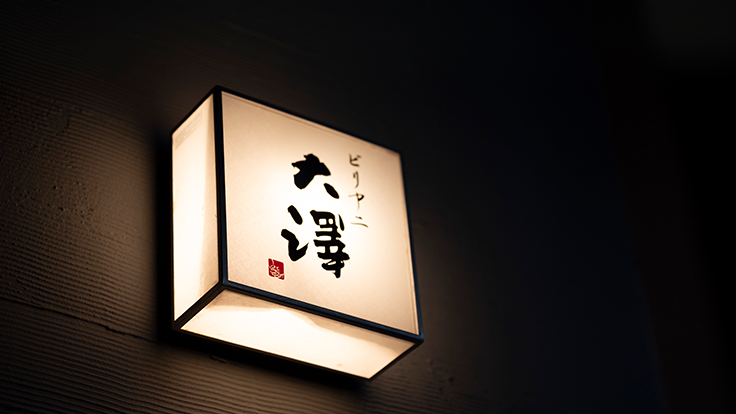
Kanda has long anchored Tokyo’s curry culture. Down a basement staircase, Biriyani Osawa operates as a reservations-only Indian restaurant with a singular focus: one biryani, served once per sitting. There are no alternatives, yet demand far exceeds supply. Owner-chef Takamasa Osawa explains his devotion to the one-pot Indian staple at his restaurant, which earned its first Bib Gourmand in The MICHELIN Guide Tokyo 2026.
Why Indian cuisine — and biryani in particular?
Since Osawa first encountered biryani in 2009, he has been on an unceasing mission to seek out its great taste — an exploration that now spans more than 15 years in the kitchen.
While traveling through South India, he noticed signs for biryani in every town he visited. One taste was enough: he was stunned at how good it was. In Tamil Nadu, there were sometimes several biryani shops on a single block. Some were street stalls with a single pot. Others were large operations turning out batch after batch. Osawa moved between them, tasting widely, trying to understand what made each version work.
His interest in rice predates that first trip. As a child, he gravitated towards seasoned rice. His favorite takikomi-style rice was matsutake gohan, made using prized matsutake mushrooms. Sushi was his favorite food, yet even there his attention went first to the rice. With kaisendon-style bowls, he found himself more absorbed by the soy-seasoned shari than by the seafood layered on top.
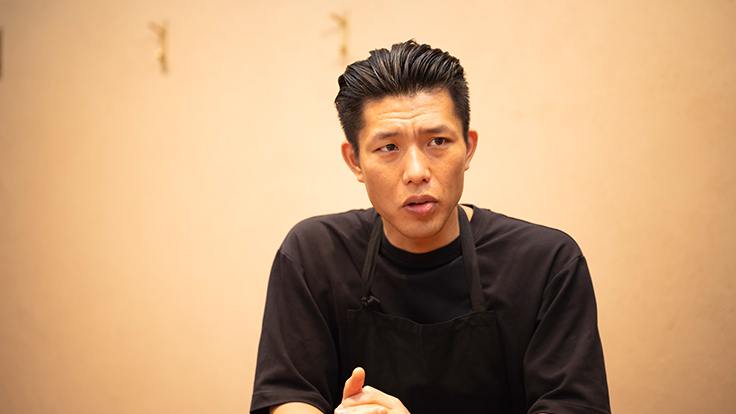
Biryani, Osawa says, reaches a better aroma and taste when batch cooked in a large pot. It is labor-intensive and time-consuming, demanding specialized techniques, which explained why, back in Japan, no restaurant yet served the authentic biryani he had discovered in India. Hearing that some restaurants would serve biryani only if he reserved the entire place, Osawa began using social media to gather enough people for private dinners. Over time, he began cooking it himself, continually refining the recipe and finding ways to share it with more diners.
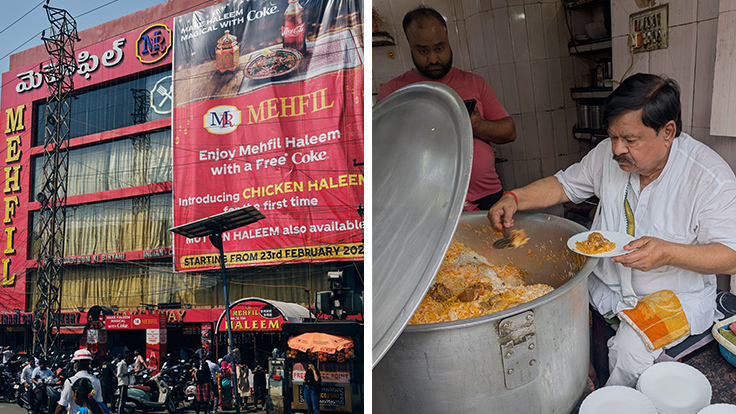
Initially, he was able to use his workplace restaurant after hours, repeating the cycle of cooking and serving. But by 2012, he had adopted a magari style — renting restaurant space during off-hours. Committed to mastering biryani, he returned to India two years later, and again the following year. Even without speaking the language, he would approach restaurants at their back doors — and each time they would welcome him in and show him their methods. In Hyderabad, some places serve as many as 3,000 lunches a day, with freshly cooked biryani always available.
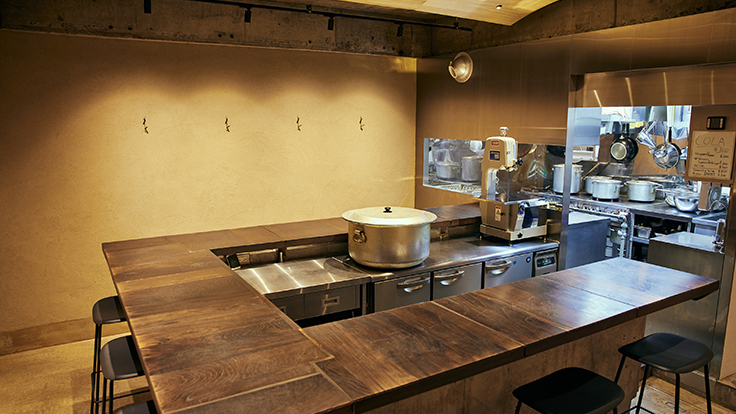
Osawa’s current restaurant is built around a U-shaped counter that seats ten. Lunch and dinner are each served in two sittings, for good reason. In the early days, before opening his current place, his pop-ups followed a simple pattern: he waited for customers to arrive. Cooking to order, however, made it impossible to serve biryani at its peak, so he began experimenting with cooking only after everyone had gathered, meaning guests sometimes had to wait up to two hours for their meal, causing them to lose their patience.
Biryani was once a showpiece of royal court cuisine. In moments of doubt, Osawa wondered whether it was not suited to restaurants at all, yet he kept insisting on one thing: everyone eating together at the moment of peak flavor. As 2012 ended, he rented a place that doubled as a share house and began serving biryani to everyone all at once. It came to be known as The Biryani House.
Even there, his focus was unwavering: to serve biryani at its best. Once people had gathered and were waiting for the rice to finish, he could even decide, right at the scheduled serving time, to cook it for another 30 minutes. This way of cooking and serving gradually turned the place into something like a biryani laboratory. At times, as many as 100 people would come looking for biryani, and he eventually introduced reservations. Word spread fast, and The Biryani House tipped from experiment into phenomenon.
For Osawa, the essence of biryani’s great taste is the rice. The crucial question is how well you can cook the basmati. He once went to a sushi restaurant in Futakotamagawa and was deeply moved by the quality of its shari rice. He also learned from their stance: always aim for the highest possible peak of flavor and never hesitate to put in the work required.
In 2020, however, the COVID-19 pandemic arrived, making it difficult for him to bring people together at The Biryani House and serve them his food. Osawa realized that, if he still wanted people to experience biryani at its peak, he would have to open a proper restaurant to follow the strict regulations. That was when he decided on a sushi counter-like system: reservations only and simultaneous starts. During the pandemic, silent eating (mokushoku) was being pushed as a way to prevent infections — something that, for Osawa, proved unexpectedly convenient.
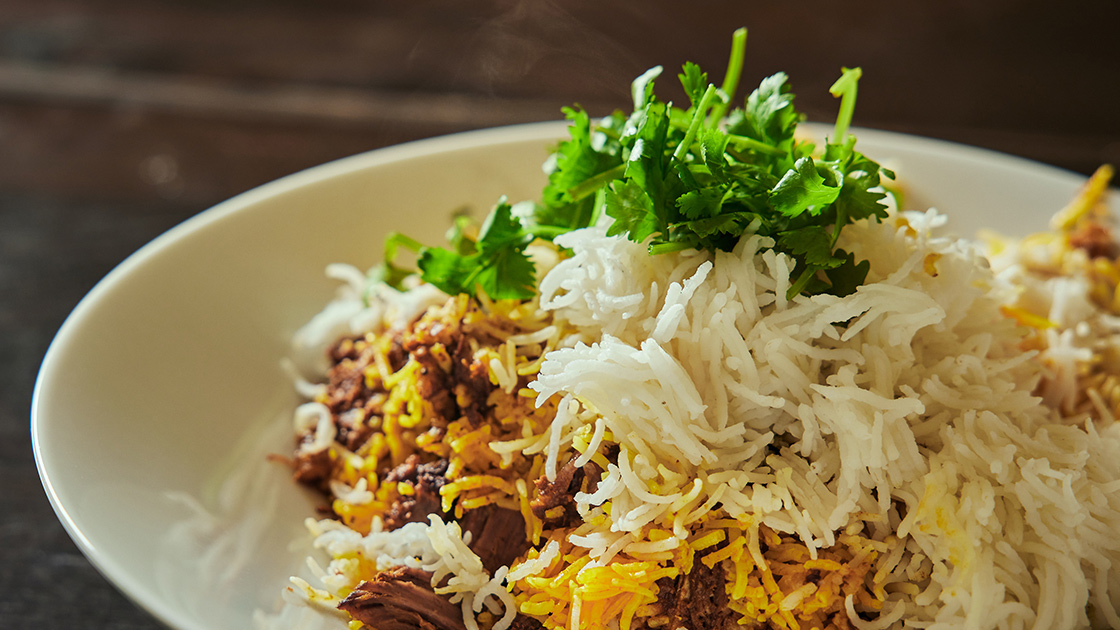
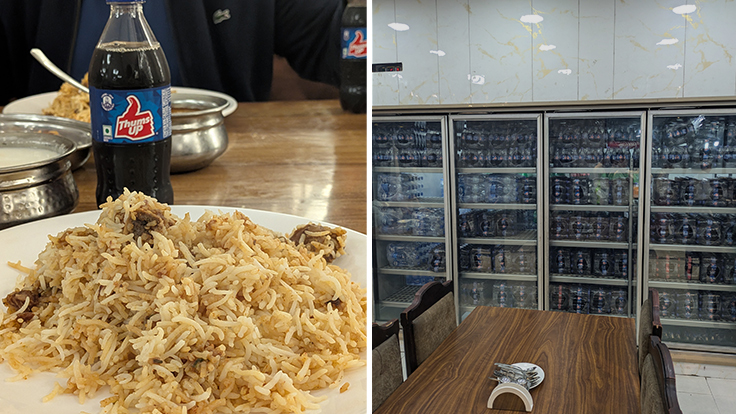
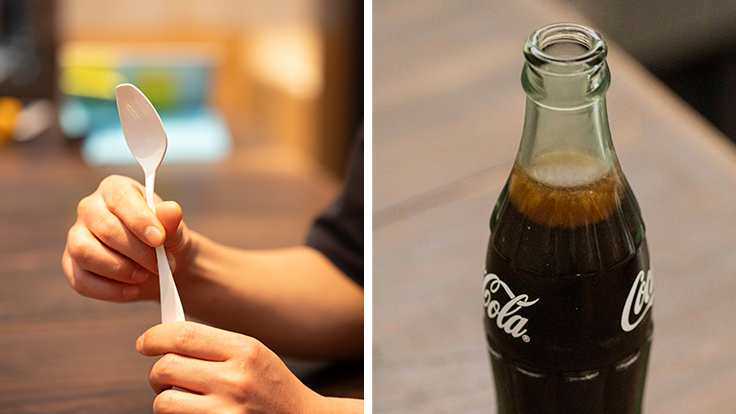
Today, he only serves a single type of biryani for the day. The meat is either mutton or chicken, with occasional limited-edition variations. After testing all sorts of different crustaceans, he chose the most delicious option: lobster. Game biryani — made from the meat of badgers before their winter hibernation — has been a popular offering since The Biryani House days. Among his many fixations, one stands out: he believes the best biryani is finished with cola. Guests can choose to have it served early, late or after the meal — though his recommendation is after. In India, biryani with cola is a classic pairing, seen on countless signs and posters.
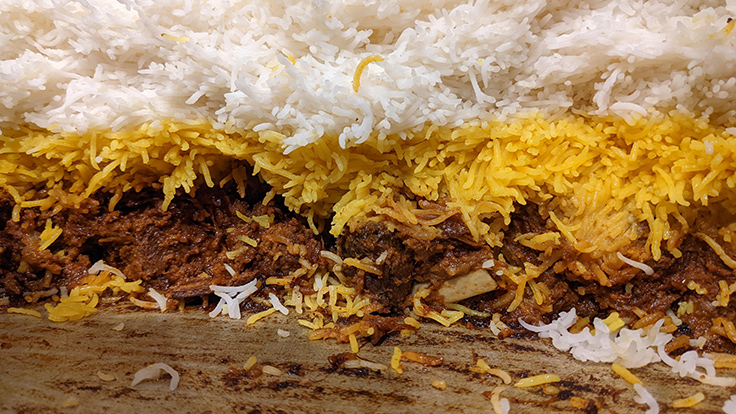
To create variation within a single pot, he cooks so that the ingredients and rice absorb flavor at different rates, forming gradations like geological layers. When plating, he carefully adjusts these layers.
Osawa also wanted to avoid an atmosphere where guests get so absorbed in conversation that they barely register the arrival of fresh biryani. Part of the reason he uses a U-shaped counter, where strangers sit facing one another, is to keep attention on the food.
He carefully shapes the room so that the atmosphere never interferes with how guests experience the biryani, treating that control as part of the dish itself. He wants them fully aware of the rising aroma from the freshly cooked rice. Every detail is aimed at a single goal: presenting the biryani in its perfect state.
Osawa’s guiding principle is simple: the biryani must be delicious. Circumstances, atmosphere and even who cooks it may matter, but for him the essential question is whether what’s in the pot meets the standards for the best possible taste. Every detail, down to enamel spoons, is crafted for optimal taste.
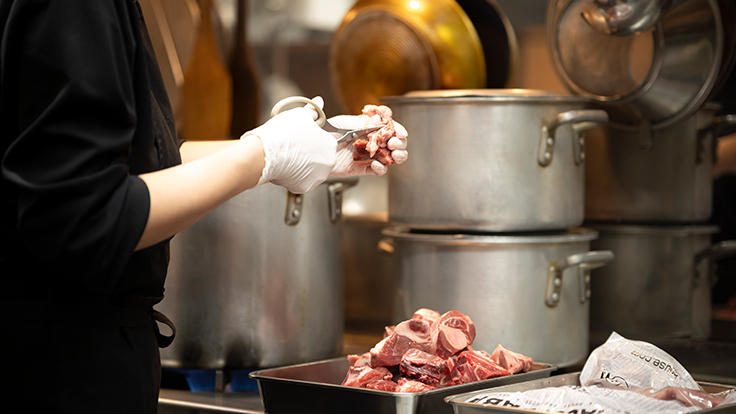
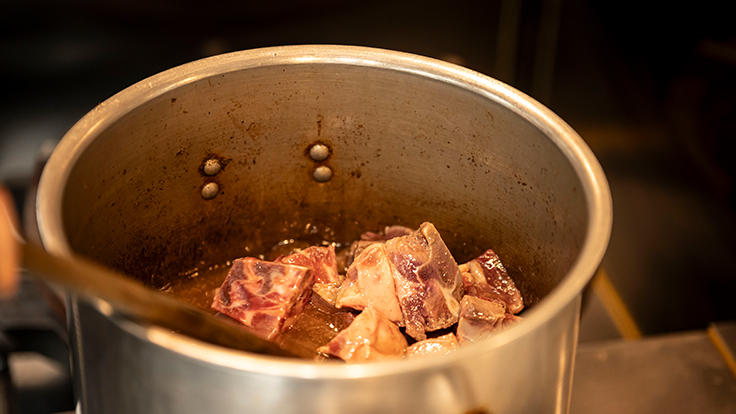
Cooking is science," Osawa says. For example, he cooks the rice using steam heated to precisely 100.1°C. Even a slight change in temperature can completely transform taste and texture. He monitors the temperature of two separate rice layers inside the pot as he cooks. Onions are also dehydrated and cooked in oil to preserve their flavor. Because he carefully prepares the same single dish every day, he can judge what is happening at every step of the process.
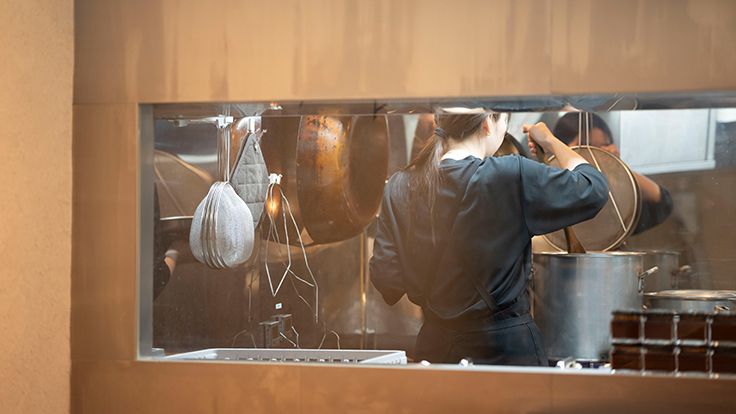
In Indian cuisine, aroma is paramount. Diners will not be satisfied unless each dish carries a completely distinct scent. Aromas shift with countless variables: how heat is applied, how garlic is grated, and when and how ingredients are introduced.
In the winter of 2025, an eight-day pop-up in Dubai was a major success locally, with word spreading quickly. Osawa was also lucky enough to have the opportunity to serve biryani at a presidential celebration.
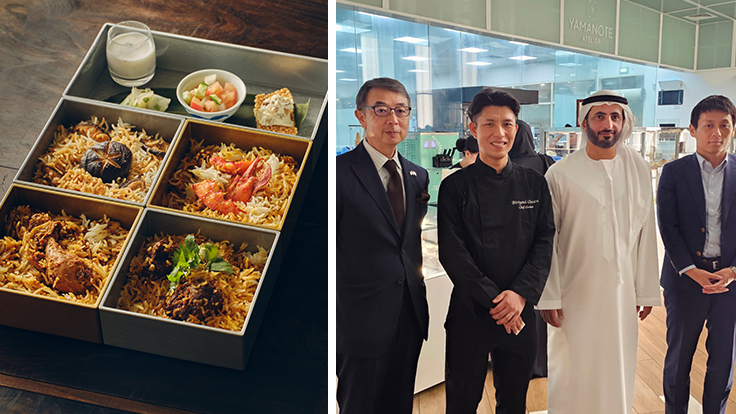
Speaking of his future aspirations, Osawa says: "Overseas expansion is on my mind. I want to create biryani that people in the Middle East and India would genuinely find delicious. Using ingredients from around the world, I want the freedom to make biryani without limits."
Back in Kanda, reservations are currently difficult to secure, but to ensure a fair chance for those who want to eat, bookings for the following seven days are released every day. Everyone gets a chance — every single day.
It is remarkable how much work and thought can be poured into a single plate of biryani. And, while Osawa speaks in terms of science and numbers, at the heart of his work lies something pure: a simple desire to deliver delicious food.
He watches the flames, understands the aroma, and records the numbers. Between method and instinct, years of observation and experimentation evolve his biryani one batch at a time.
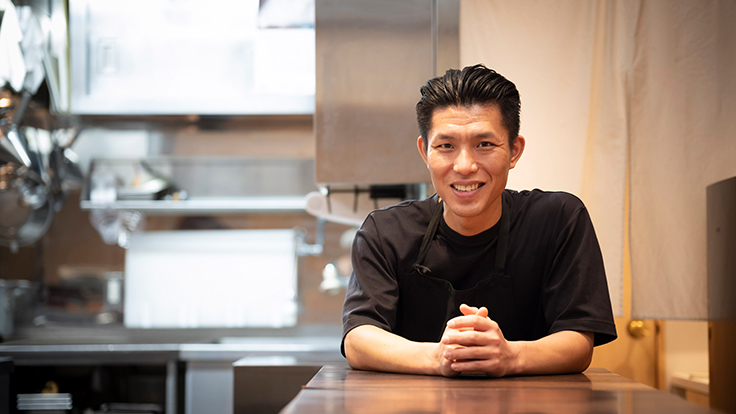
Hero image: © Ryo Tsuchida / Biriyani Osawa