11 February 2026

Share


Pancakes have existed for thousands of years and appear across countless cultures, yet they rarely resemble one another in either form or flavor. The one thing they do share in common? A batter that forms the foundation. Beyond that, ingredients vary wildly, from the type of flour used (all-purpose, rice, lentil, teff and buckwheat, to name a few) to the liquid that binds it together. Additions and toppings range even further, encompassing everything from spiced potatoes and seafood to delicately sweetened farmer cheese and maple syrup.
For those seeking the fluffy comfort of an American stack, the crisp edges of an Indian dosa, the savory depth of a Korean pajeon, or something altogether different, here are some of the most memorable pancakes and where to find them at MICHELIN Guide restaurants.
American Pancakes
It’s hard to pinpoint one “American pancake,” as there are so many iterations. Great Maple in San Diego, California, offers piles of diner-style silver dollars topped with everything from peanut butter fried banana to Fruity Pebbles. Morning Glory, also in San Diego, serves classic flapjacks alongside extra butter, as well as airy souffle pancakes inspired by the Japanese version. And tucked into the savory section of the menu at Nancy’s Hustle in Houston are fluffy cornmeal-based Nancy cakes, which come with a mound of cultured butter and smoked trout roe — Chef Jason Vaughan’s lowkey version of blini with caviar.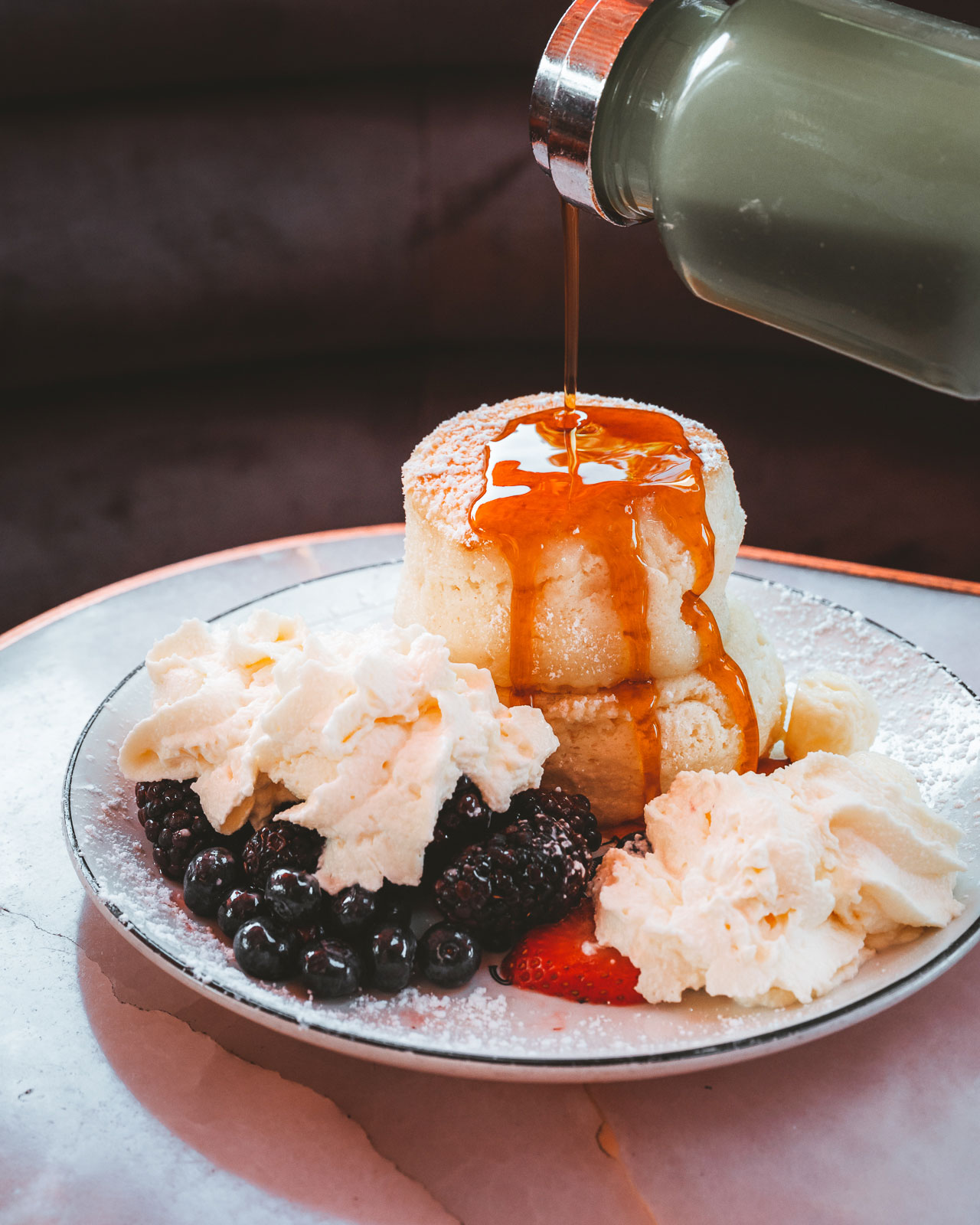
European Pancakes
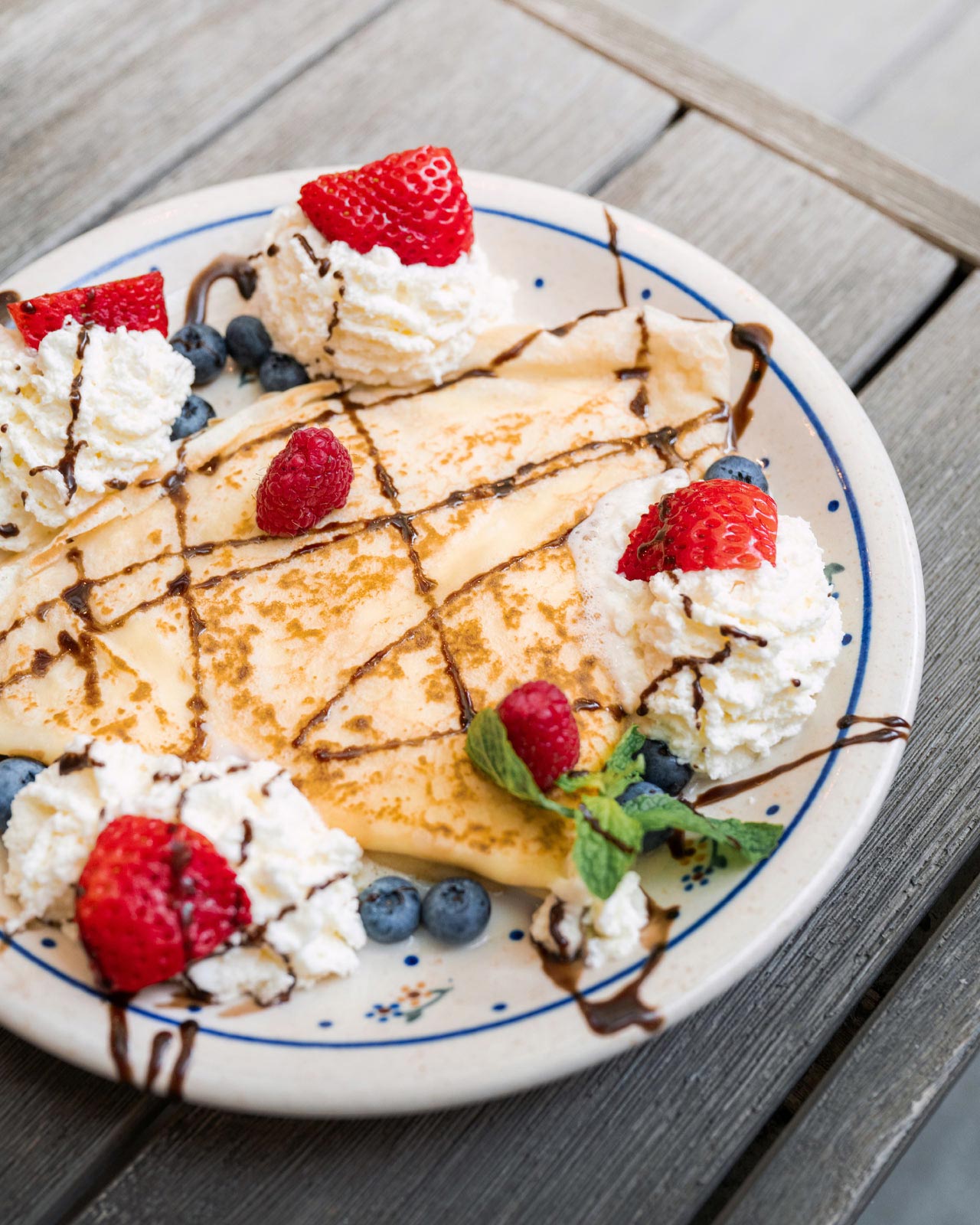
Across Europe, a love of pancakes prevails in many forms. The Czech Republic has palačinky, the Austrians make kaiserschmarren and the Dutch serve cute poffertjes. In France, the tradition runs especially deep: crêpes, originally made with buckwheat flour, are believed to have originated in Brittany as early as the 13th century.La Mercerie in New York City’s SoHo neighborhood aims at the ideal French version with its crêpe complête: a classic buckwheat crêpe folded around a sunny side up egg, Comté cheese, Parisian ham and crème fraîche. Across the Hudson River in Brooklyn’s Greenpoint neighborhood at Pierozek, a pierogi spot, a woman named Grace is single-handedly responsible for making the naleśniki, Poland’s take on the pancake. The batter, while thinner, is similar to a French crêpe, but made with wheat flour, as well as eggs and warm milk (some like to add carbonated water for airiness). At Pierozek, the naleśniki are filled with sweetened farmer cheese and topped with chocolate sauce and whipped cream. Co-owner Alexandra Kucharski says that the restaurant is considering offering savory options soon, too.
“Dosa batter is a labor of love. There are no shortcuts, just practice and patience.”
South Indian Dosa
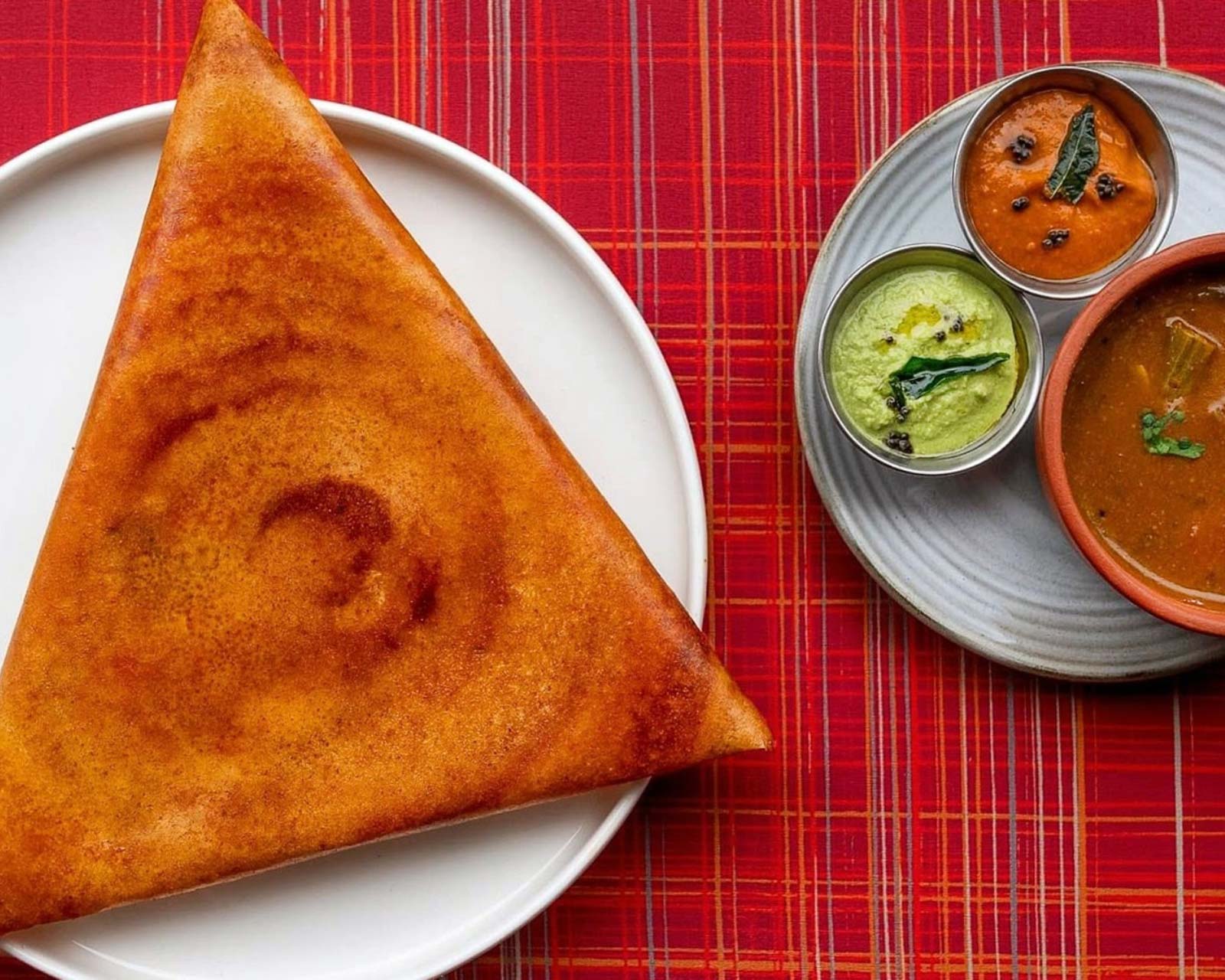
A large, thin crepe that can be served plain or filled and served alongside various sauces, chutneys and stews, the classic South Indian dosa is made from a combination of ground rice, black lentil flour and often fenugreek seeds. This mixture is then naturally fermented, resulting in something that is tangy, crispy and pillowy. “Dosa batter is a labor of love,” says Chef Vijay Kumar at New York City’s Semma. “There are no shortcuts, just practice and patience. You keep at it until it tastes right to you.” The coarseness of the rice and lentils, the ratio of the ingredients and the duration of the fermentation are all crucial to achieving the perfect dosa.At Copra in San Francisco, Chef Sri Gopinathan uses a 4:1 ratio of short grain Indian rice to lentils. “I believe the secret to this batter’s success is that we don’t grind our rice too finely. A coarse grind gives the dosa just the right crispiness,” he says. Much consideration is also put into the accompaniments; Copra’s coconut-and-sesame chutney-filled Mysore masala dosa (a style that includes a layer of chutney inside the crepe) includes tomato chutney, gunpowder podi (a fiery spice blend) and onion sambar, a lentil-based stew.
While these restaurants tend to the more traditional side of dosas, other restaurants, like Guru Lukshmi in Mississauga, Ontario, fill theirs with all sorts of ingredients, from mozzarella to M&Ms for kids.
Pajeon
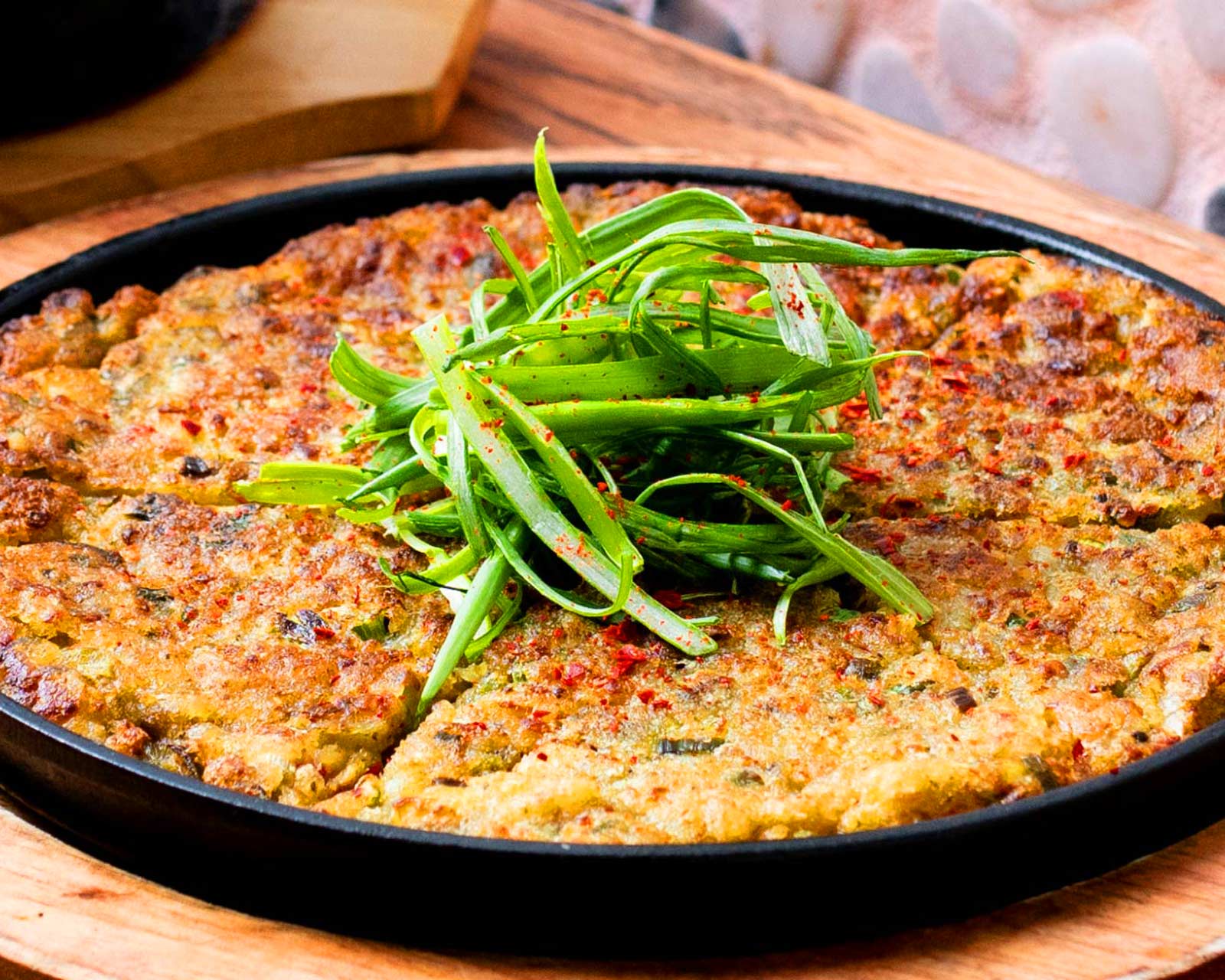
Korean pajeon (savory scallion pancake) is the sort of homey recipe that gets passed down from one generation to the next. “We actually use a recipe my mother has used for as long as I can remember, and I'm 45 now,” says Danny Lee, who is the co-chef and co-owner of Mandu in Washington, D.C., with his mother, Yesoon Lee.It’s Yesoon’s take that most pajeon relies on too much flour; her version is primarily made with ground seafood, including shrimp, squid and scallops, along with long green Korean chile peppers, scallions and “just a bit of seasoned flour to bind everything together.” The mixture is pan-fried, resulting in concentrated seafood flavor, with a crispy exterior and chewy interior.
In Boston, Chef Jamie Bissonnette of Somaek takes his cues from his Korean mother-in-law for his pajeon. “Soon is a pancake wizard. It's a guarantee when we get to her home that pancakes will just start stacking up next to a vinegared soy to dip them in and scissors to cut them with. It's the best family gathering,” he says.
His haemul (seafood) pajeon batter (a simple blend of flour, water, eggs, oil and scallions) is made 24 hours ahead of time. Local seafood — an ever-changing array of long-armed octopus, shrimp, mussels, oysters and squid — as well as buchu (chives) are added to the batter just before cooking. Pajeon can also be made with kimchi and/or pork, rather than seafood, as at Sungho in San Francisco.
Bánh Xèo
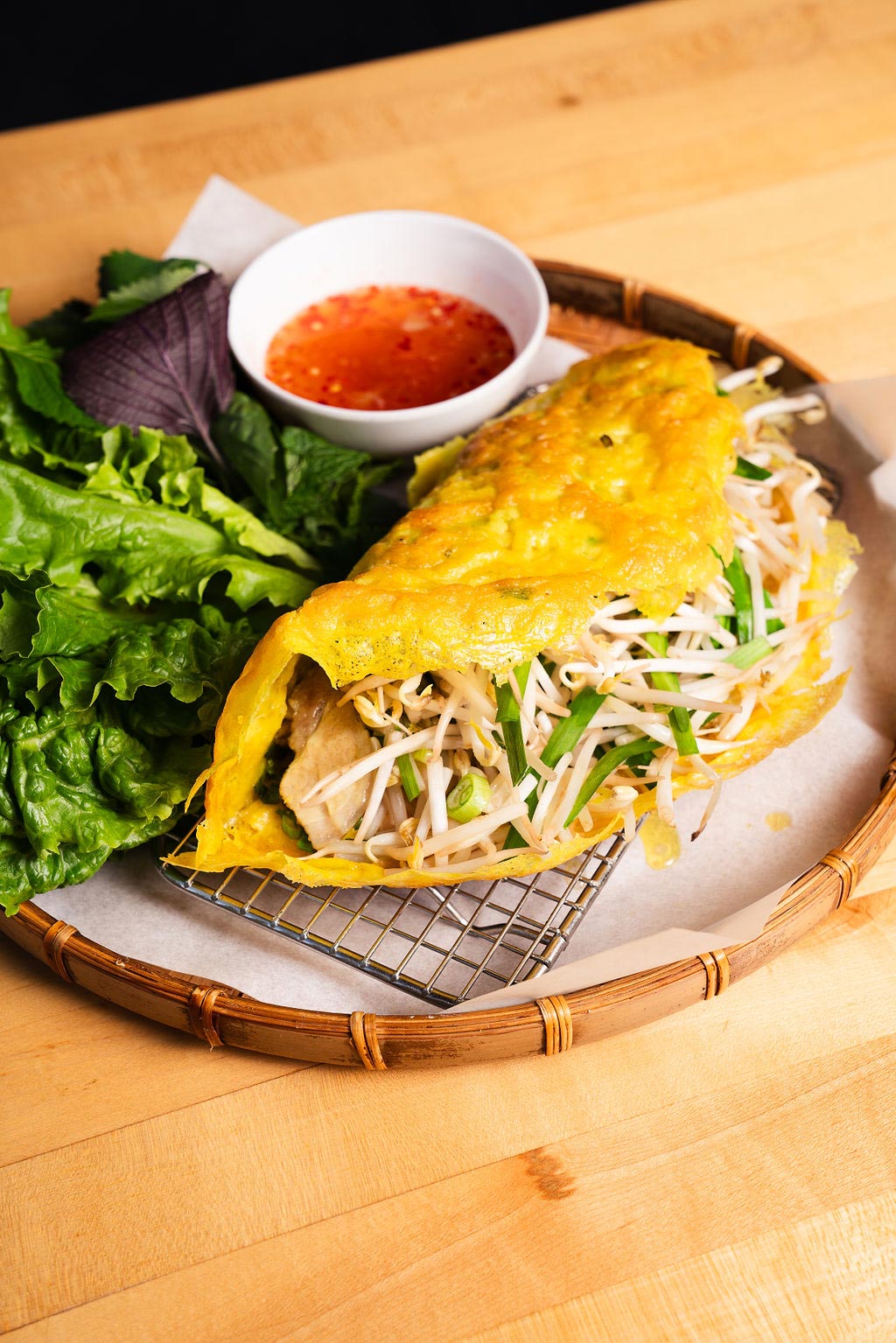
“Bánh xèo means sizzling crepe in Vietnamese because that’s the sound the batter makes when it hits the pan. I always loved that,” says Danielle Dang, director of HaiSous in Chicago. The bright yellow crepes, made from rice flour, turmeric, water or coconut milk, are essentially a mode of transportation from plate to mouth for all sorts of delicious fillings, like shrimp, pork and bean sprouts.At HaiSous, Chef Thai Gang believes that allowing the batter to rest before making the pancakes is the most important step. Bánh xèo is most often served with lettuce and a mountain of fresh herbs to wrap around the crepes before dipping them in nước chấm, the tangy, sweet, spicy, umami-deep sauce. “When wrapped in herbs and dipped, it should feel crispy, bright, fresh, savory and satisfying all at once,” says Dang.
Okonomiyaki
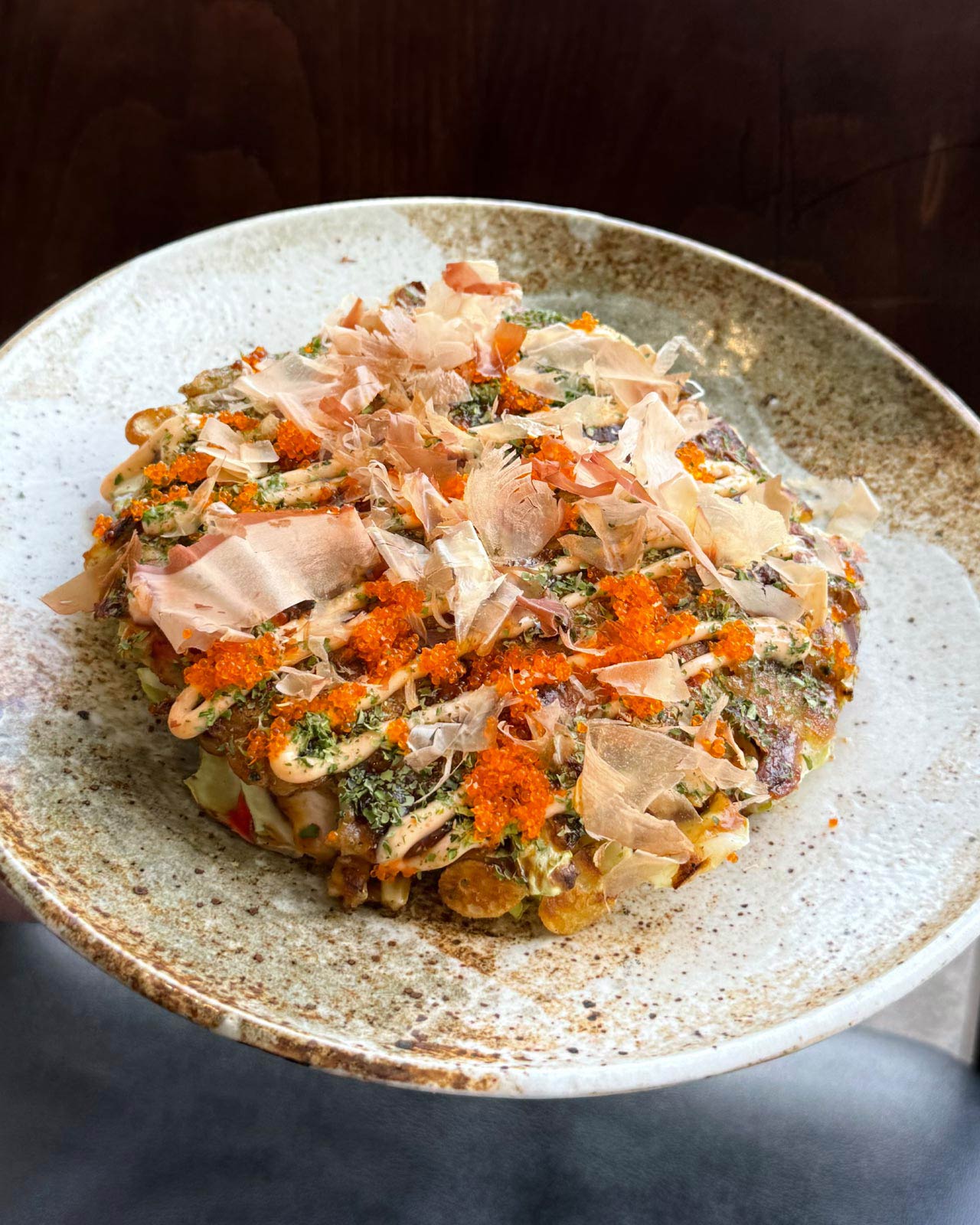
It took Chef Sho Kamio eight years to arrive at the ultimate okonomiyaki recipe for his restaurant Iyasare in Berkeley, California. Traditionally, Japanese okonomiyaki is made with a batter of flour (usually all-purpose wheat, though Tei-An in Dallas uses buckwheat), eggs and water that binds together a wide chef’s-pick spectrum of add-ins. Those can include any combination of seafood, pork belly and vegetables such as cabbage and bean sprouts. Okonomiyaki is then typically topped with an abundance of tangy soy-based sauce, squiggles of mayonnaise and bonito flakes.Kamio’s goal with his recipe was to make okonomiyaki that are crisp on the outside but fluffy and light on the inside — even when loaded with ingredients — a method that requires gently steaming the pancakes in the oven. He uses dashi broth rather than water in his batter for more depth of flavor, though he uses minimal batter to bind the ingredients in the okonomiyaki. His love for the pancake stems from his early days of working as a chef in a demanding French restaurant in Tokyo’s Ginza district and eating okonomiyaki at midnight after work. As a tribute to the vividness of Ginza, Kamio tops his okonomiyaki with bright orange flying fish roe.
Injera
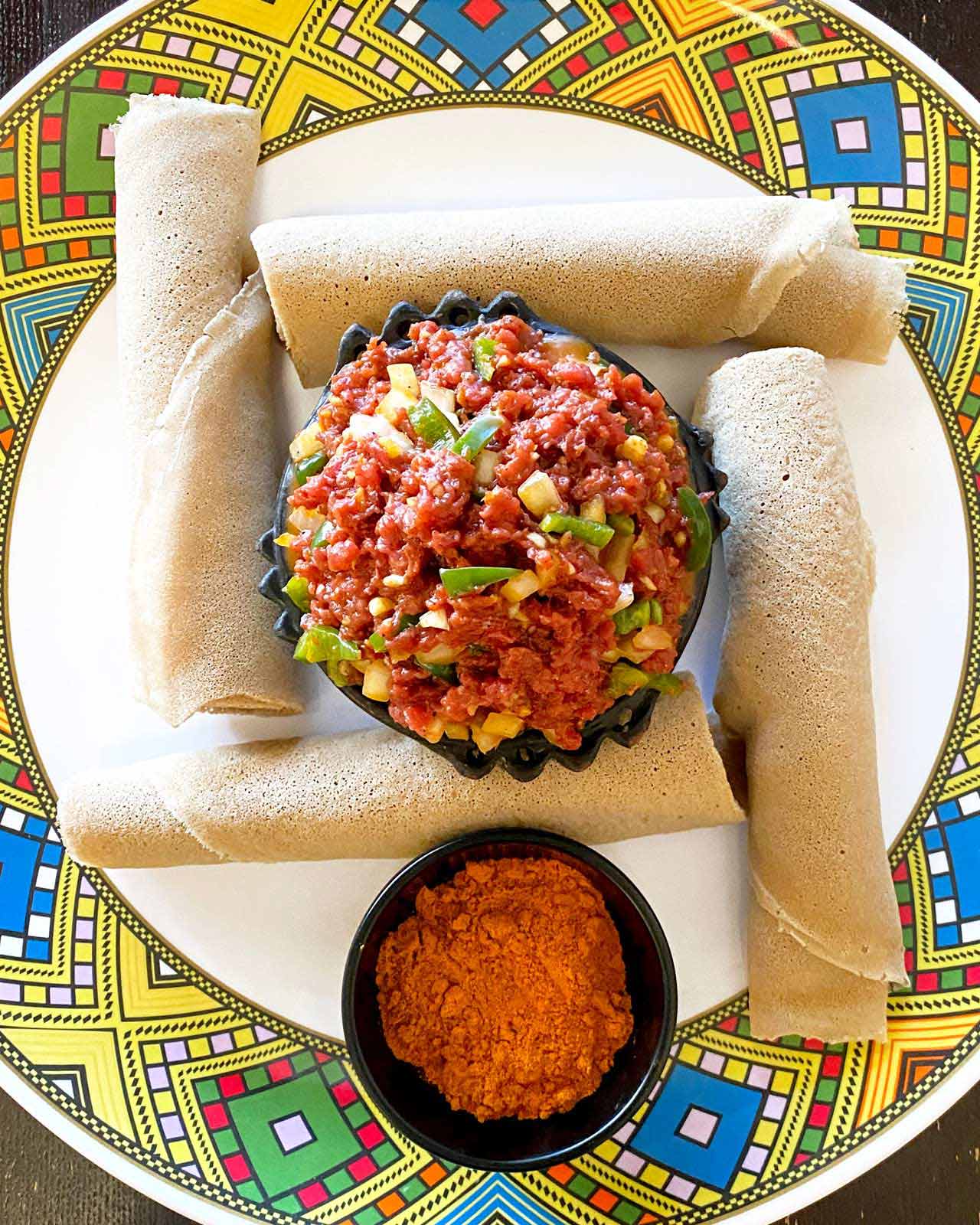
At Lalibela in Los Angeles, Chef-Owner Tenagne Belachew and her daughters line silver platters with stretchy, soft injera, then pile it with all sorts of flavorful lentils, purees and stews, which are primarily vegan or vegetarian. Injera, an Ethiopian pancake, uses a fermented batter made from a high-protein grain called teff, often mixed with wheat flour, baking soda and water. Injera has somewhat of a spongy texture, which makes it great for sopping up sauces.
The injera at Addissae Ethiopian Restaurant in Asheville, North Carolina, is made entirely with teff flour, which means its gluten free. The vegetarian platter here offers seven different vegan dishes, all meant to be eaten with injera and with your hands, family-style.
Hero image: Haemul Pajeon © Elissa Garza/Somaek
Thumb image: Airy souffle pancakes © Shannon Partrick/Morning Glory