21 May 2026

Share


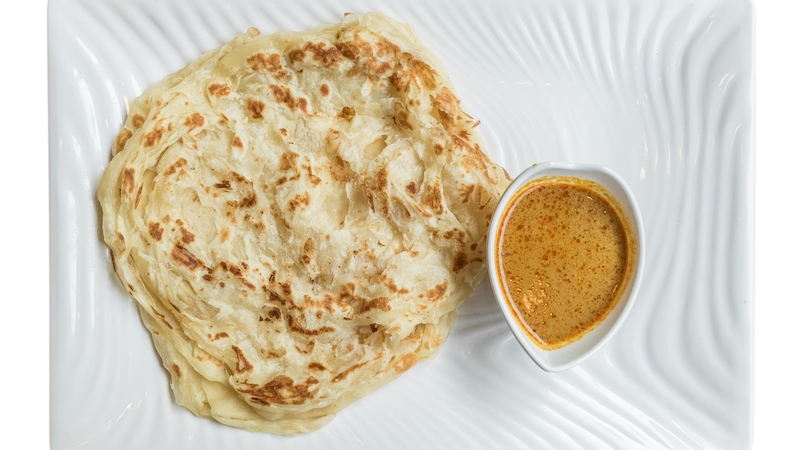
Roti prata is one of Singapore’s most familiar pleasures. The flatbread always arrives glistening from the griddle alongside saucers of curry or a smidge of sugar — crisp at the edges, yet soft and chewy at the center. Torn apart, its blistered layers give way with a gentle stretch and the butteriness of a well-kneaded dough.
It is also almost everywhere. Students order it after nights out. Taxi drivers eat it between shifts. Families gather around stacks of it on weekends, while prata shops hum late into the night. Prata has become one of Singapore’s most democratic foods — a wallet-friendly, filling and deeply satisfying dish that cuts across class and community so completely that most people rarely stop to think about it.
Yet beneath that familiarity lies a layered history stretching across South India and Sri Lanka, brought across the region through colonial trade routes and migration. Known variously as parotta or barotta, the flatbread traveled with communities who brought it across various port cities until it became embedded within Singapore’s culinary identity.
Origins of a Flatbread
Tracing where prata comes from is far from straightforward. “The historical lineage is a little difficult to pin down,” says Vasunthara Ramasamy, South Indian culinary researcher. Numerous variations of the bread exist, each with its own techniques, accompaniments and regional identities.
The name “parotta” is believed to derive from the North Indian “paratha”, a broader term rooted in the Sanskrit words parat (layers) and atta (flour). Traditionally, paratha refers to a layered flatbread made from whole wheat flour. Across North India, parathas are typically thicker, softer and sometimes stuffed with fillings such as potatoes, paneer, radish, cauliflower or minced meat.
Parotta emerged as a South Indian adaptation of the same family of breads but using maida (all purpose flour), particularly associated with Tamil Nadu, Kerala and Sri Lankan Tamil communities. The word itself is widely believed to be a Dravidianised evolution of “paratha”.
Over time, however, the technique diverged. South Indian parottas became stretchier, flakier and more heavily laminated, creating the distinct shredded texture now associated with Tamil Muslim and Malabari Muslim food culture. In Kerala, it is often paired with thick meat stews and beef fry. In Tamil Nadu, it is commonly eaten with salna, a thin meat gravy with Mughal influences adapted to South Indian tastes.
“There’s strong evidence that the veechu parotta, the style most commonly seen in Malaysia and Singapore now, originates from Jaffna, Sri Lanka,” she says. “In Tamil Nadu, they call it the ‘Ceylon veechu parotta.’”
Even so, wheat-based flatbreads were not always central to that geographic region. “Wheat isn’t cultivated in Southern India nor Sri Lanka,” says Vasunthara, explaining that rice or rice-based batters were the staple. “The ingredients used — shortening, refined wheat flour, refined sugar — are not indigenous to the local cuisines.”
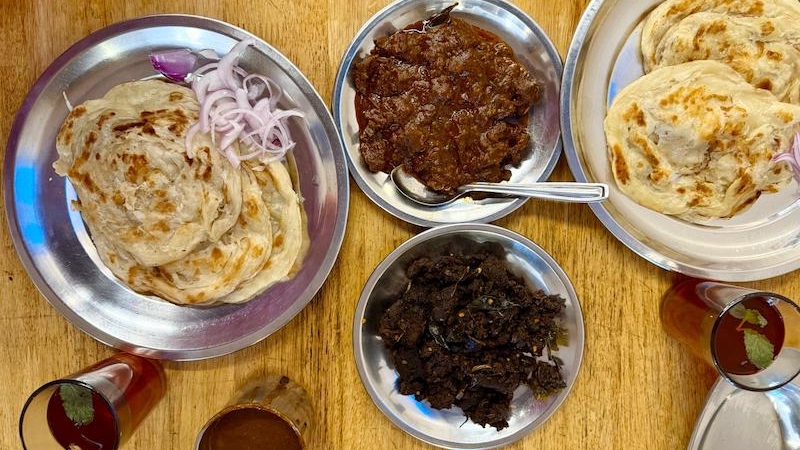
Pictured on the left is Ceylon Egg Parotta from Tirunelveli © Vasunthara Ramasamy
Kiran Raghavan, CEO of MICHELIN-listed Podi & Poriyal points to World War II as a crucial turning point. Before the war, Burma supplied much of the rice consumed in Southern India, but that was cut during the Japanese occupation between 1942 and 1945, contributing to severe rice shortages and famine across the region.
“The British government aggressively pushed wheat to combat this situation,” he explains. As flour became more widely available, layered breads such as parotta grew increasingly common.
Its Arrival in Southeast Asia
At the same time, migrant labor moving between Tamil Nadu, Kerala, Sri Lanka and British Malaya carried food traditions across the region, eventually introducing parotta into the kopitiams and Indian Muslim eateries of Singapore and Malaysia.
As it traveled eastward, parotta gradually evolved to find its own home in local life. The very name “roti prata” reflects that adaptation, combining the Malay word “roti,” meaning bread, with “prata” or “paratha,” referring to the layered flatbread itself.
Across the causeway in Malaysia, another name entered common usage: roti canai. In Malay, “canai” describes the act of flattening and working dough by hand into thin layers.
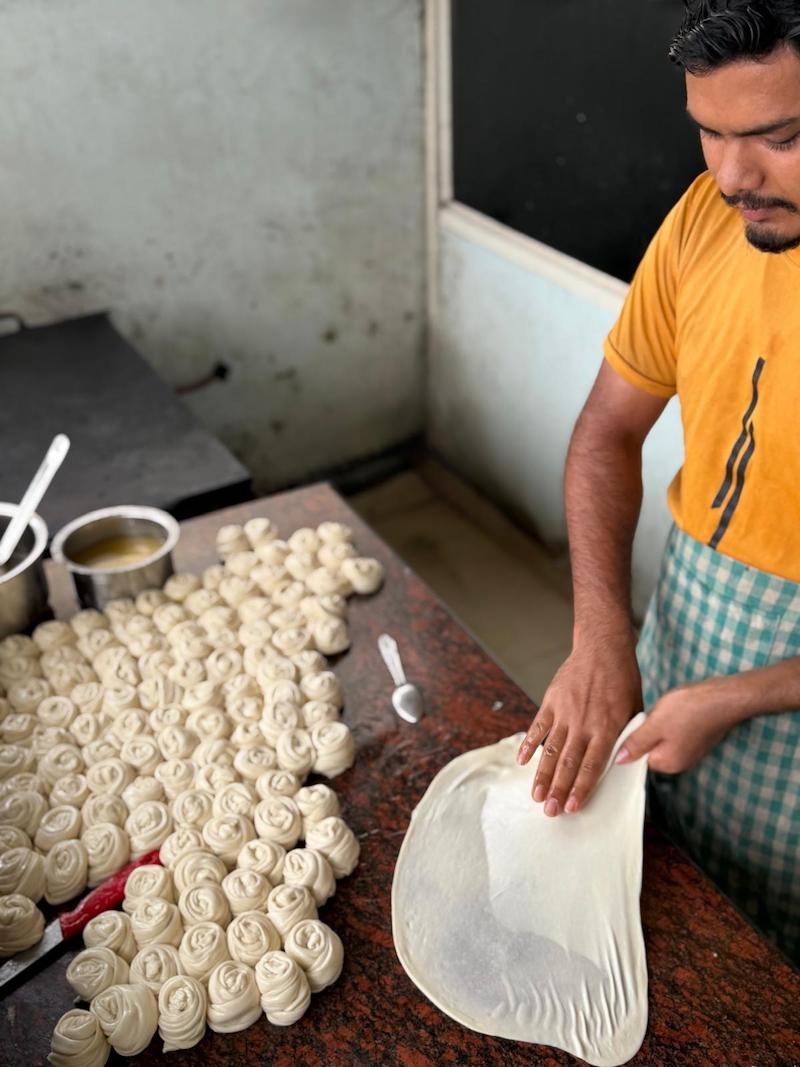
Pictured on the right is a man flipping parotta. The action of flipping it thins the dough while trapping air in it. © Vasunthara Ramasamy
The prata found in Singapore today also differs noticeably from many South Indian versions. Compared to the softer, savory parottas eaten in its place of origin, Singapore’s version tends to be thinner, crispier and slightly sweeter.
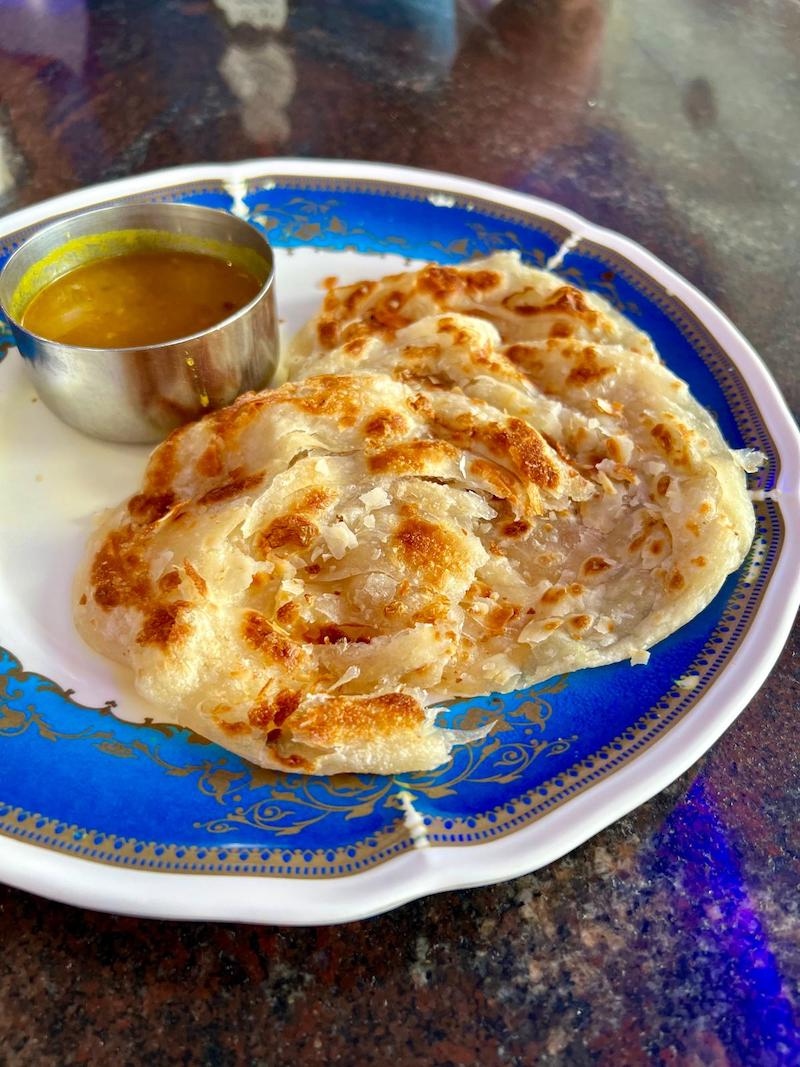
Pictured on the left is Malaysian Roti Canai © Vasunthara Ramasamy
“In Singapore, the emphasis is on a sweet and very crispy dough,” says Vasunthara. “Most Singaporeans eat prata with cutlery and with very thin gravy, hence the prata has to have textural contrast.”
The accompaniments changed, too. Fish curry and sugar became the dominant pairing in Singapore, while in Malaysia a dollop of sambal became the norm. Over time came egg prata, cheese prata, plaster prata and tissue prata — local adaptations that pushed the bread even further from its roots while cementing its place within Singapore’s culinary culture.
A Technical Feat
For all its accessibility, prata remains one of the most technically unforgiving flatbreads to execute well. According to Kiran, basic competency of making parotta can take up to a year, while developing consistency in elasticity, layering and control may take several more.
“It can take up to five years before they truly learn and let speed, showmanship and control become intuitive,” says Kiran. “The most experienced people in prata-making will often describe how they ‘listen’ to the tension in the dough, rather than observing it.”
Hydration and fat content form the foundation of the dough. Achieving the right texture also requires a resting period of five to 12 hours, allowing the gluten to relax while retaining elasticity. “Without gluten development, the dough will not be pliable and break when being flipped,” says Vasunthara.
The dough is then stretched paper-thin by pulling and flipping before being folded repeatedly into layers. “Stretching and flipping realigns the gluten into thin sheets while trapping microscopic air layers between the dough,” explains Kiran. “That is what prevents the prata from developing a uniform crumb and gives it its layered texture.”
Executing that consistently, however, is far more difficult than it appears. Any uneven force can tear the dough, while humidity and temperature dramatically affect how it behaves — a constant challenge in Singapore’s climate.
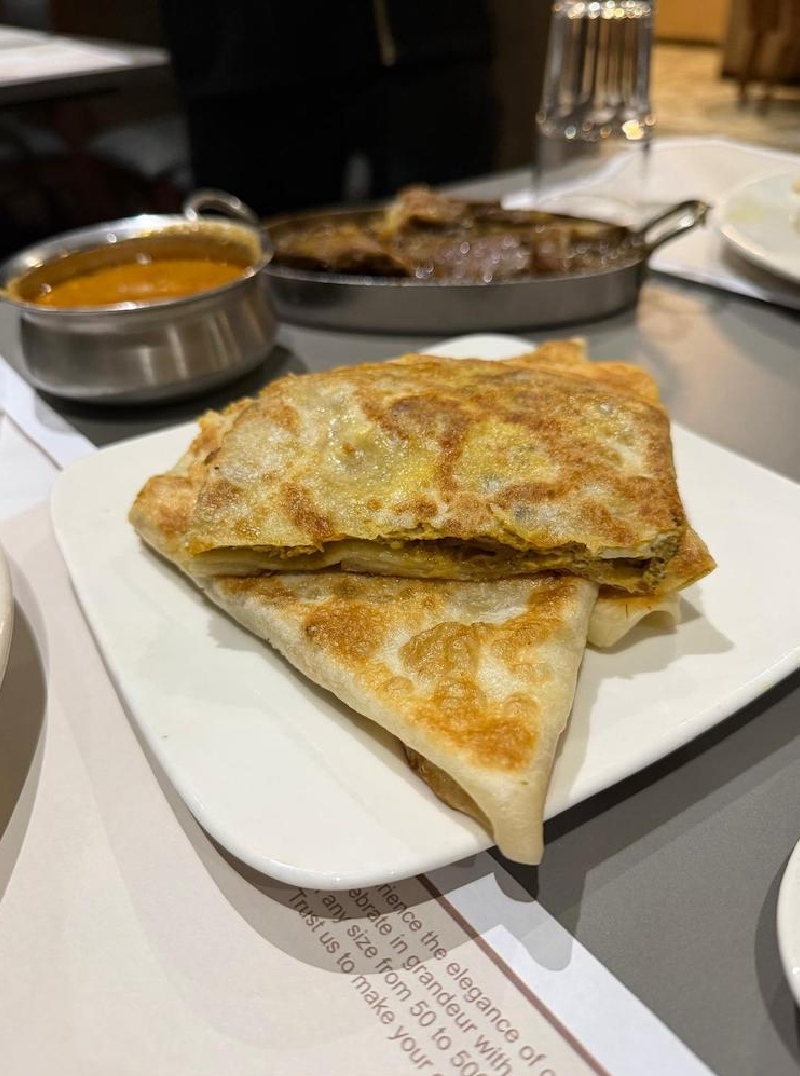
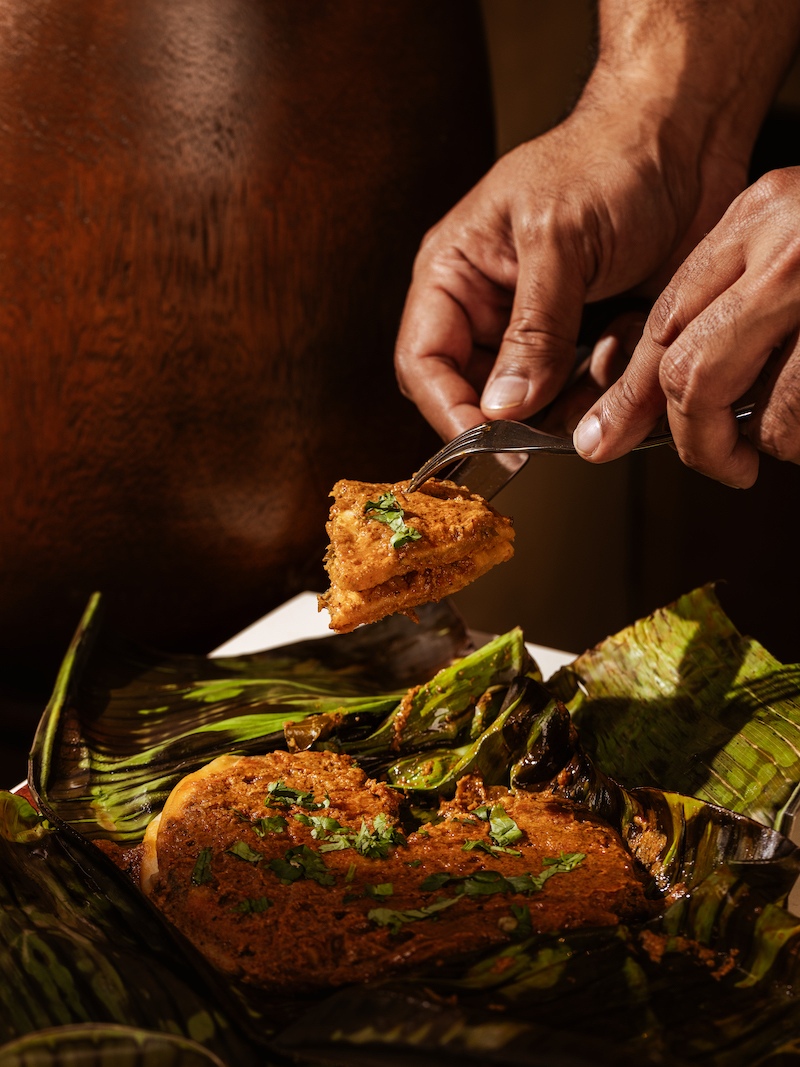
Pictured on the right is Podi & Poriyal's Double Decker Parotta © Podi & Poriyal
Heat control is equally important. If the griddle is too hot, the layers seal too quickly and the interior toughens. If the heat is too low, the dough absorbs excess oil and becomes greasy.
“The ideal temperature allows fat to fry while moisture steams, producing blistering without collapse,” says Kiran.
Structurally, that balance is what gives prata its defining contrast: a brittle, blistered exterior giving way to soft, layered interiors beneath. By the time prata reaches the table, much of that labor has already disappeared from view. The hours of resting, stretching, folding and adjusting for heat and humidity become compressed into something that feels almost ordinary: a quick breakfast, a late-night supper or a familiar comfort food.
That the humble parotta has crossed oceans and made itself at home in every city it reaches perhaps reflects how instinctively satisfying the bread remains across cultures and generations.
“It is food of the laboring classes which has endured through the ages,” says Vasunthara. “It is a mesmerising sight to see the parotta masters flip parottas magically into the air like casting a wide net. It is both a spectacle and an art.”
-
Header and Thumbnail Images © Uswah H