19 March 2026

Share


As cooler temperatures wane in the Northern Hemisphere, an abundance of flora pushes its way through the soil and stretches towards the sun, all while chefs and their farmers sharpen their pruning shears. It’s time to put fresh flowers (and their stems, seeds, leaves and petals) onto the menu.
In MICHELIN kitchens, botanicals abandon their typical supporting role as a garnish and step into the spotlight as the lead. Whether transformed into aromatic infusions, flavorful sauces or piquant pickles, they thoughtfully and intricately tell a dish’s story of seasonality (that is, what blooms naturally at that moment). They also form elaborate — and stunning — plating displays to help set the right scene.
Here are six MICHELIN restaurants in the U.S. and Canada that make flowers and other botanicals the hero on the plate.
Oyster Oyster
Washington, D.C.
Oyster Oyster in Washington, D.C., could perhaps easily be called “Flower Flower” for its use of botanicals throughout the seasons. Even the menu itself is embedded with wildflower seeds, so that diners can bring their restaurant experience full circle back to the environment by planting it after their meal.
In the warmer months, flowering buds such as marigold and hibiscus — and herbs like basil, borage, chive and shiso — are picked from the restaurant's rooftop garden (or are foraged) only as needed for freshness and to keep attracting pollinators. And while Chef/owner Rob Rubba collaborates with a hydroponic farm in the winter, he sticks to using what is locally grown in the area. “If [the plants] wouldn’t naturally be growing outside, they don’t really tell the story of our region,” he says.
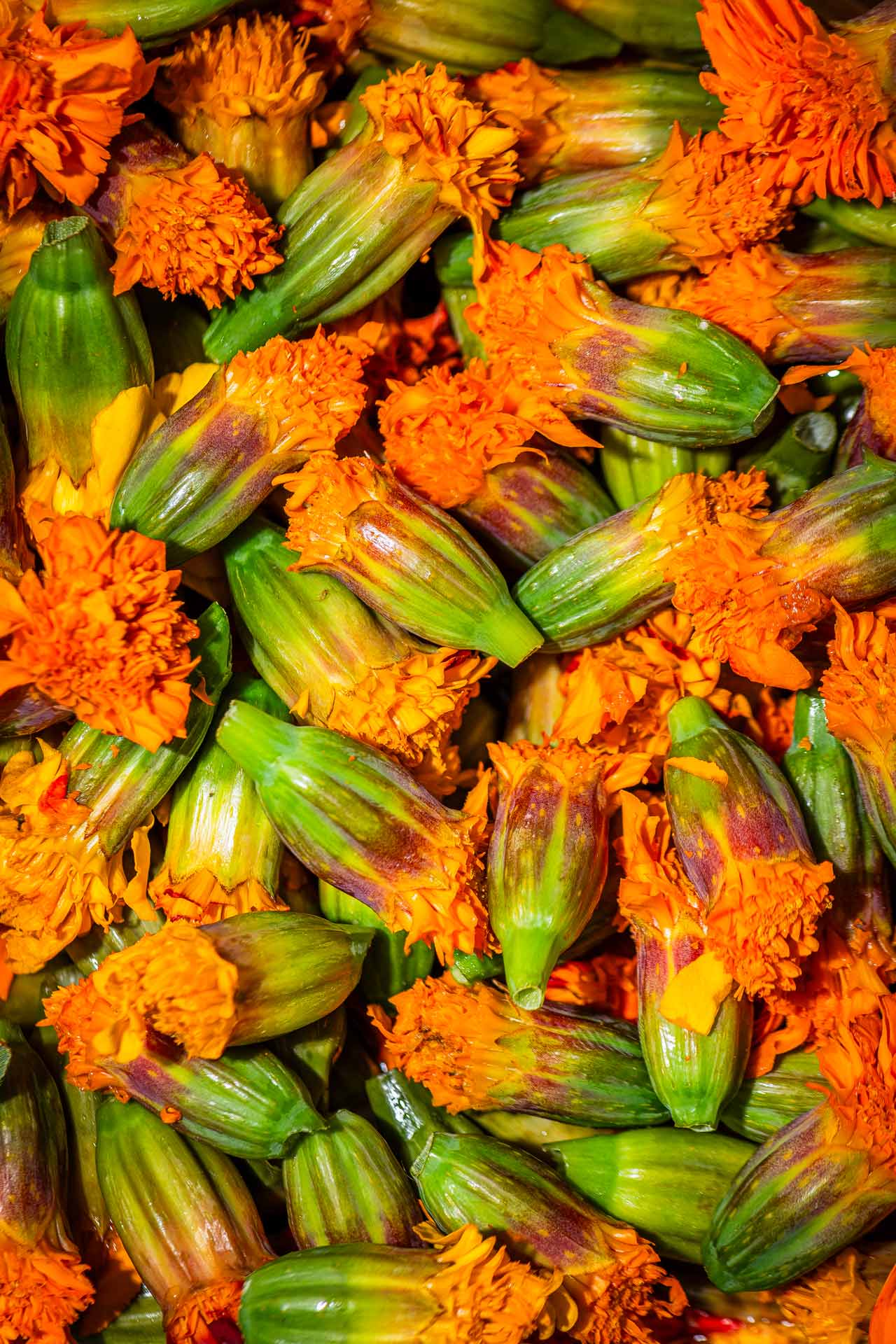
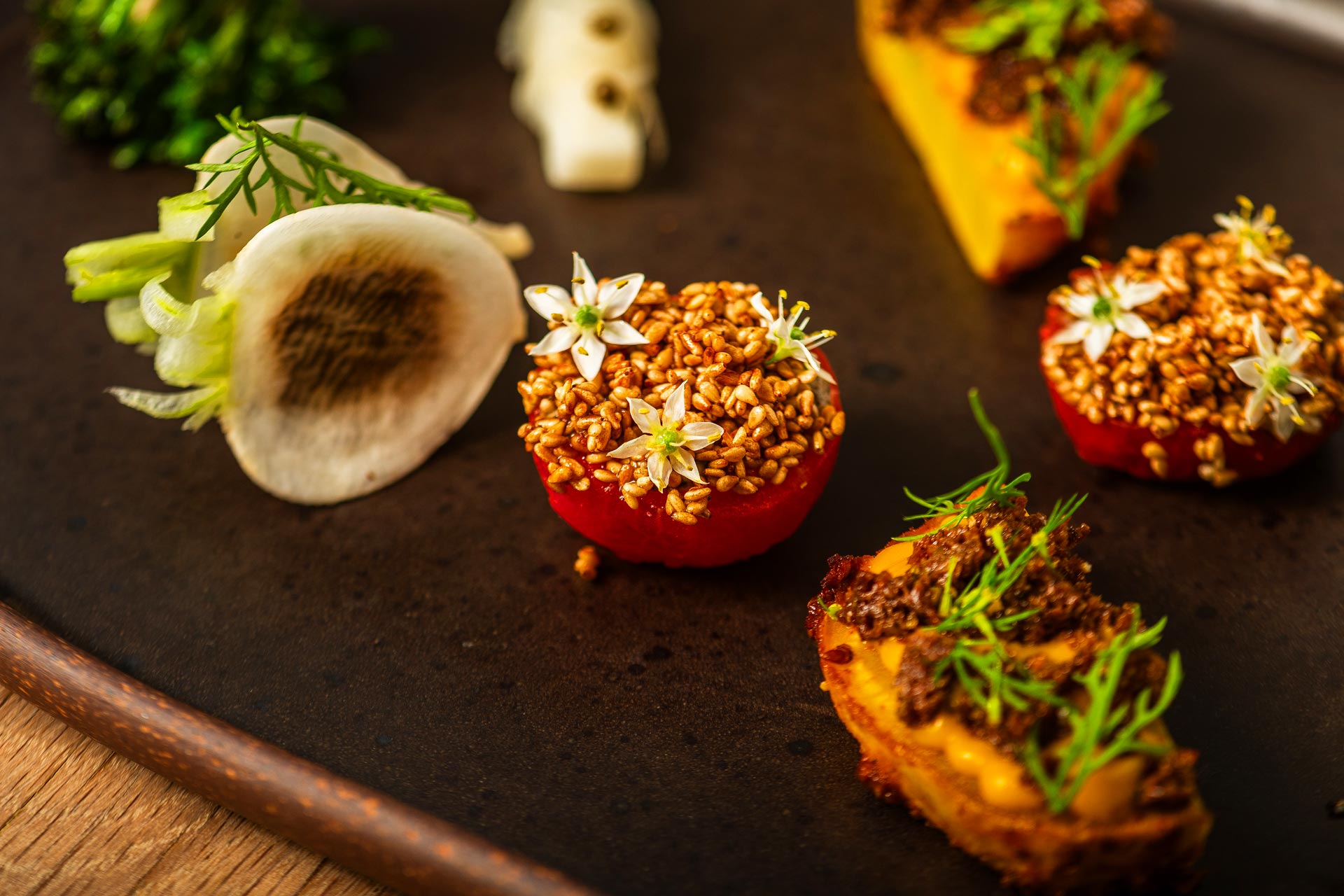
In dishes, Oyster Oyster uses flowers like squash blossoms for sauces, nasturtiums for spicy vinaigrettes and garlic chive blossoms in place of garlic. One thing that’s always on the menu: marigold butter, which is part of the bread service and has been on offer since opening night in 2021. The vibrant yellow vegan spread is made from marigold flowers and sunflower seeds, while buds are turned into a marigold vinegar that Rubba likens to yuzu.
Burdock & Co
Vancouver, British Columbia
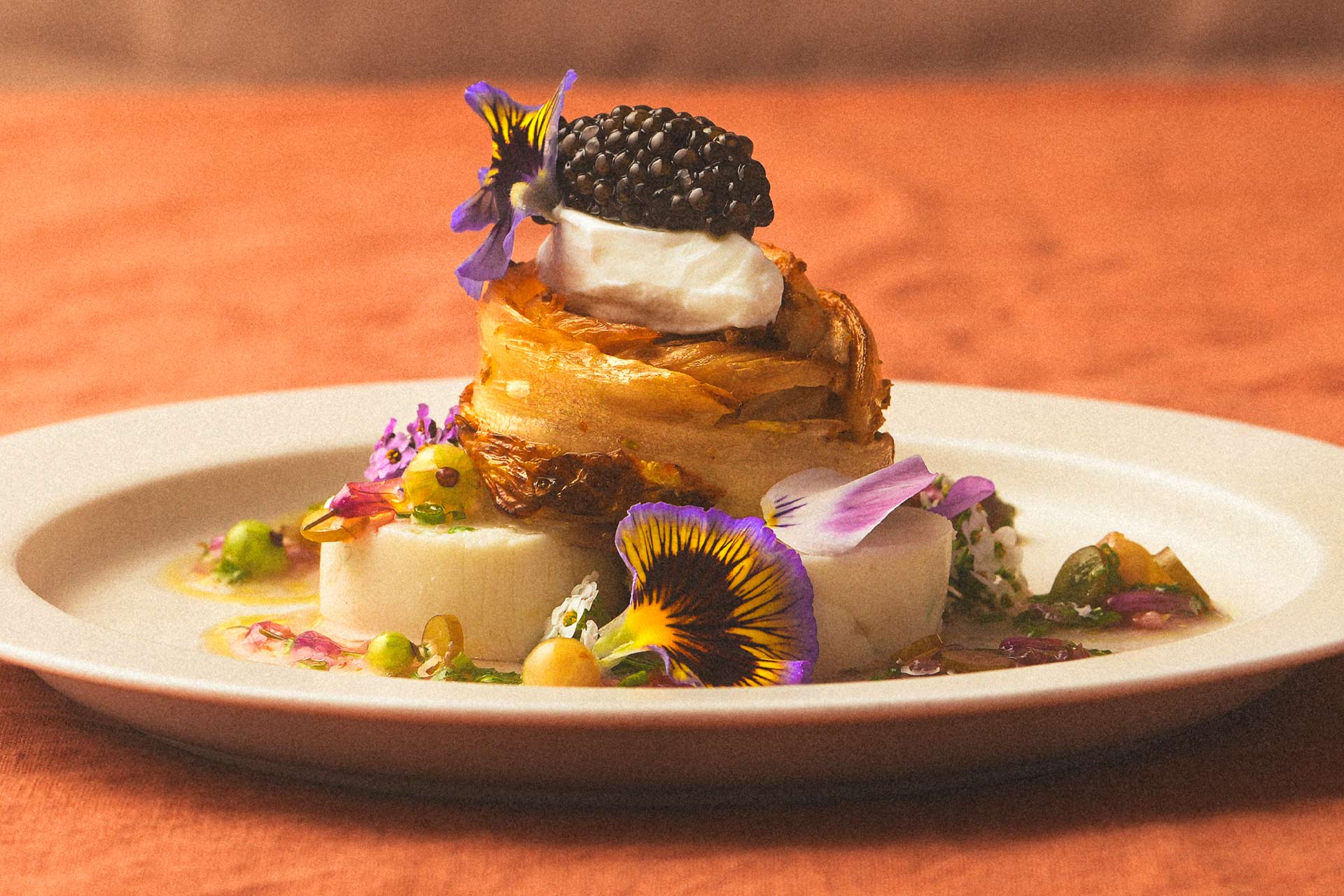
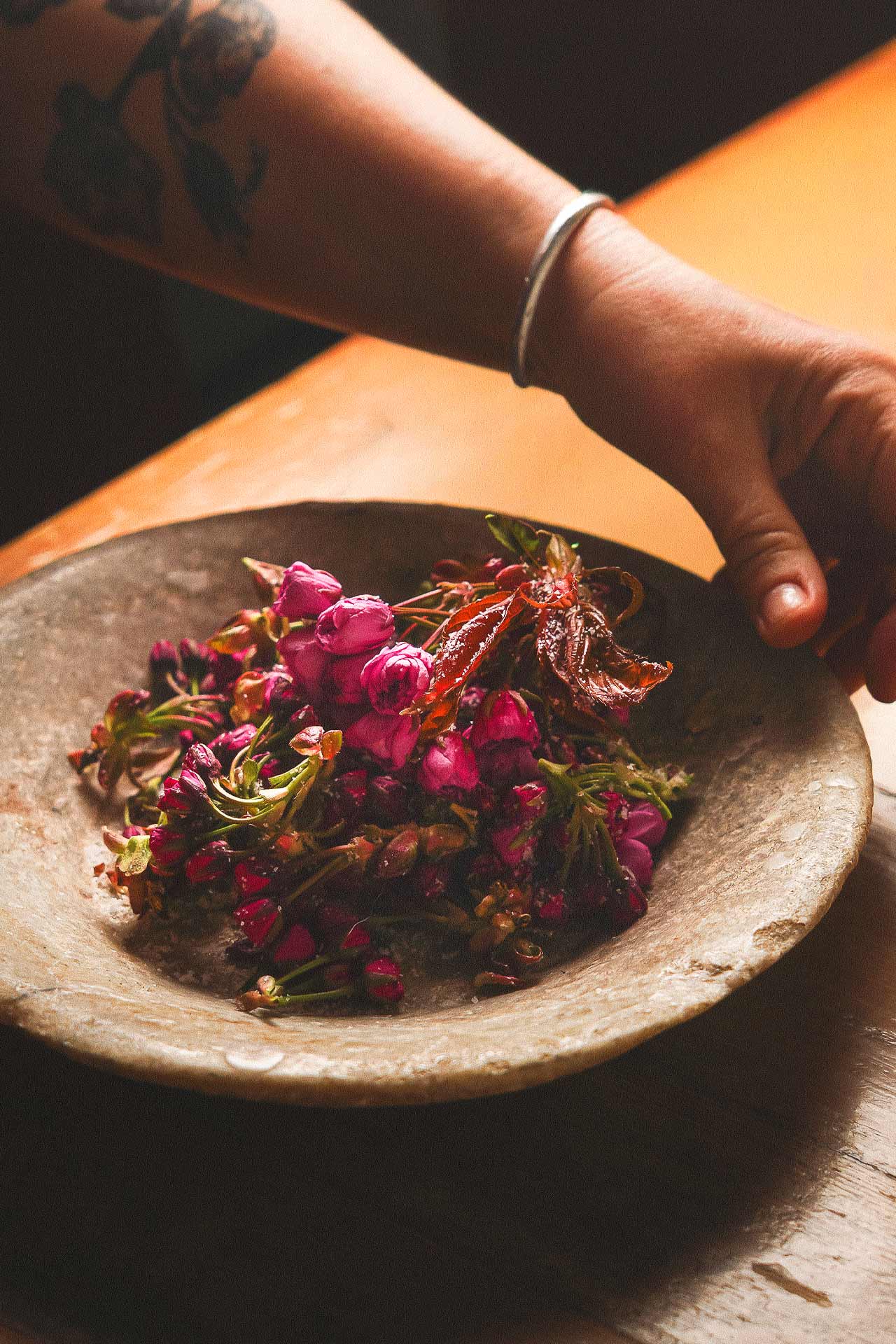
As the clocks spring forward in Vancouver, British Columbia, for the last time (the Canadian province will be adopting a year-round Pacific time zone moving forward), the earliest blooms come up from the ground and find their way onto menus at Burdock & Co. First come magnolia and cherry blossoms, soon followed by elderflowers, wild roses, tuberous begonia and other edible flowers.
“With such an abundance, it’s no surprise we’ve chosen to do an entire menu based on wild forged flowers,” says Chef Andrea Carlson. “I do a lot of urban foraging, as well as harvesting from the restaurant garden and my personal garden.”
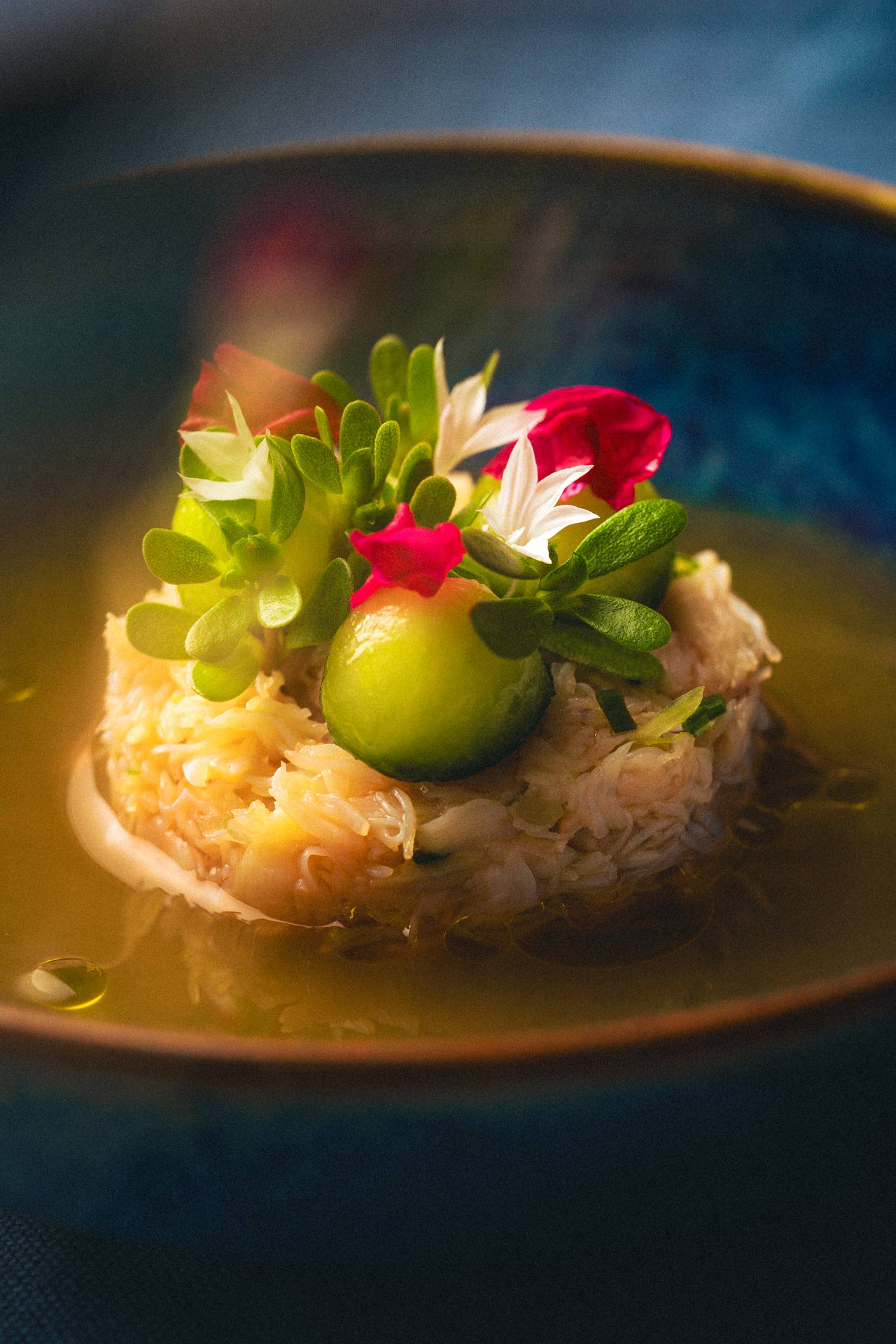
Wild onion flowers, which Carlson says are “subtle in presentation but pack a punchy flavor,” will feature in a dish with cottonwood resin (which is extracted from tree buds). Other offerings include Dungeness crab and Charentais melon (a French heirloom cantaloupe) soup with Nootka rose vinegar, butter-fermented elderflower basted cabbage with halibut mousseline and salt cured cherry blossom milk custard with sour cherry. What parts of the plants are used? The answer is all of them, including flowers, leaves, roots and seeds, which Carlson says “express differently and offer exciting culinary focus” for her six prix-fixe moon menus, which are based on micro-seasons and the lunar calendar.
Published on Main
Vancouver, British Columbia
A short walk down the road at Published on Main, sweet alyssum, bachelor's buttons and calendula are on the menu. While these flowers, among others, are sourced from a hot house at Brew Creek Farm (just south of Whistler) in the winter, the restaurant has even more floral bounty to choose from come spring, summer and fall, when area farms are in full swing outdoors.
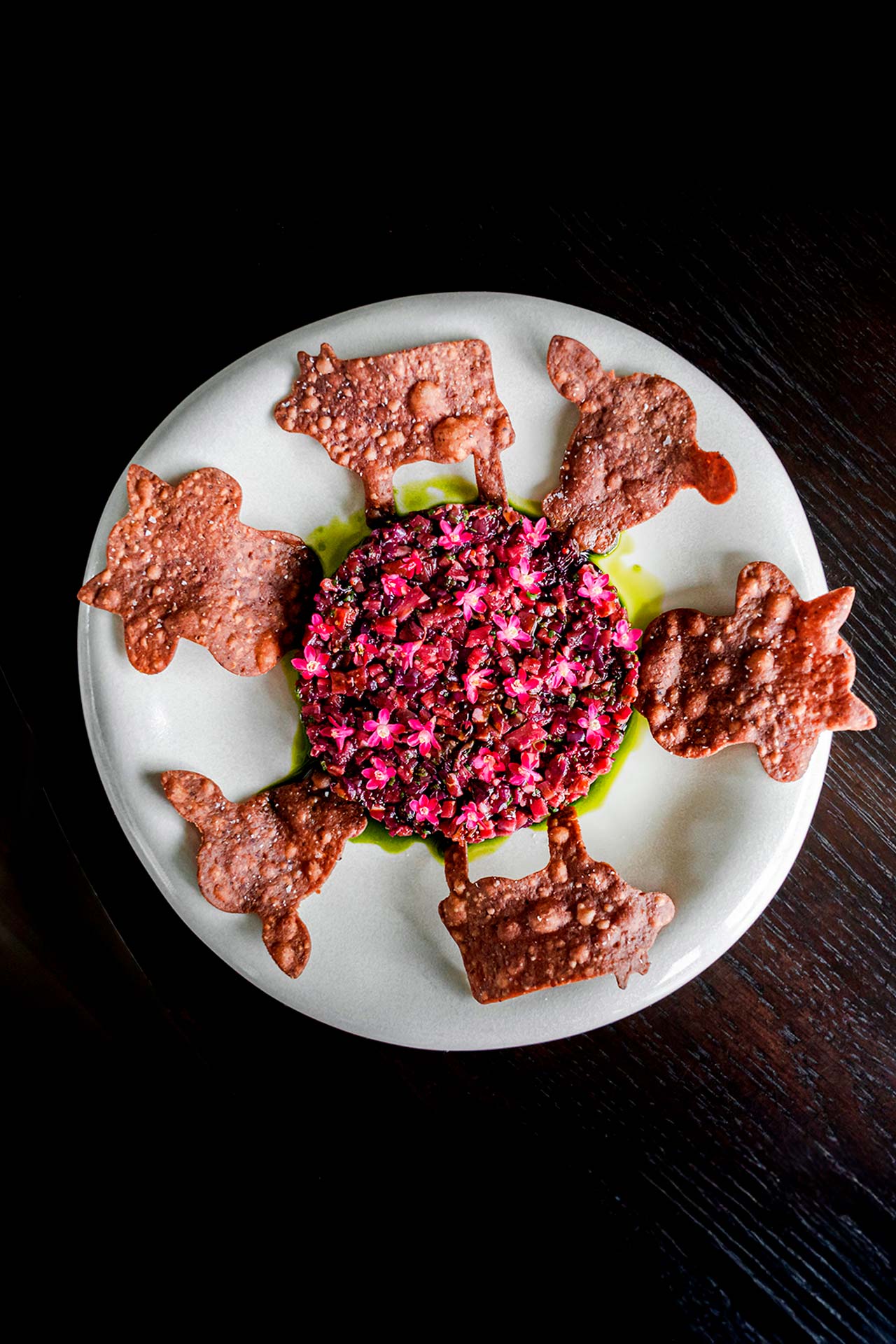
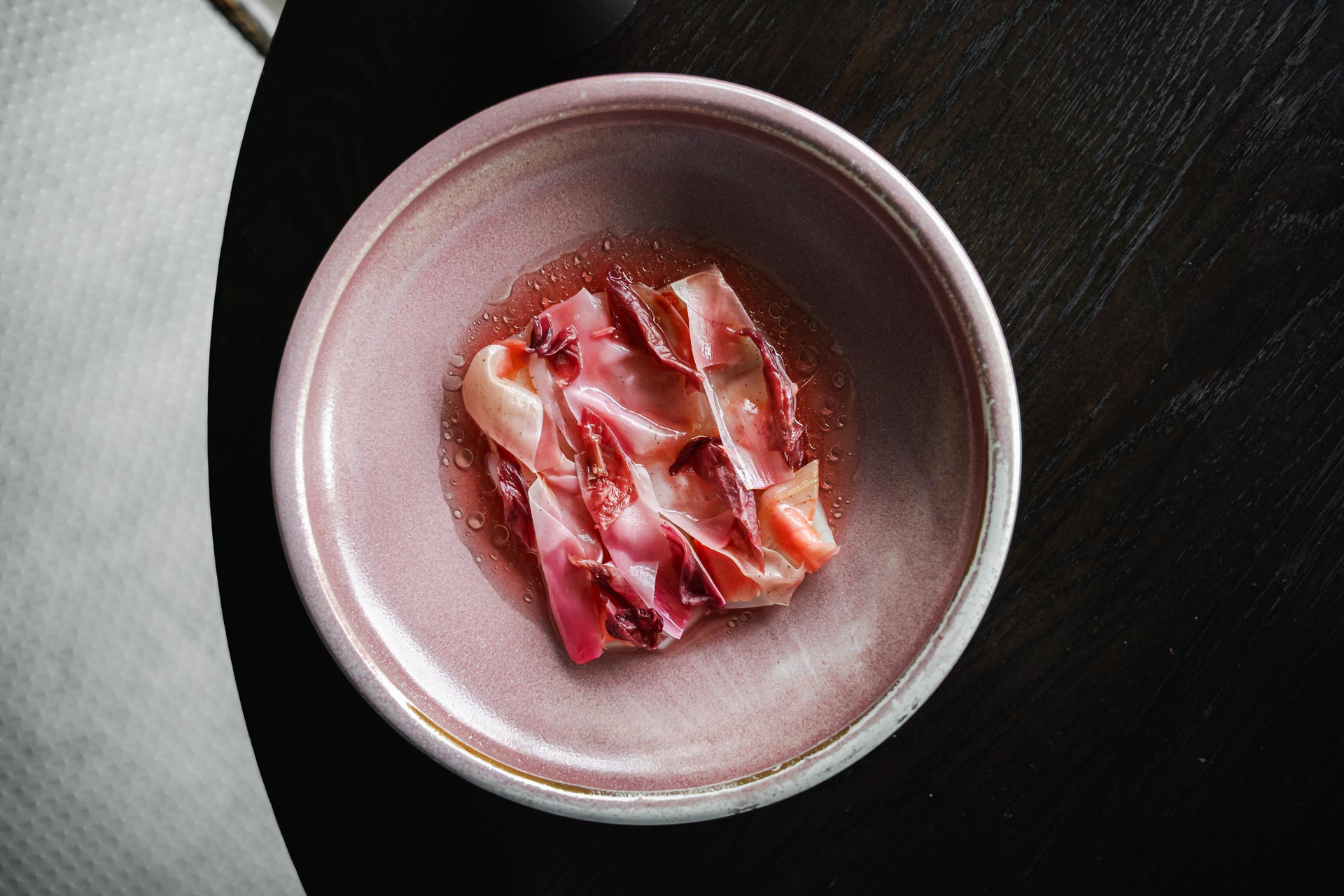
Chef Gus Stieffenhofer-Brandson — who forages extensively in the spring for ingredients like rose petals, elderflower, cherry blossoms, flowering currant and magnolia — says the restaurant also preserves a lot of flowers at their peak so that they can be incorporated into dishes throughout the year, such as pickled flowering currant in a tartare with fermented currant or pickled magnolia blossoms with cured scallops and fermented radicchio in a clarified rhubarb ponzu. “I love the fragrance of fresh petals but also love the complexity they can add as a candied or pickled product,” he says.
According to our MICHELN Guide Inspectors, “Timing is everything, but Stieffenhofer-Brandson and his team have a preternatural ability for sensing when produce is at its peak — whether showcasing it on the plate or pickling and preserving it.”
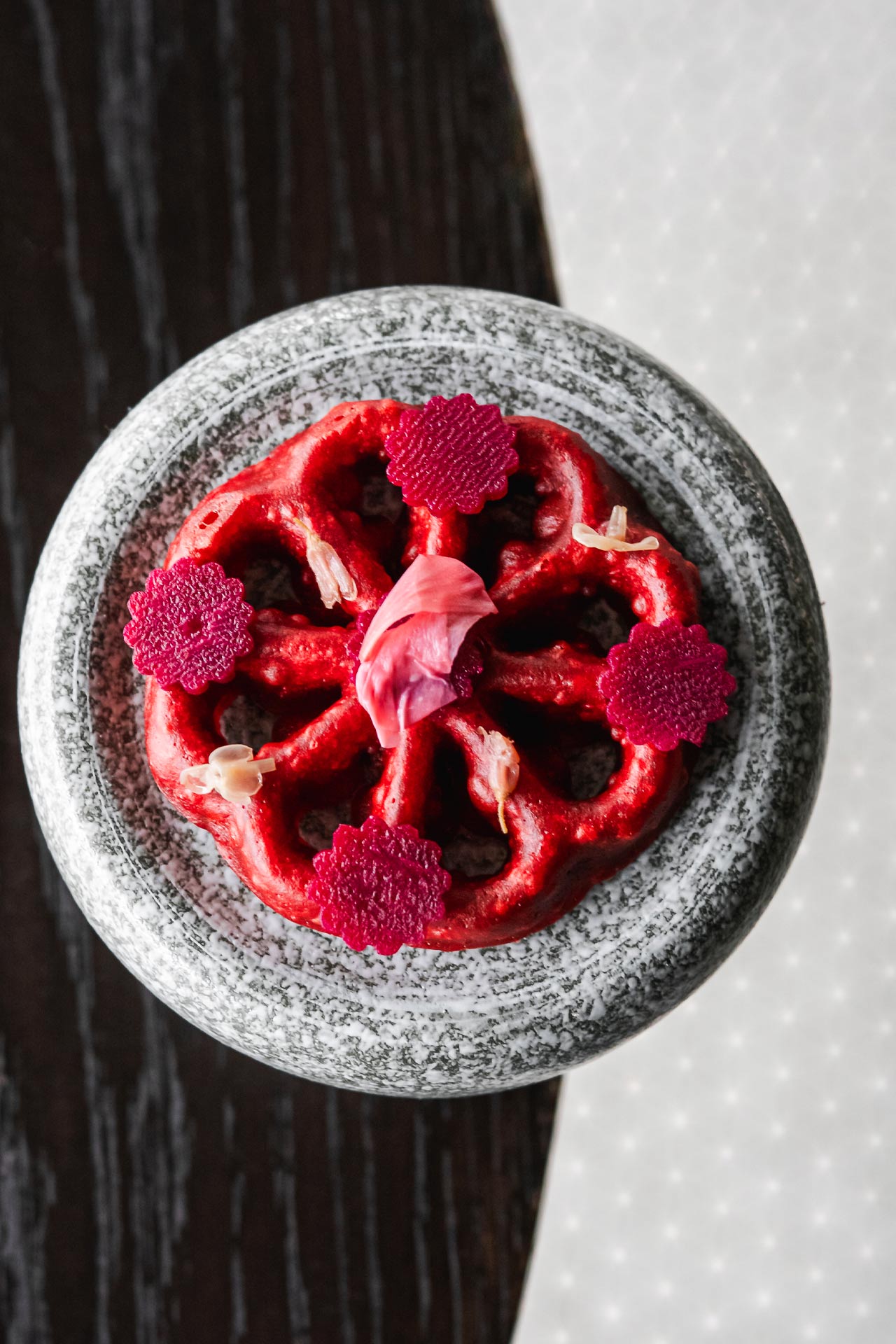
Atelier Crenn
San Francisco, California
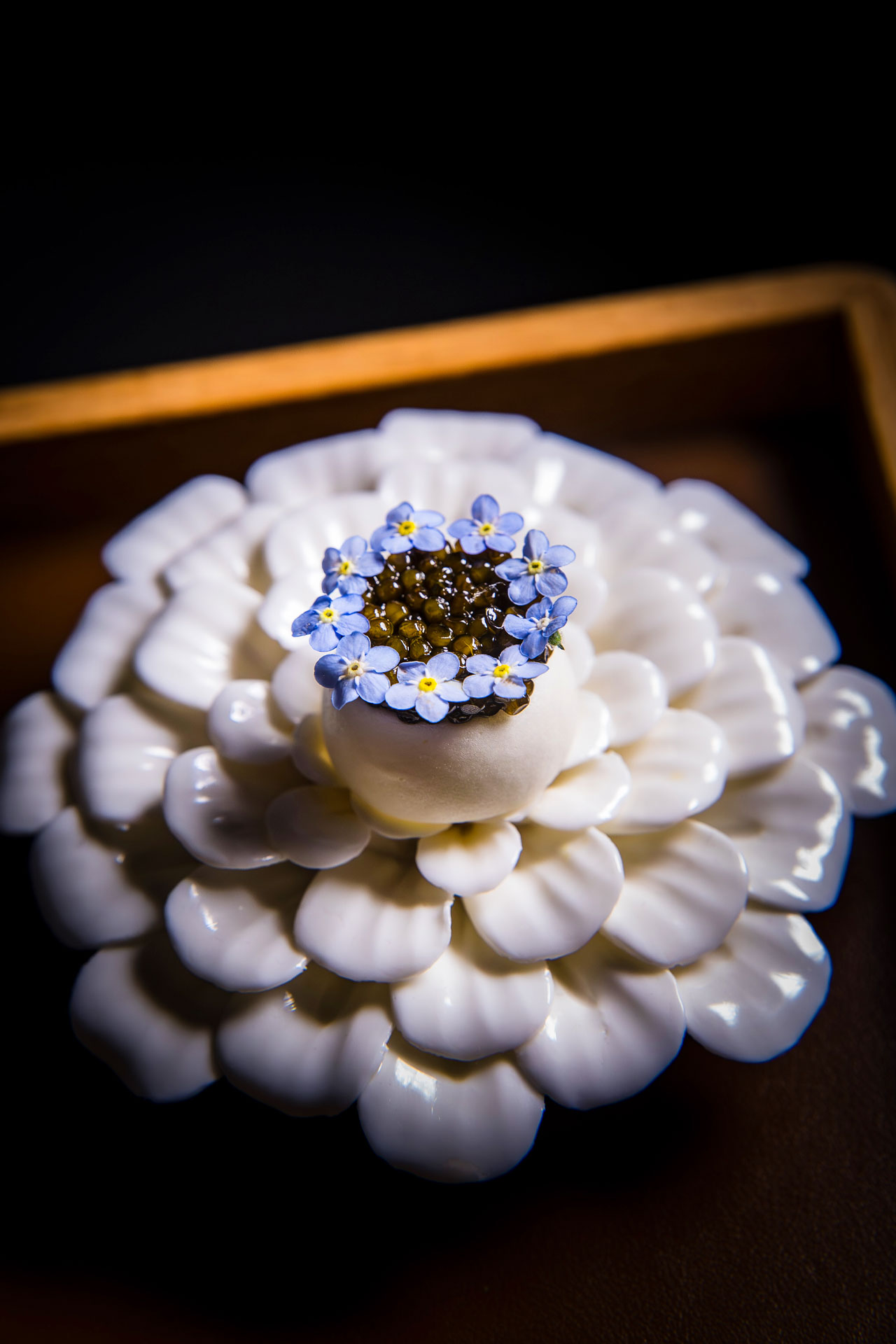
The cuisine at Atelier Crenn in San Francico is nature-inspired, with florals appearing on menus in subtle and dramatic ways, just like waves in the nearby Bay and sea. According to Chef Dominique Crenn, who deeply connects her food to the local environment, “the most beautiful plates are the ones that feel like you could have discovered them while walking through a field or along the ocean.”
Creen and her team source edible flowers from Northern Californian farmers as well as grow some herbs and botanicals at the restaurant’s own Bleu Belle Farm just north of the city in Sonoma County. When it comes to cooking and plating, they always make sure to use botanicals “to impart flavor, aroma or emotion” when layered with vegetables and seafood, versus merely as decoration.
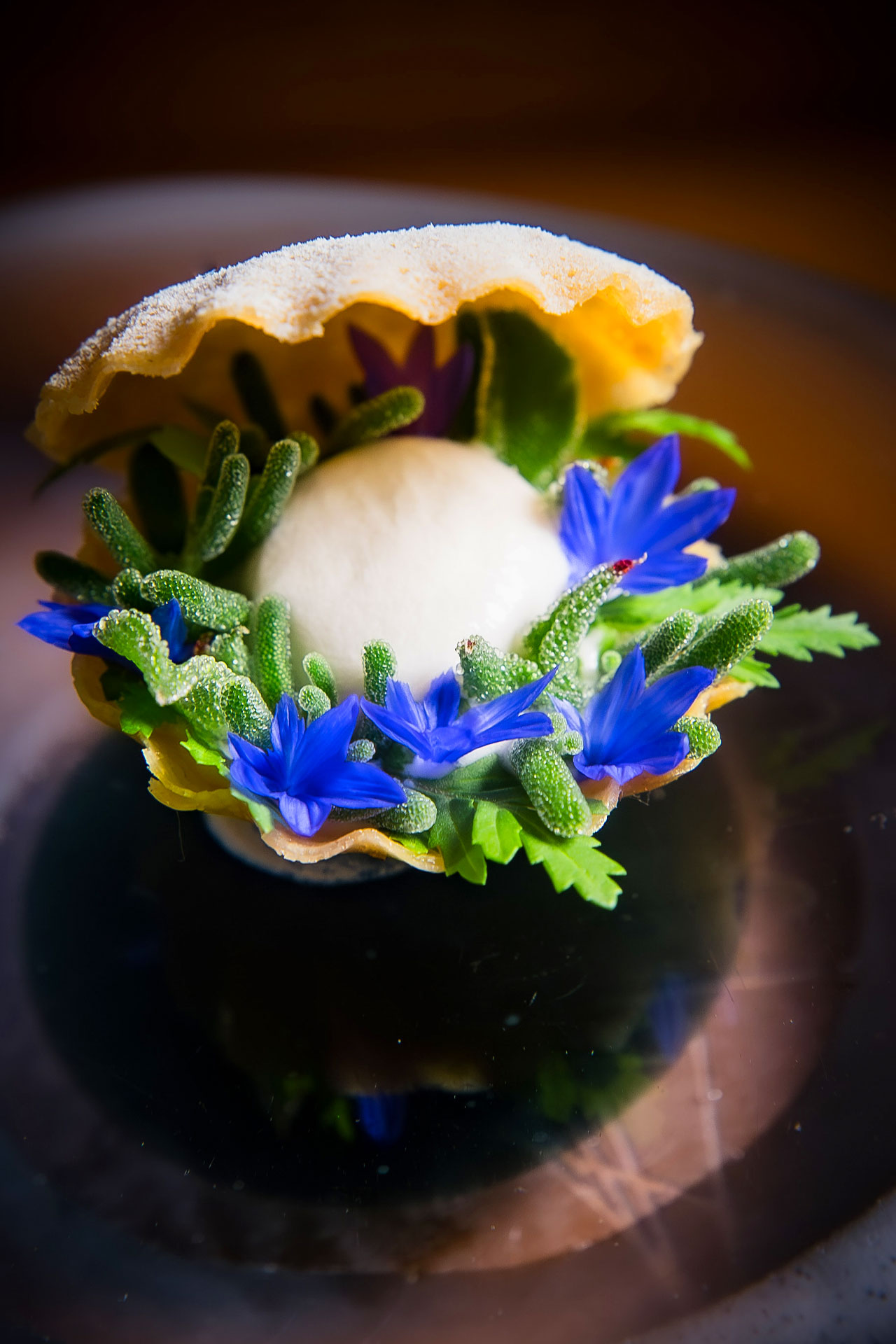
In one dish inspired by the California coastline, delicate herbs, greens and flowers are arranged like a small landscape. “The flowers bring gentle aromatics, sometimes a hint of jasmine, sometimes peppery nasturtium, but they also create a sense of poetry on the plate,” say Crenn, who also incorporates rose, chamomile, elderflower or citrus blossoms — which she says carry fragrance and memory — into broths, gels and infusions.
Restaurant Pearl Morissette
Jordan Station, Ontario
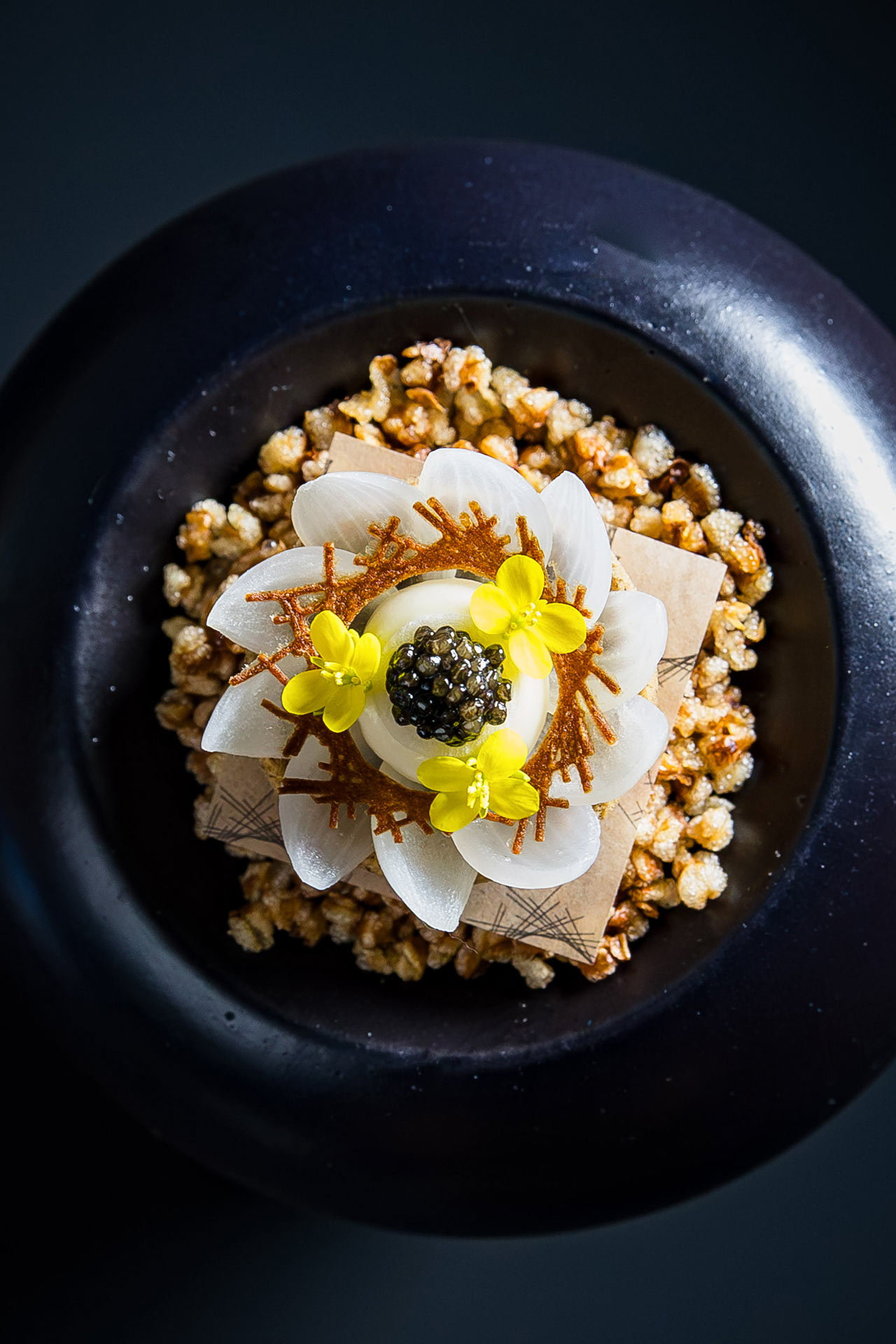
Helmed by co-chefs and co-owners Daniel Hadida and Eric Robertson, Restaurant Pearl Morissette stays true to the cool-climate terroir in and around Jordan Station in Ontario’s Niagara region. Since they can’t grow citrus so far north in Canada, they cultivate orange-zest-scented thyme or lemon verbena. No pineapples? How about pineapple sage or tangerine gem marigold instead? “In that sense, the garden becomes a kind of sensory bridge, allowing us to evoke flavors that you might never imagine coming from Niagara,” says Robertson.
Head gardener Deirdre Fraser cultivates everything from cold hardy annuals and perennials to self-seeding plants and even edible weeds — think roses, violets, pansies, and tiny blossoms of oxalis, shiso or thyme (which Robertson says, “may be minuscule but can completely transform a dish”). While most of their herbs and flowers come directly from the restaurant's grounds, the team also forages seasonally, harvesting things like peppery watercress from nearby streams or gathering spicebush, which they use almost like cinnamon or pink peppercorn.
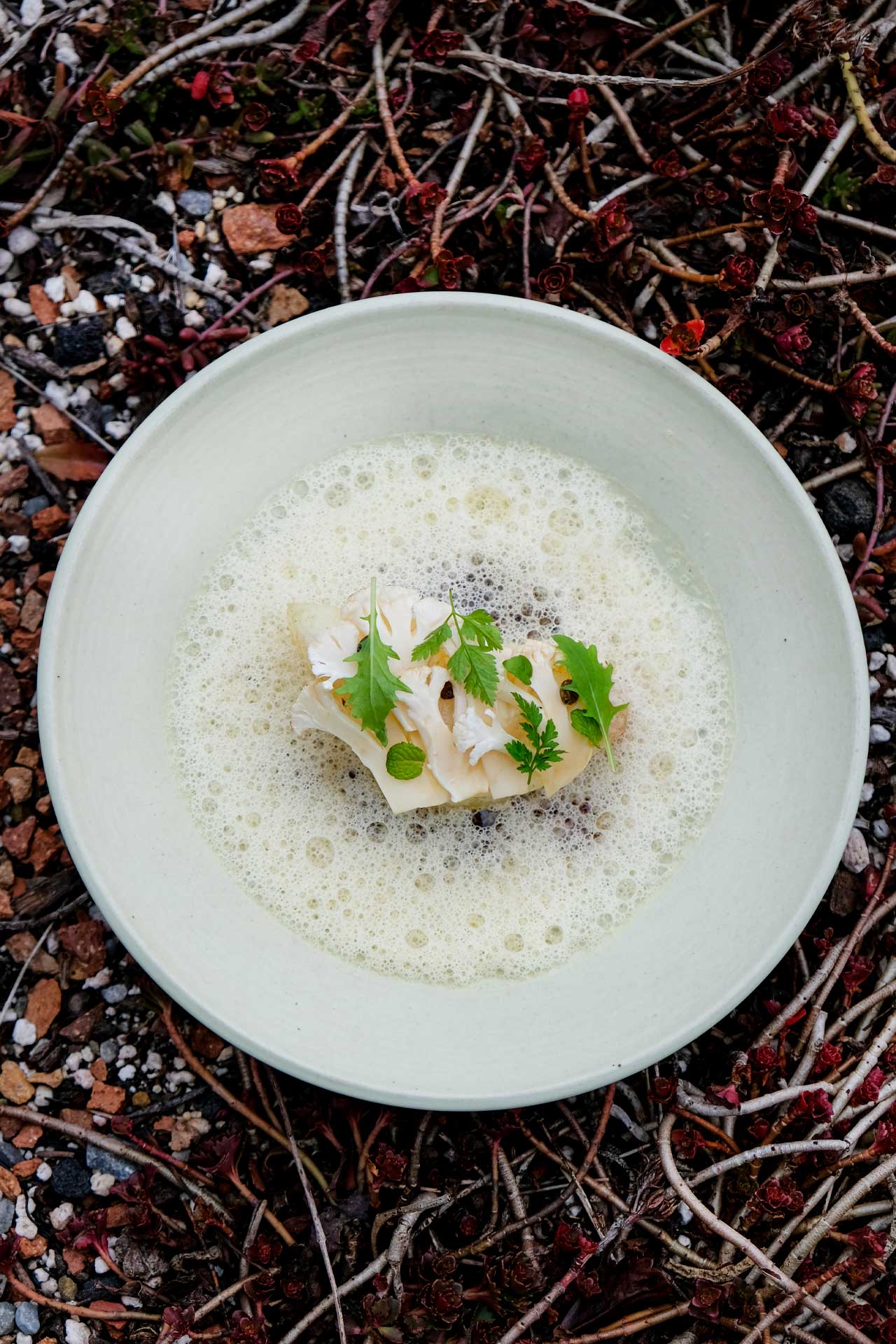
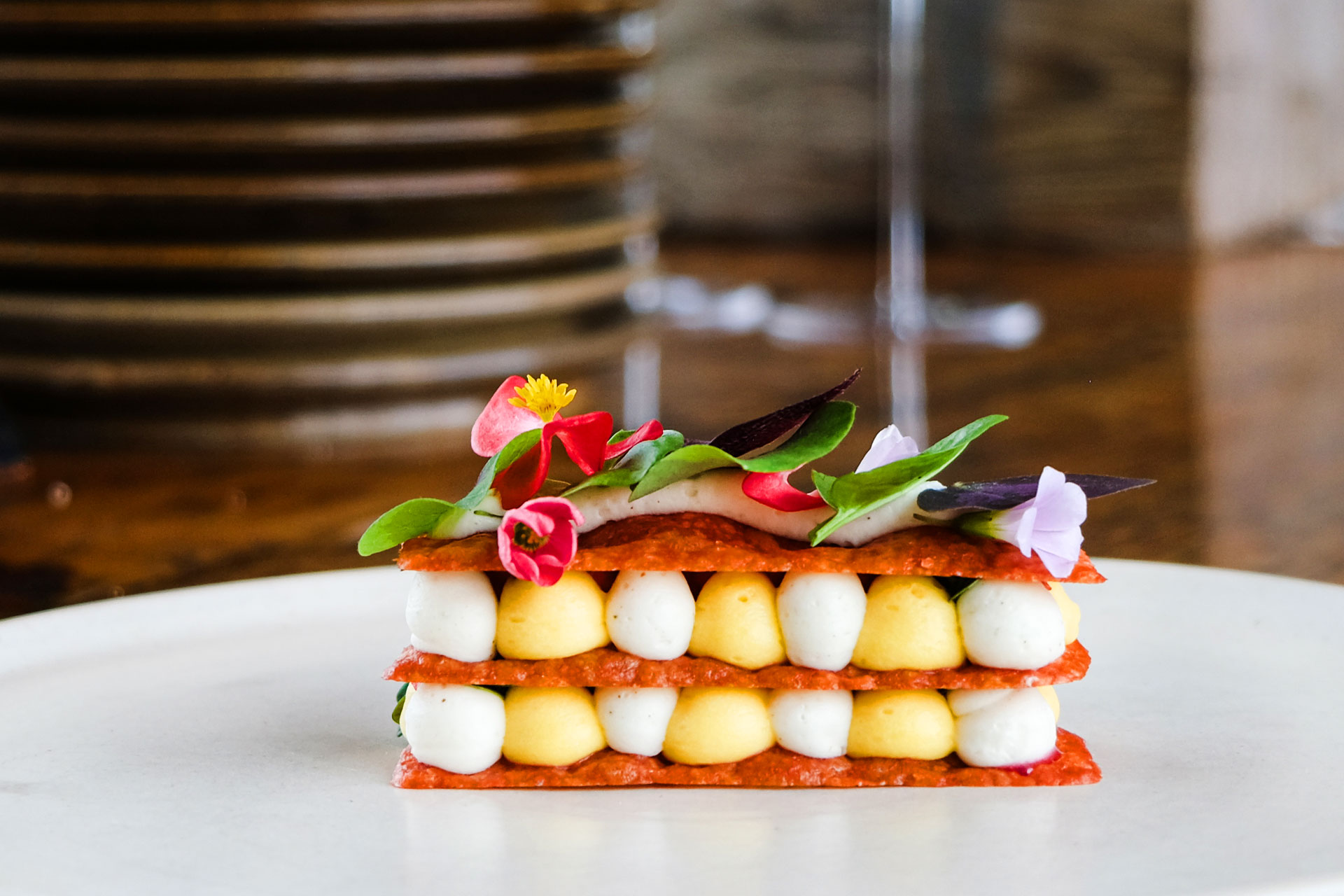
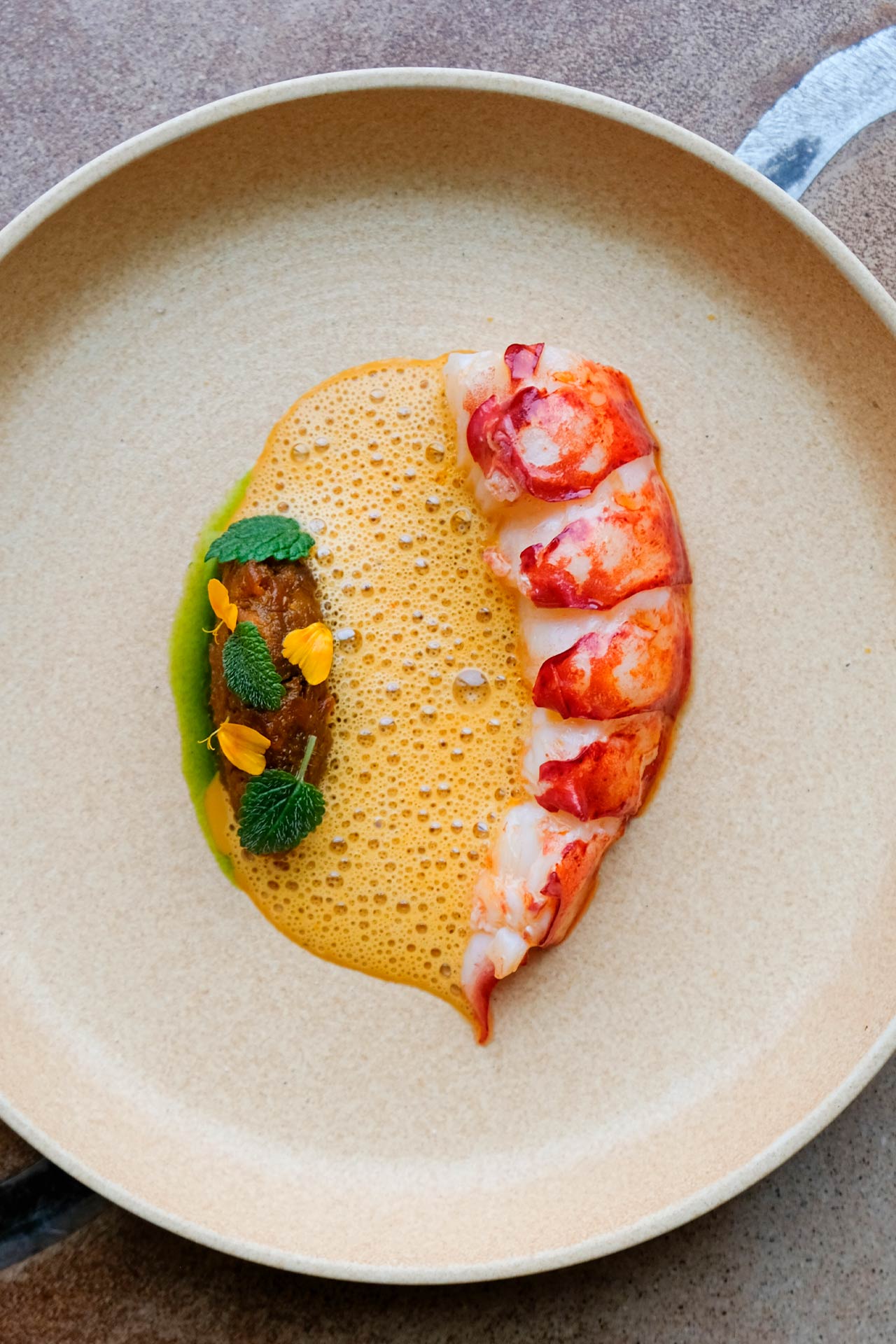
Inside the restaurant, botanical bounty delights diners in every aspect of their meal, with flowers both on the plate and in decorative arrangements. “Even if they never set foot in the garden, the flowers, just like the food, should be a sensory object that signals to them exactly what moment they are in,” says Fraser. On the seasonal menu, find floral-forward dishes like Mahone Bay lobster tail with beets, pickled green peaches, tangerine gem marigold, lemon balm and false cardamon. And for dessert? A mille-feuille with peach curd, wild strawberries and a bouquet of oxalis flowers, begonias and sorrel.
SingleThread
Healdsburg, California
Time is of the essence at SingleThread in Northern Sonoma County’s Healdsburg, where Chef Kyle Connaughton and team tell "the story of today.” That narrative is largely expressed through his farmer, floral designer and wife, Katina, who goes beyond cut flowers alone, also using budding fruit tree branches, bolting asparagus, tomato vines and pea plants in vases and intricate plating displays. “These products and biproducts have their own beauty and speak to the moment in time within the season and further the link between farmer and chef,” says Kyle.
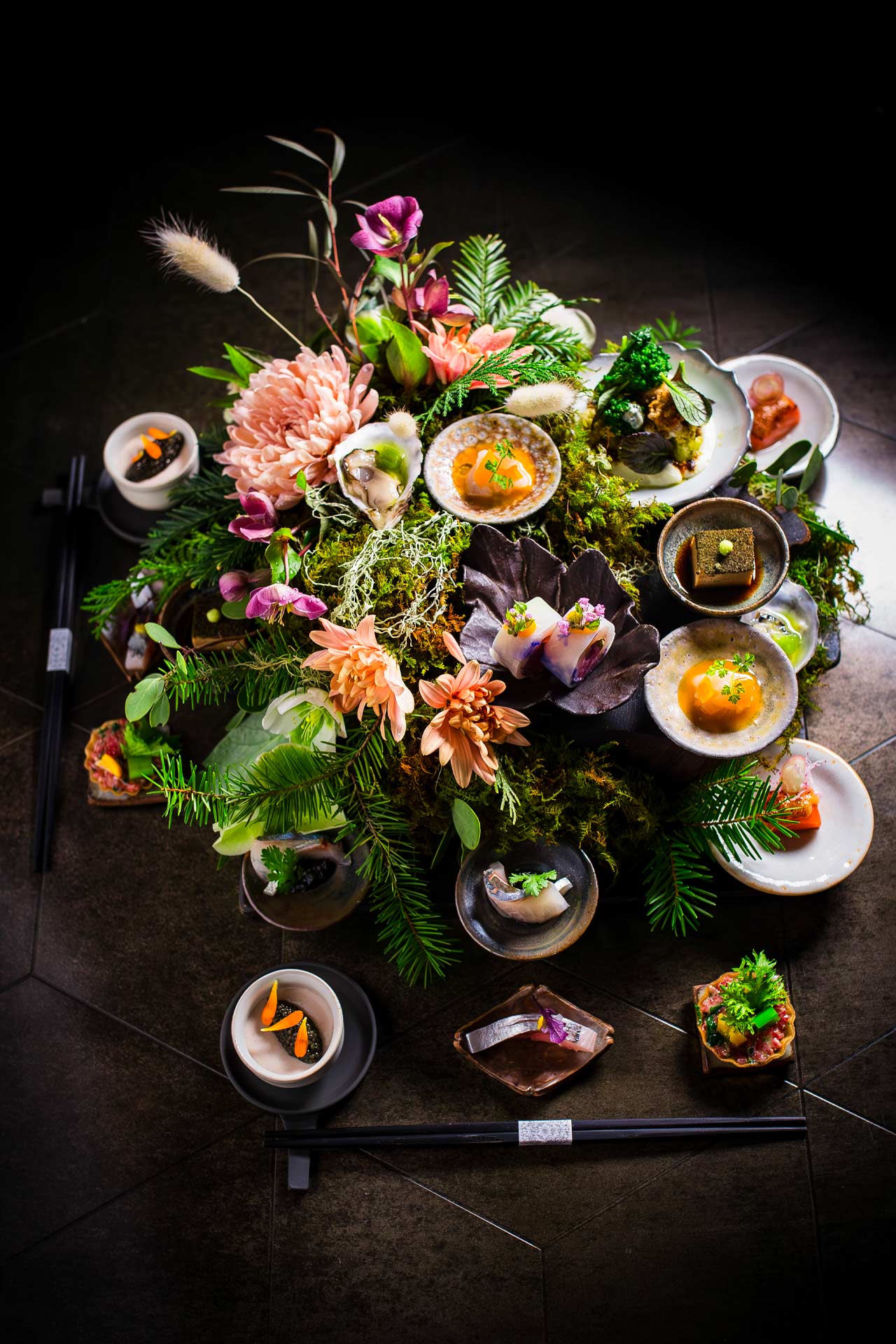
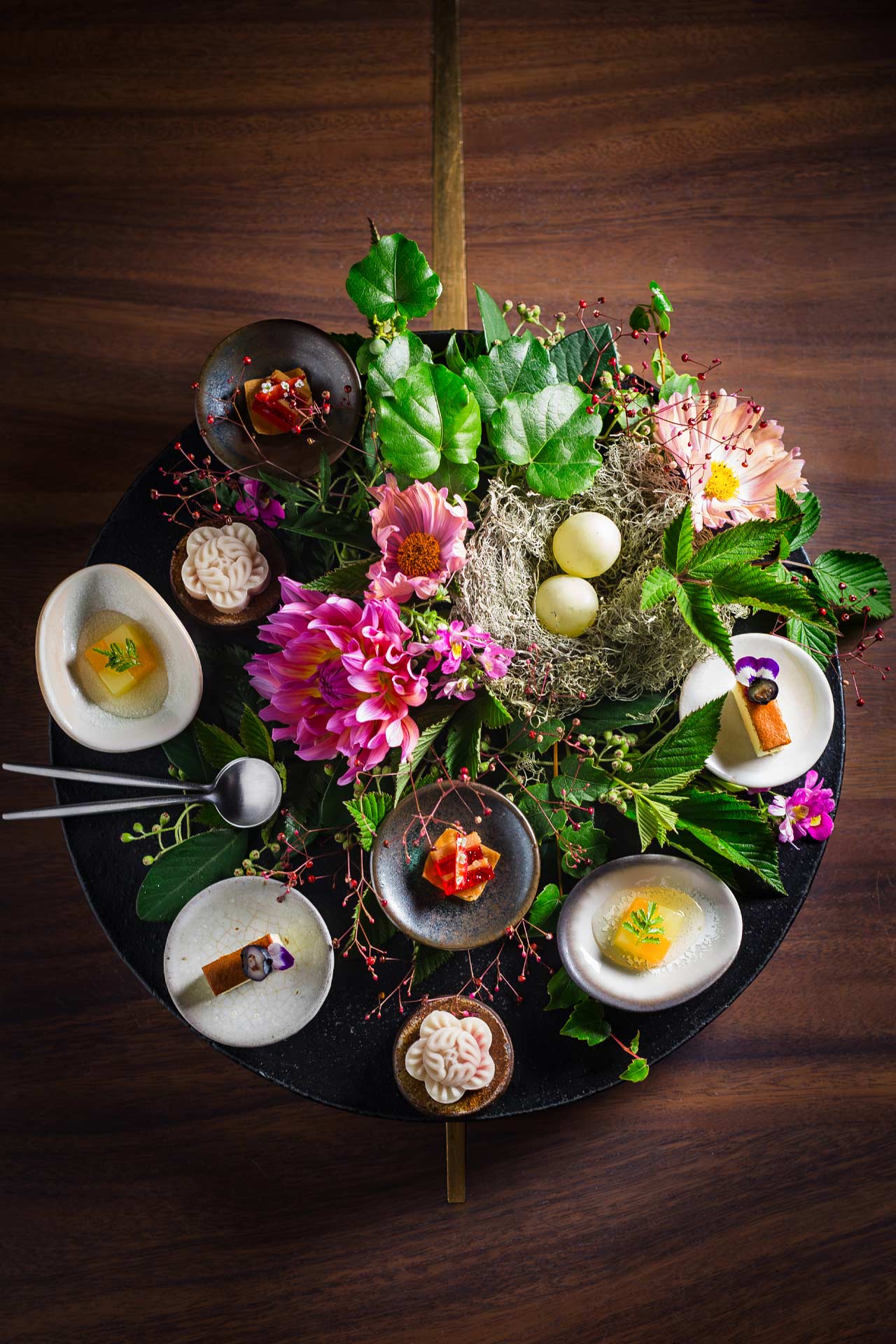
Based on the couple’s time in Japan, the cuisine served in the intimate, zen-like restaurant is based on kaiseki (a multicourse Japanese meal that combines seasonal flavors with artful presentation). The menu begins with a botanical landscape of moss and flowers that comprises small dishes, which Kyle says, “provides this sort of ‘snapshot’ of that day and reflects what is currently blooming in Sonoma."
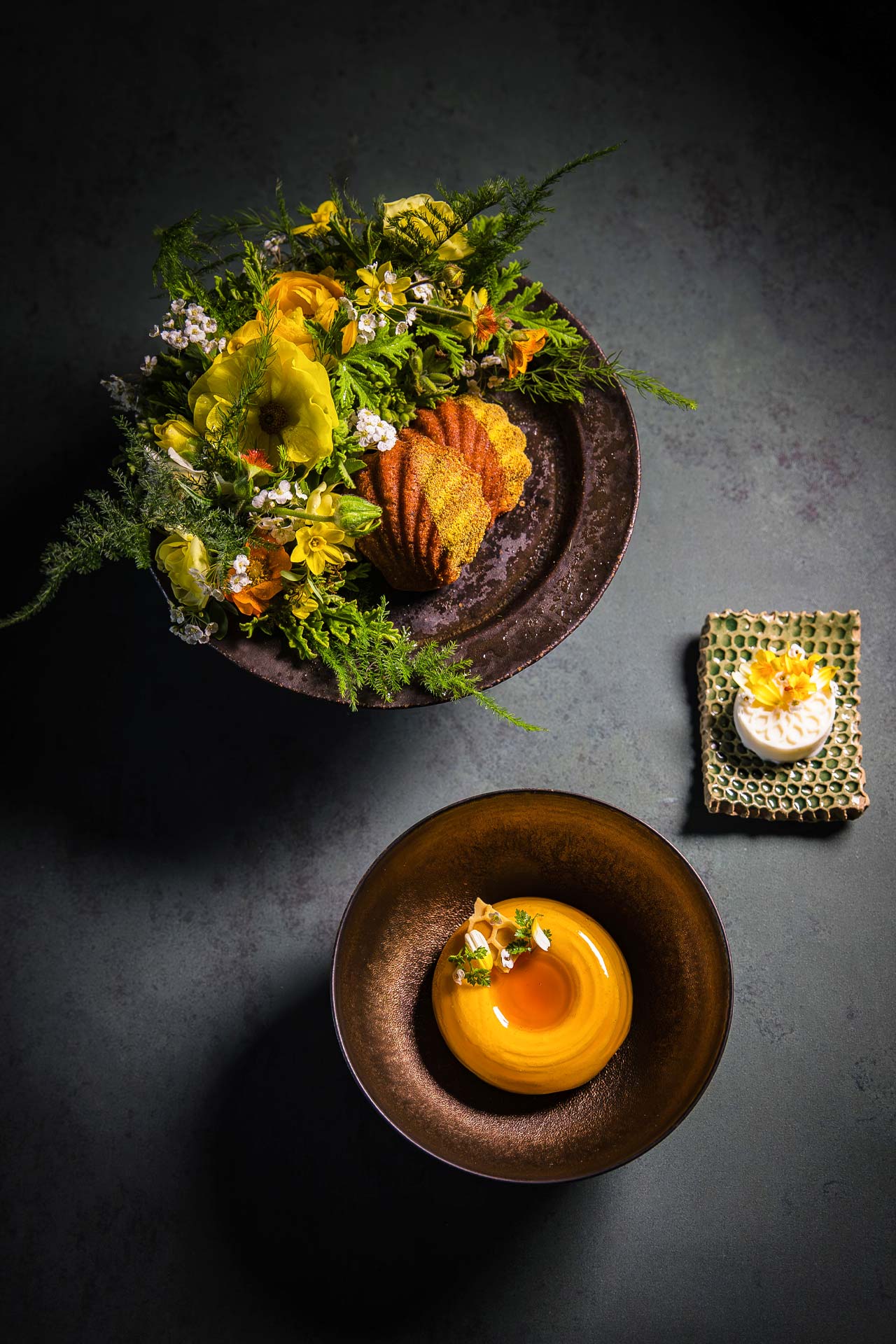
The meal continues with a host of savory courses and concludes with a flower-focused dessert round. In the “Sonoma Milk and Honey” entremet — composed of a multi-layered Japanese barley cake with a side of beeswax, honeycomb ice cream and a honey-butter madeleine with bee pollen — the bees are as honored as the diners are enticed; an accompanying floral display shows some of the pollinators' favorite flowers. The final course is inspired by wagashi, artistic Japanese sweet snacks that incorporate floral elements and leave the diner with “one last parting feeling of the season,” says Kyle.
Related Articles:
Hero image: Spring Wagashi © John Troxell
Thumb Image: "A Fleeting Taste of the Sea" - Dashi meringue, smoked crème fraîche, egg yolk, Kristal caviar. © John Troxell/Atelier Crenn