19 May 2026

Share


To make a taco de canasta, or basket taco, a big vessel like a wicker basket is the first required kitchen tool. The second and the third are a plastic bag and a stretch of fabric you’re not afraid to get wet.
This variation on the taco is defined by its texture: a melty, mushy mass that owes its essence to steam. Hot tacos go in tool one, which is lined in tool two and covered gently by tool three.
“The little bit of sweat, that's what gives it the special touch,” says Uriel Hernández, the manager of Tacos de Canasta Los Especiales in Mexico City.
The namesake basket at this longstanding taquería is actually a cradle-sized metal tub, but the style of preparation is true to tradition: simply filled corn tortillas are layered to the container’s brim and left to sit and sweat in the condensation formed by their grease.
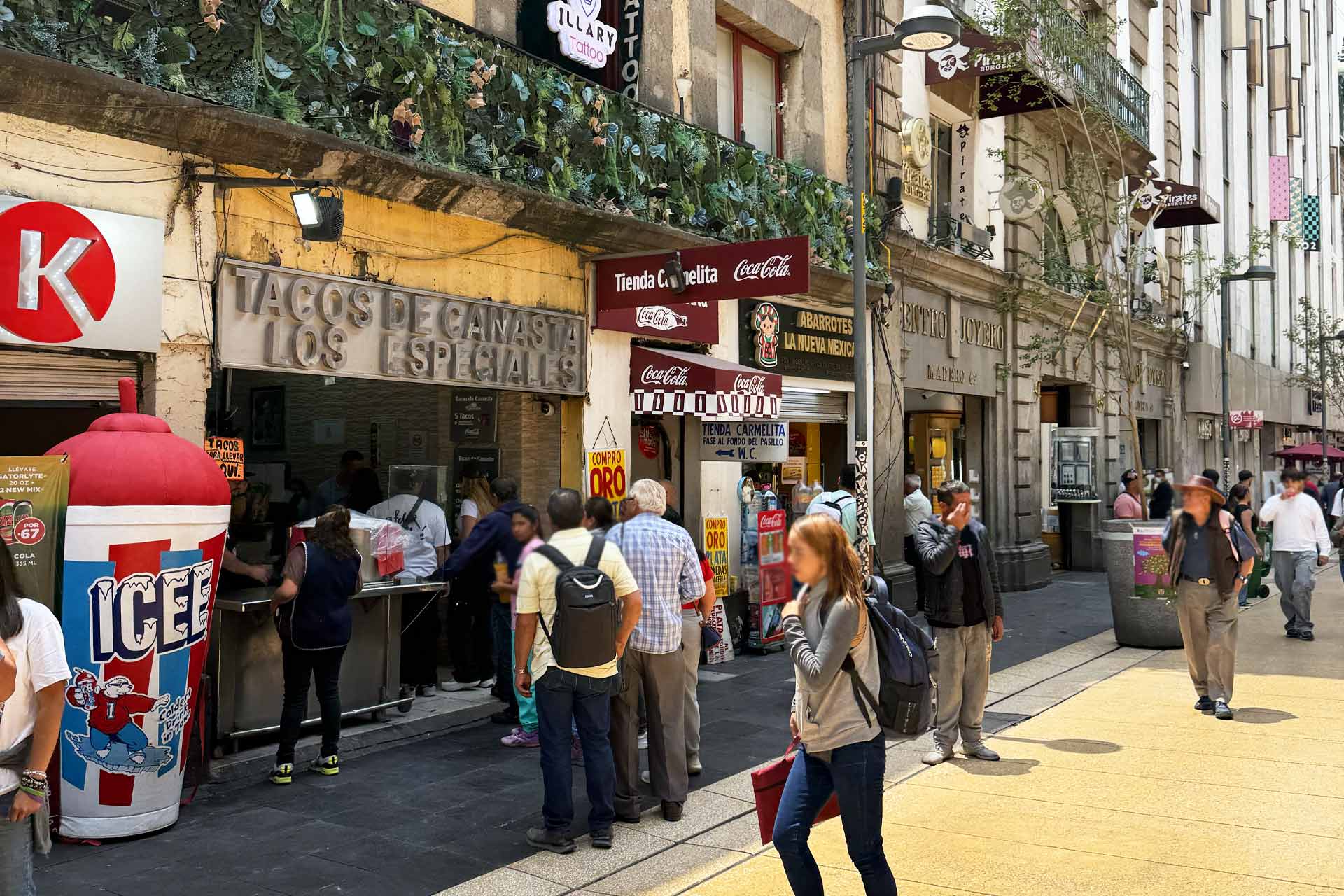
The lines that form outside the hole-in-the-wall spot are ever-present.
Los Especiales, steps from the capital city’s grandiose central square, is the rare brick-and-mortar purveyor of tacos de canasta. The style is typically sold in central Mexico straight from the basket in a street vendor’s arms, or settled onto the back of a bike.
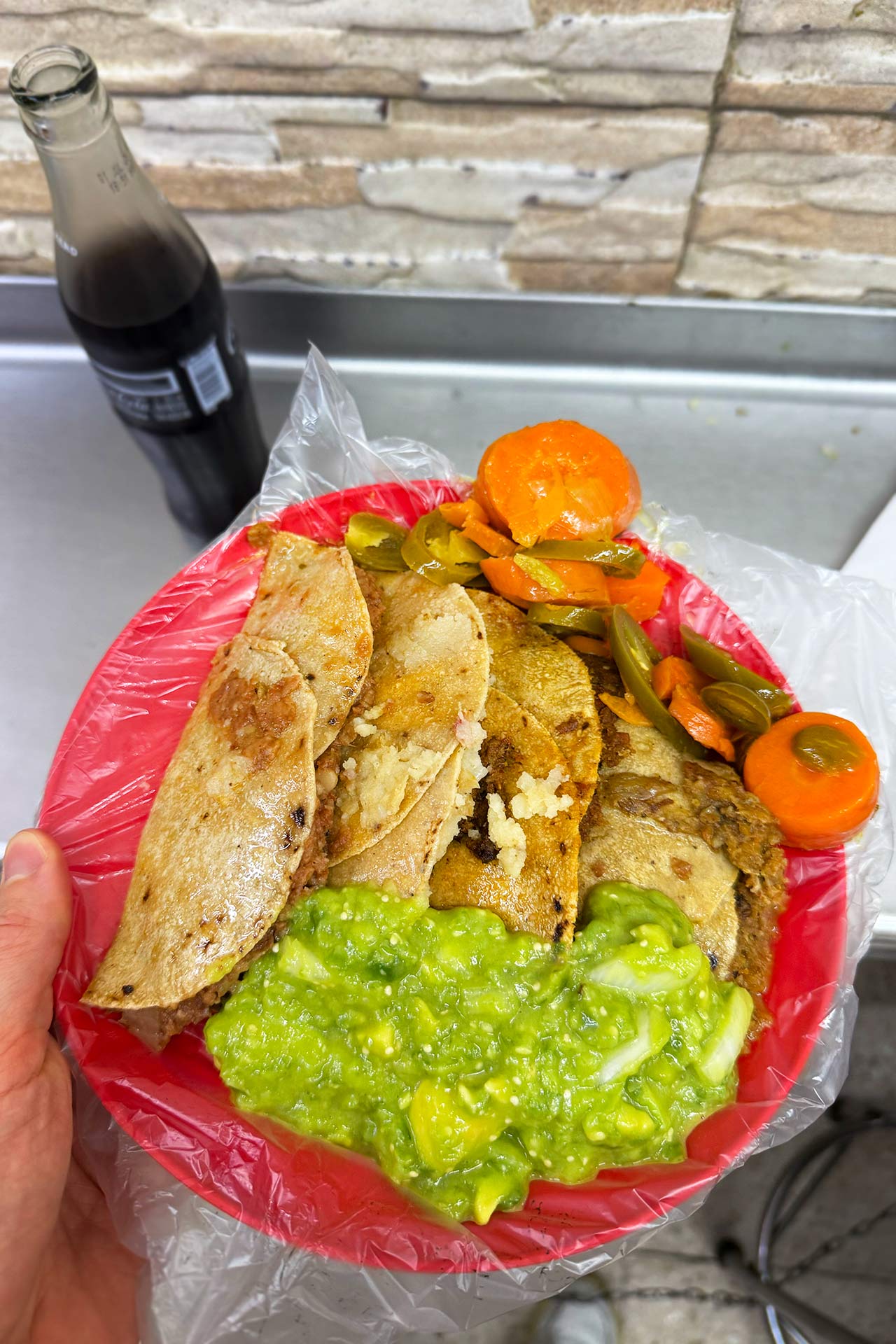
With just four menu items to choose from, the line here moves quickly. Tacos come stuffed with mushy chicharrón in a red or green salsa, refried beans or a smooth potato purée. A plate of one of each, alongside a glass-bottle Coke, runs just 65 pesos, or a bit less than four U.S. dollars.
Plucked from their steamy sanctuary, the tacos are glistening and fall apart at first touch. Together, the tortillas and their fillings meld into a glorious clump.
Each basket here is loaded with more than 200 tacos, and some 2,000 tacos are sold each day to a crowd of local workers and tourists. The two chicharrón options are favorites, Hernández says.
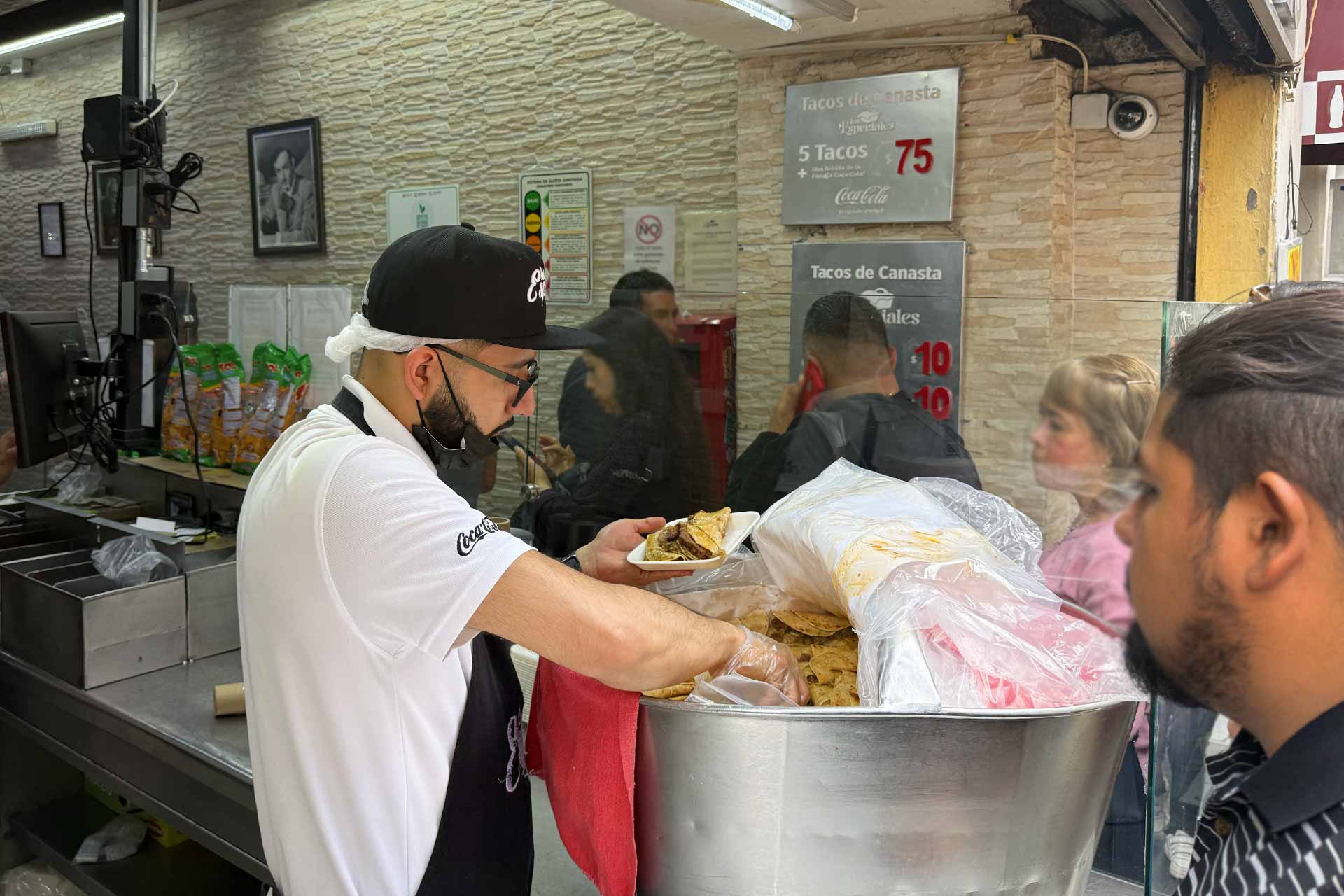
The stew-like filling is made by double-frying pork rinds and pressing them into compact chunks. The red sauce is an adobo, made with dried chiles, spices and vinegar, while the green is made from tomatillos.
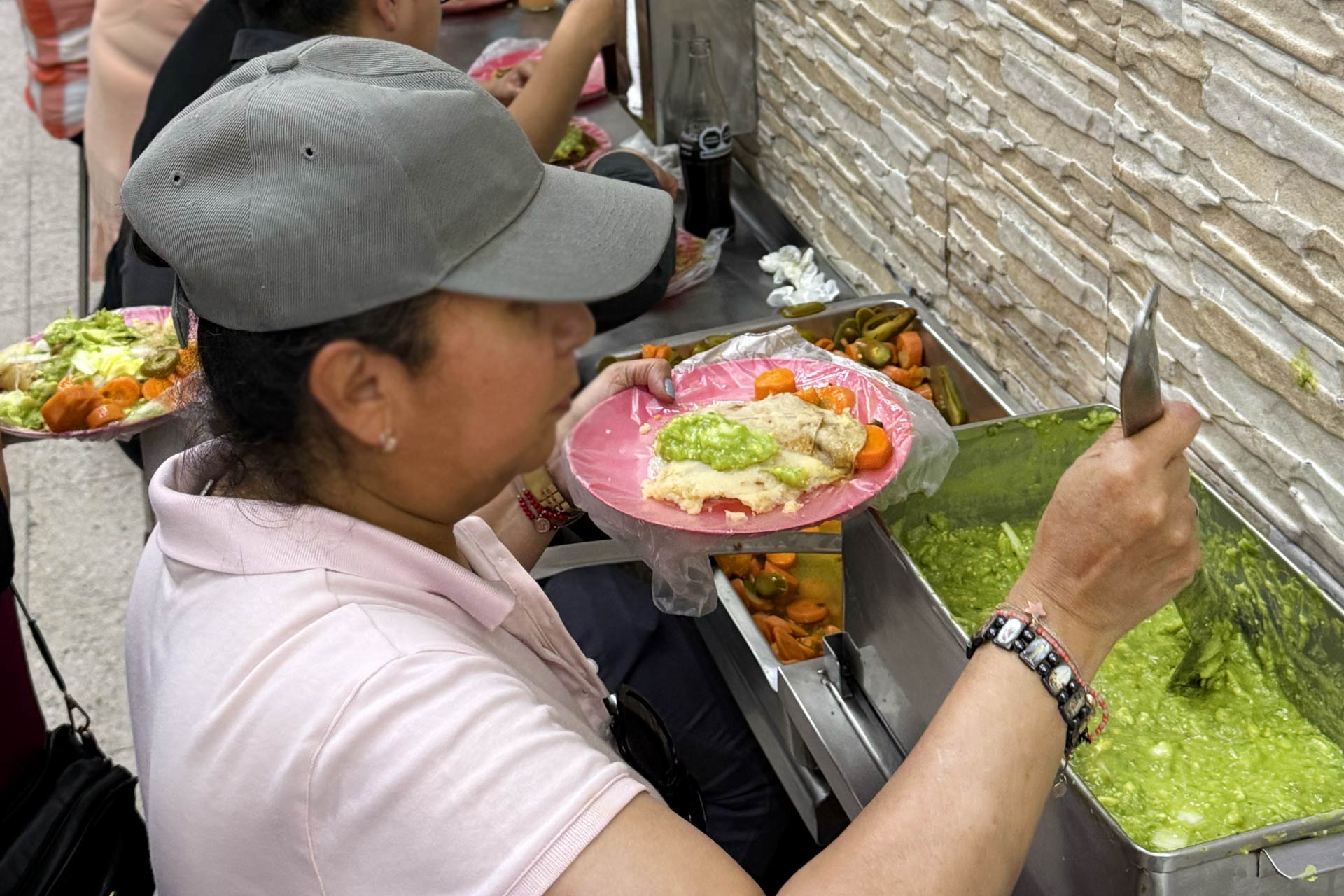
Both are rich and fragrant. A spoon of neon guacamole-salsa and some chiles en escabeche, a combo of pickled carrots and chilis, add some welcome zip.
“It has to be characterized by being soft. If it's not soft, it's not a taco de canasta,” Hernández says.
Related articles:
Hero Image: The namesake basket at this longstanding taquería with corn tortillas layered to the container’s brim. © David Shortell/MICHELIN