23 April 2026

Share


We can thank the ancient Greeks for giving us cheesecake, though back then it was more of a baked cheese patty than a cake. The advent of modern cream cheese in the town of Chester, just north of New York City, in the late 19th century gave birth to New York-style cheesecake: a rich, dense dessert made with full-fat cream cheese, heavy cream (or sour cream), eggs and sugar, typically set on a graham cracker crust.
More than a century later, the recipe continues to evolve. Versions — from a vegan cashew-based cake to a toasted turmeric cheesecake with spiced cornbread crumble — abound. Spain, too, has left its mark: the crustless, burnt Basque cheesecake, created in 1990, has grown in popularity and inspired many delightful variations.
Read on for the creative ways that cheesecake is being imagined at these seven MICHELIN Guide restaurants.
avec
Chicago, Illinois
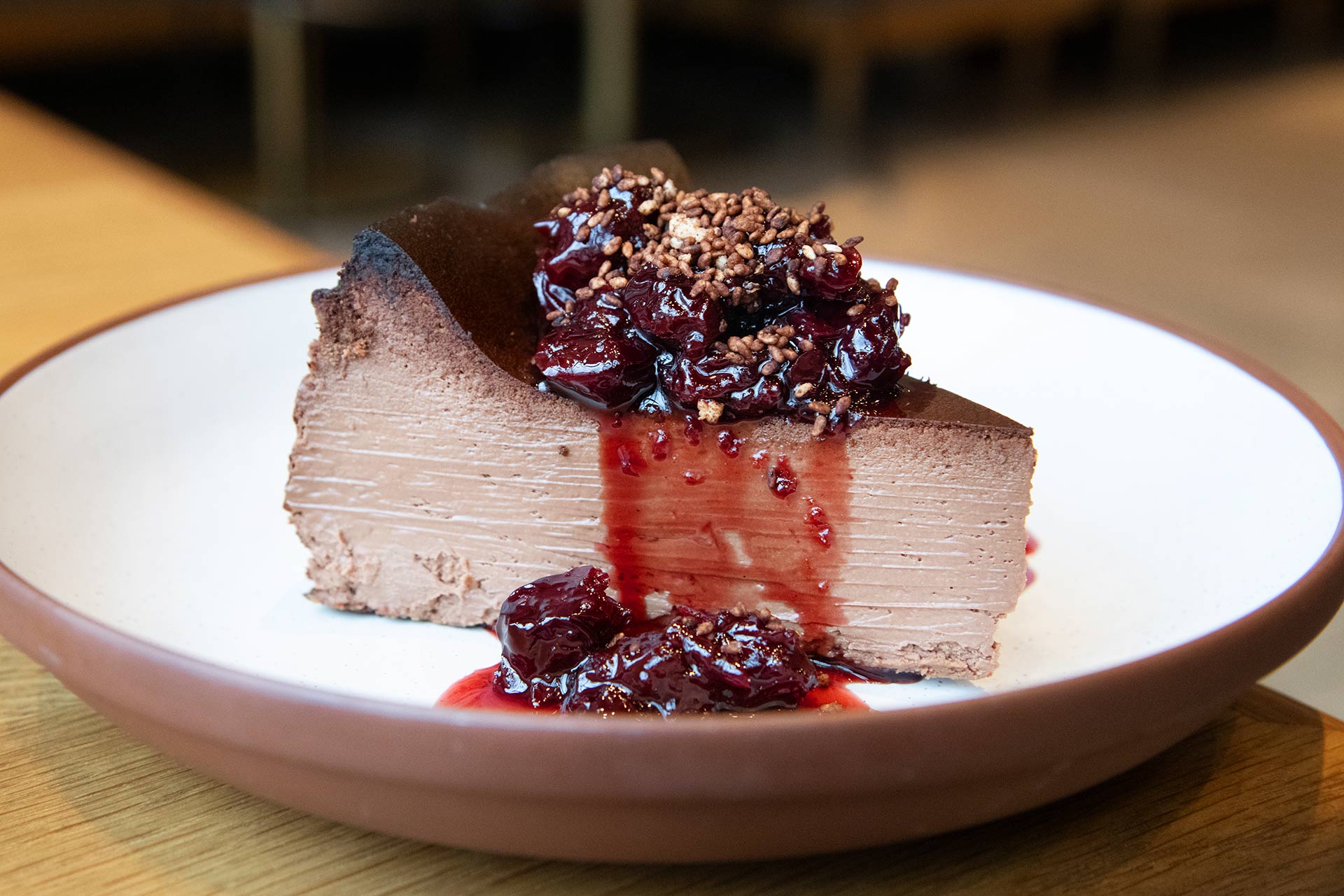
If you haven’t tried it yet, it’s time to try Basque cheesecake, and the version at avec is a very good place to start. The dessert is characterized by its burnt top and super creamy inside, as well as its ease: there’s no need to bake this cake in a water bath, unlike its New York-style counterpart. Basque cheesecake is also baked at high heat. These two distinctions allow the cake to develop a crust while retaining a loose, jiggly interior. “It’s meant to be ‘perfectly imperfect,’ with its rustic, cracked top’” says Natalie Saben, Executive Pastry Chef at avec.
Typically, Basque cheesecake only contains a few ingredients: cream, cream cheese, eggs, sugar and a touch of flour. “Heavy cream is essential in Basque cheesecakes because it creates the signature, ultra-creamy, custard-like center,” says Saben. “Our cooks are always a little nervous when removing it from the oven because of how much it still jiggles.”
Adding chocolate is not terribly common, but it works. “When we first created this dish, we were close to Valentine’s Day and looking for something to satisfy the chocolate craving associated with the holiday,” says Saben. After tinkering with the recipe, they landed on one with a mix of cocoa powder and 70% chocolate.
To finish, Saben includes a compote of citrus-poached cherries from farmers in Michigan, along with candied sesame seeds tossed in cocoa powder. “It’s a perfectly rich chocolate dessert without being too heavy,” she says. “What more could you want?”
Dōgon
Washington, D.C.
At Dōgon, the toasted turmeric cheesecake from Chef de Cuisine Martel Stone was inspired by his childhood in Philadelphia, Pennsylvania, where trips to Denise’s Delicacies (a local bakery) meant the perfect cheesecake. This is his homage to that. “This dessert was my first love letter to memory, culture and bold flavor — where North Philly nostalgia meets Jamaican influence.”
Stone starts by blooming turmeric in butter, then folding this into whipped cream cheese. “Baked just until set, the custard retains that signature gentle wobble, silky, soft and irresistible,” he says.
Other components of the dessert are vanilla and pimiento-spiced cornbread crumble; a bright, sweet-tart plum jam; an herbaceous thyme anglaise and, lastly “a final drizzle of curry oil that brings everything full circle — aromatic, complex and deeply rooted in inspiration from Dōgon flavors,” says Stone.
Emeril’s
New Orleans, Louisiana
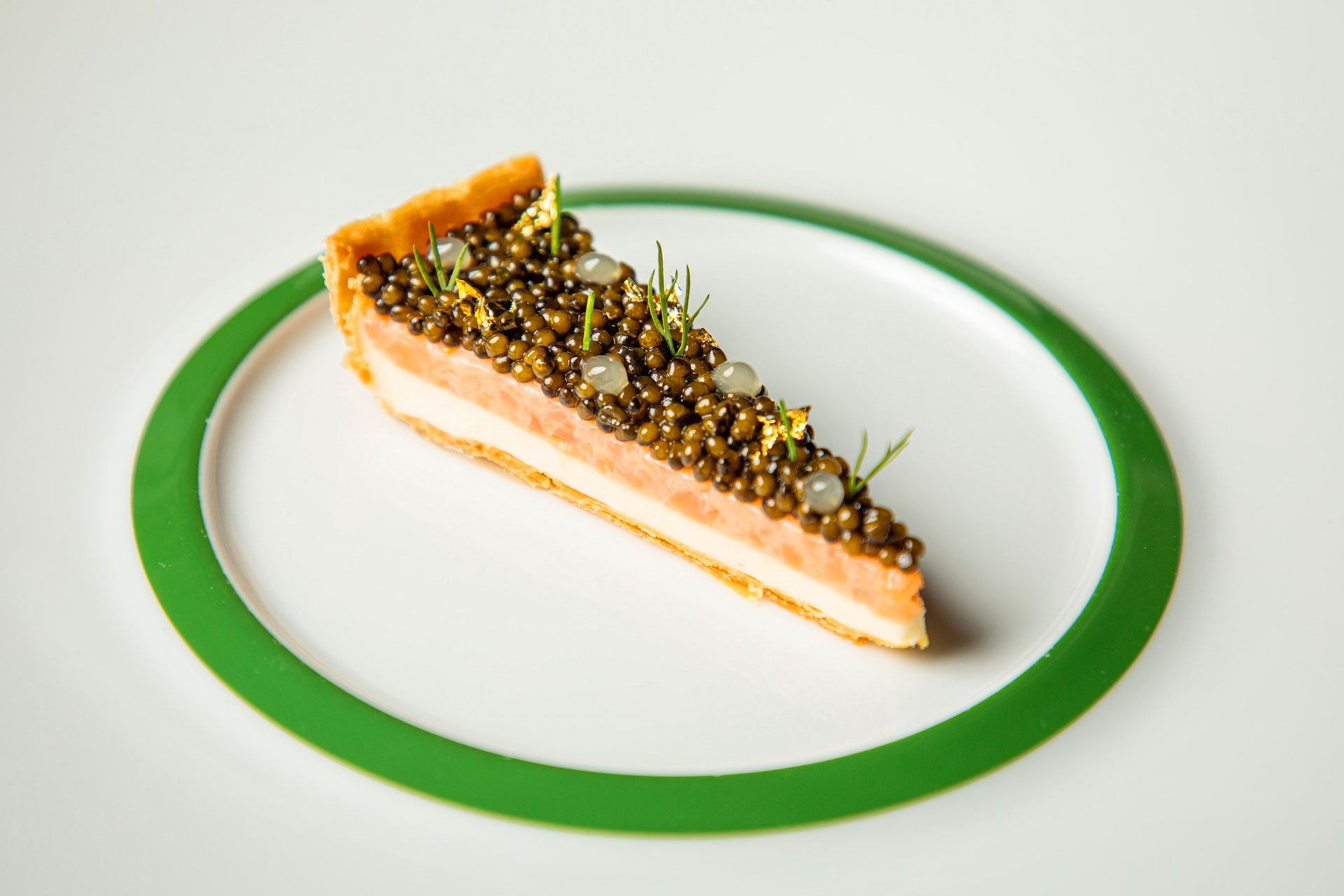
Emeril’s offers a savory take on cheesecake: its signature smoked salmon version was the first dish Emeril put on the menu when the restaurant opened, and it has remained ever since. Today, his son, E.J. Lagasse, serves as chef and continues to make the dish. “There have been many versions of it in our 36-year history,” he says, “but this is my favorite, where we add Petrossian caviar.”
A key element is Creole cream cheese, which is made in New Orleans and similar to ricotta. It’s blended with crème fraîche and a touch of honey, then spread into a savory pastry shell. On top, a layer of smoked salmon mousse is mixed with diced smoked salmon. The dish is finished with a generous layer of caviar and small dollops of lemon gel.
Francie’s
Brooklyn, New York
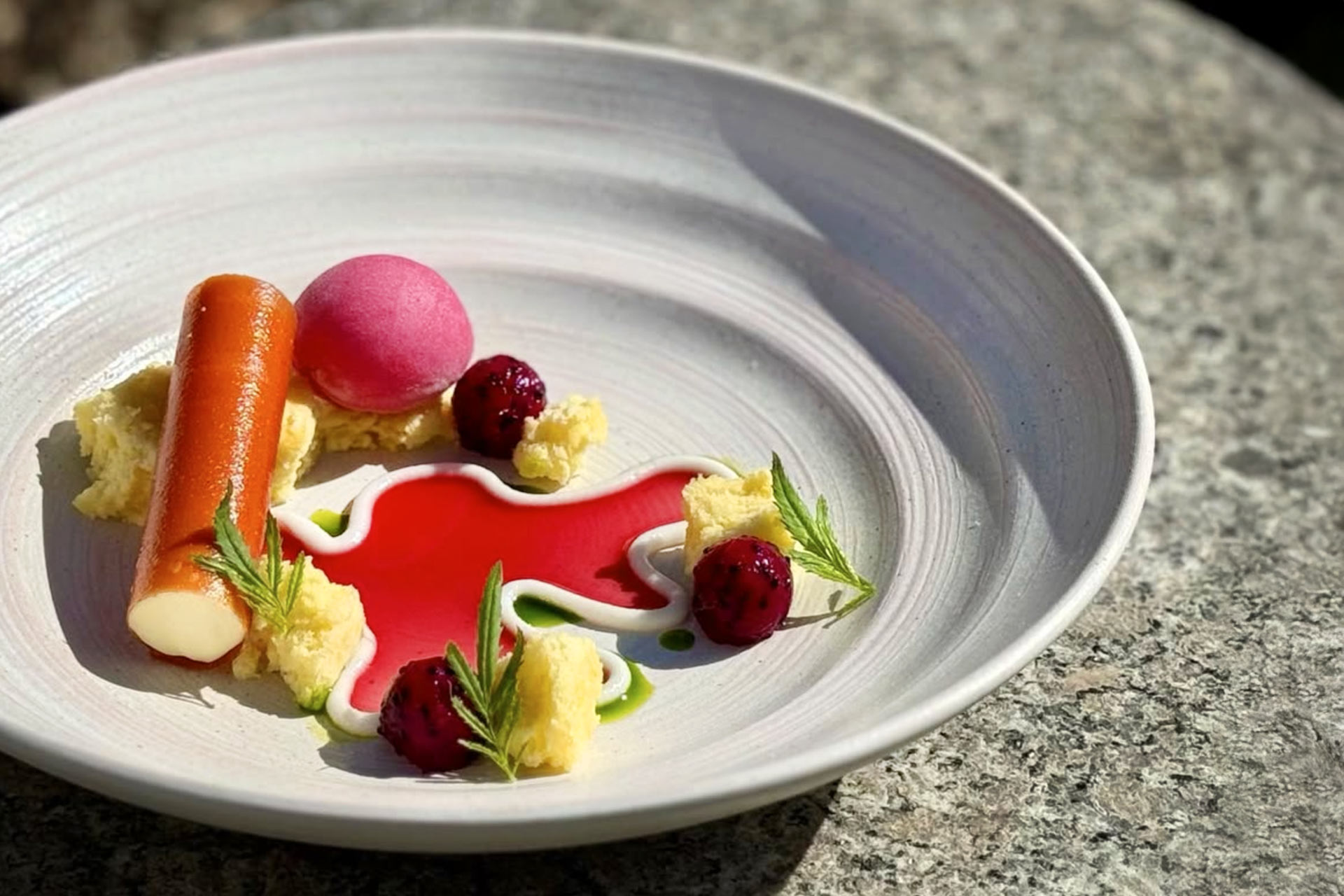
Frigid weather was the impetus for Francie’s guava cheesecake. “This dish went on the menu in the middle of the winter storms here in New York City, when we were all longing for somewhere warm and tropical,” says pastry chef Justin Binnie. The dessert is based on the classic Latin American pairing of guava and cream cheese.
There are multiple components to the dish. Binnie pipes creamy cheesecake into a tube of dehydrated guava purée, then doubles down with torn pieces of baked chiffon-style cheesecake for even more cheesecake on the plate. Other accompaniments include prickly pear sorbet and dragon fruit balls — both cactus fruits. A ruby-red prickly pear-mezcal sauce is enclosed within a ribbon of coconut-lime pudding.
The final touch is with huacatay, an Andean herb known as black mint, which appears as both an oil and a fresh garnish.
Junoon
New York, New York
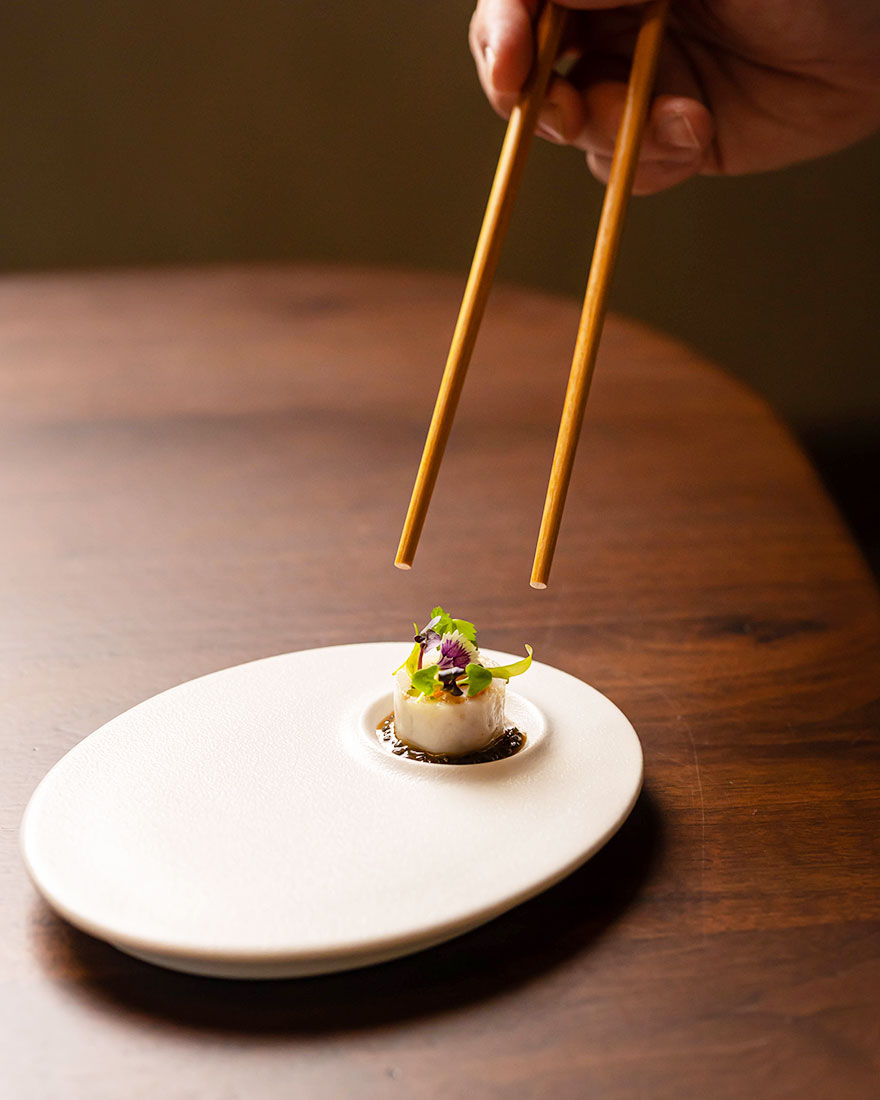
Cheesecake is a New York staple, and at Junoon, executive pastry chef Gustavo Tzoc incorporates Indian flavors into the classic.
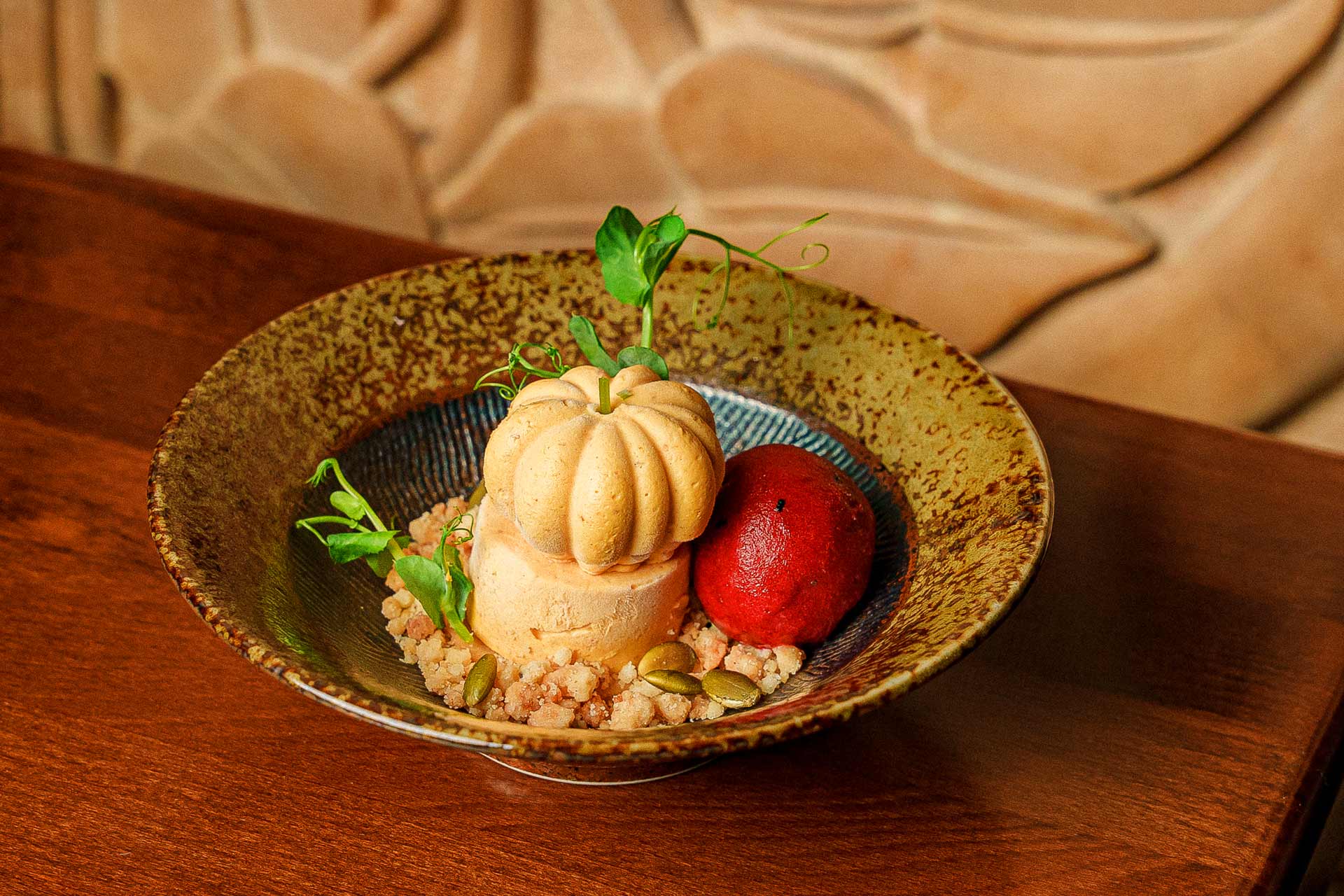
To make it, he blends cream cheese with dahi, a creamy, slightly sour Indian curd (similar to yogurt) that has been hung for 24 hours to drain off the whey and thicken. This is folded with whipped cream and butternut squash purée, creating an airy texture. It’s then molded and frozen into both a disk and a pretty squash-shaped form.
“We pair the cheesecake with a crumble made with jaggery (unprocessed cane sugar), green cardamom and Amul buffalo butter. The final touch is kamalam (dragon fruit) sorbet, grown in the Indian states of Karnataka, Kerala, Maharashtra, Gujarat and the Nicobar Islands since the 1990s,” says Tzoc.
Mexta
Austin, Texas
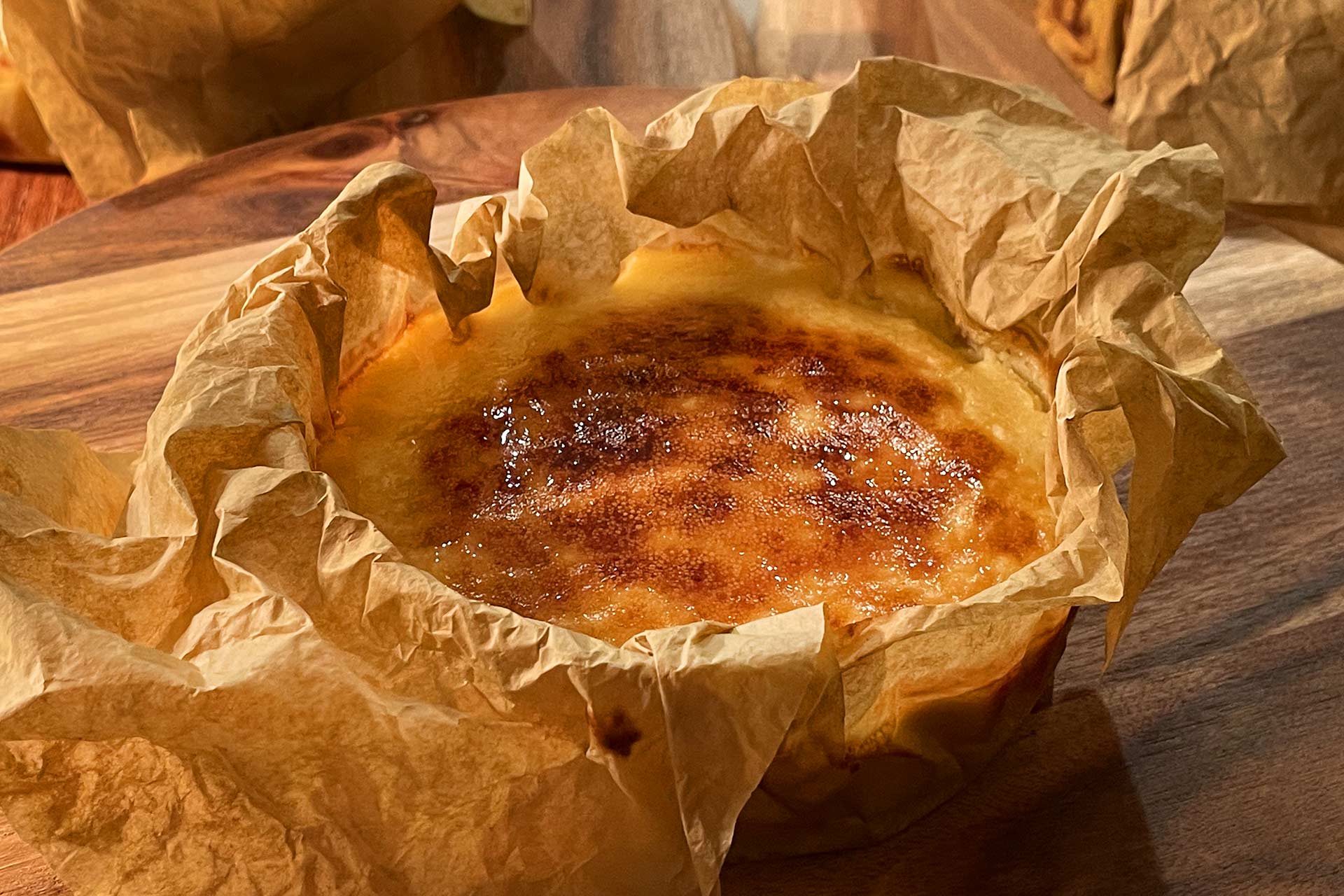
At Mexta, the Tarta de Queso Cremoso Al Horno (creamy baked Basque-style cheesecake) is a direct homage to the iconic version from Bar La Viña in San Sebastián, where Chef Mikel Alonso grew up. “It’s a deeply emotional recipe for me,” he says, “and we aim to respect its essence while bringing it into our own context.”
The kitchen starts with a cream cheese base, then builds complexity with two additional cheeses: Cambozola for richness and aromatic depth, and Parmesan for salinity and umami.
Rather than relying solely on sugar, the team uses a mix of sweeteners. Reduced sucrose supports the cake’s structure, while organic honey and maple syrup add layered sweetness. A touch of stevia fine-tunes the balance.
The dessert is baked to order and the baking process is just as critical. The cake emerges from the oven still slightly unstable, then settles as it rests, reaching its final form: a deeply caramelized exterior and a soft, creamy interior that sets with residual heat.
To serve, Alonso keeps it simple. “We finish it with a touch of organic honey and finely grated Parmesan,” he says, “reinforcing that balance between sweet, savory and umami that defines the dish.”
Tâm Tâm
Miami, Florida
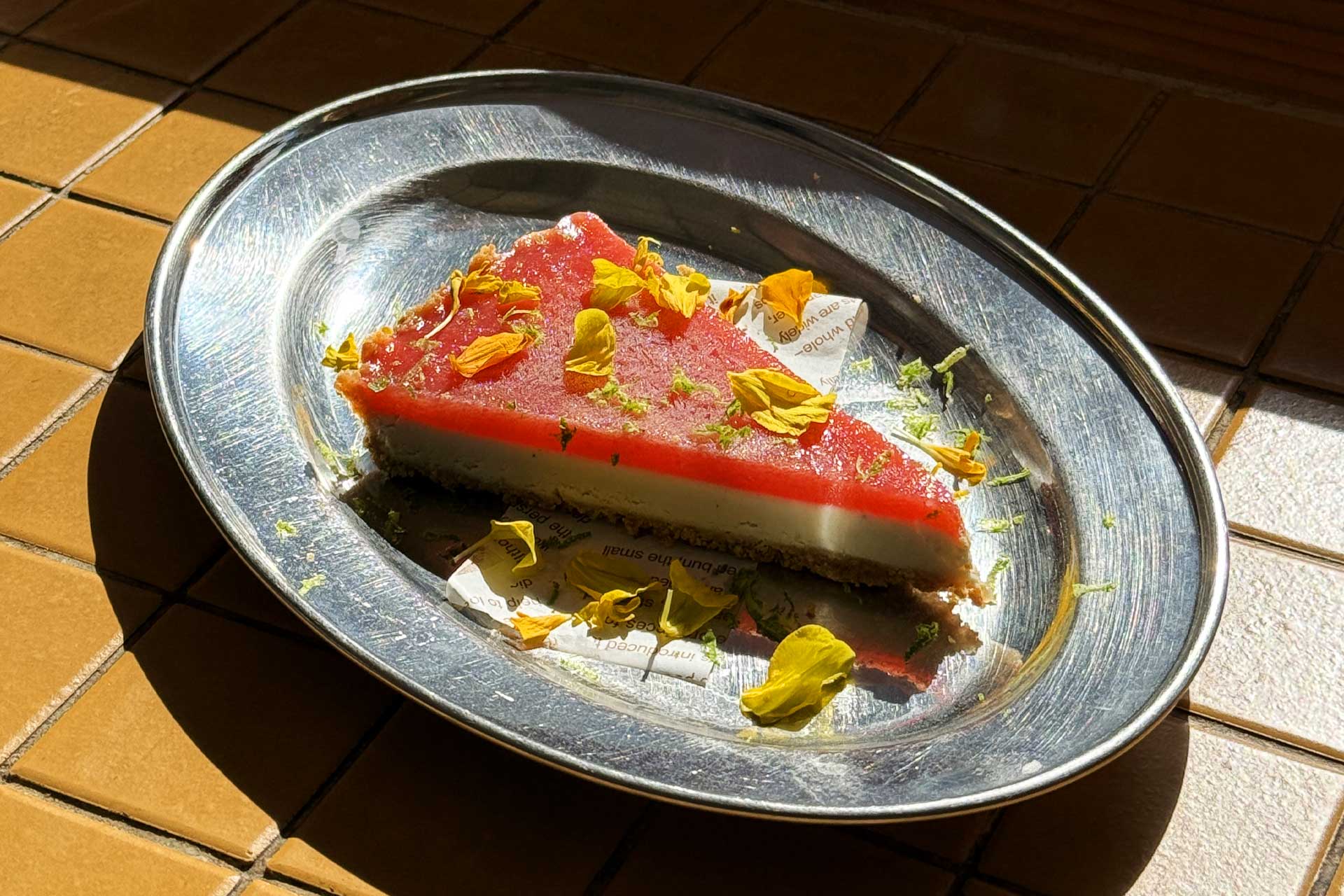
Serving a vegan cheesecake doesn’t mean sacrificing flavor. At Vietnamese restaurant Tâm Tâm, the team turned to local baker Lauren Ochoa of Isabel’s Vegan to create a version that reflects the bold and funky spirit of the place.
The crust is an homage to Miami’s Hispanic culture, made with Maria cookies — thin, lightly sweet, crisp biscuits found in many Latin households. For the filling, Ochoa ferments cashews before blending them to achieve the tang typically found in dairy-based cream cheese.
The striking gelée that crowns the cheesecake varies. “The flavors rotate based on the seasonality of South Florida’s tropical fruits, with past varieties including guava, mango, passionfruit and soursop. We finish it with lime zest for a bright lift and local marigold petals for garnish,” says Chef Tam Pham. “It really works because there’s a natural overlap between the fruits celebrated in South America and those found in Vietnam.”
Hero Image: Cheesecake with an Indian twist. © Junoon
Thumb Image: Basque cheesecake with chocolate and compote of citrus-poached cherries. © One Off Hospitality/avec