23 April 2026

Share


The Bib Gourmand is a special distinction recognizing restaurants serving high-quality food at great value, helping diners discover outstanding meals for every occasion and every budget. There’s no set formula for a Bib Gourmand restaurant; each one has its own distinct character. What Bib restaurants do have in common is their simpler style of cooking — you typically won’t find molecular gastronomy or extremely precious ingredients. Instead, these restaurants leave you with a sense of satisfaction without breaking the bank.
Jahunger, a restaurant specializing in Uyghyur cuisine, was awarded a Bib Gourmand in 2025.
What is Uyghur Cuisine?
It’s a little tricky to pinpoint Uyghur (pronounced WEE-gur) cuisine, as it draws from Central Asian, East Asian and Middle Eastern influences. A typical Uyghur menu might include steamed dumplings, savory baked pastries, rice pilaf, naan, lamb skewers, hand-pulled noodles, stir-fried lamb and braised chicken with potatoes.
You could argue that this is the original fusion food, shaped over centuries.
To understand the cuisine, it helps to know its people. Uyghurs are a predominantly Sunni Muslim group from northwestern China’s Xinjiang Uyghur Autonomous Region, with communities across Central Asia. Xinjiang borders eight countries, including Russia, Pakistan and Afghanistan, and was a key stop along the ancient Silk Road. That history informs the wide range of spices and cooking techniques found in Uyghur cooking.
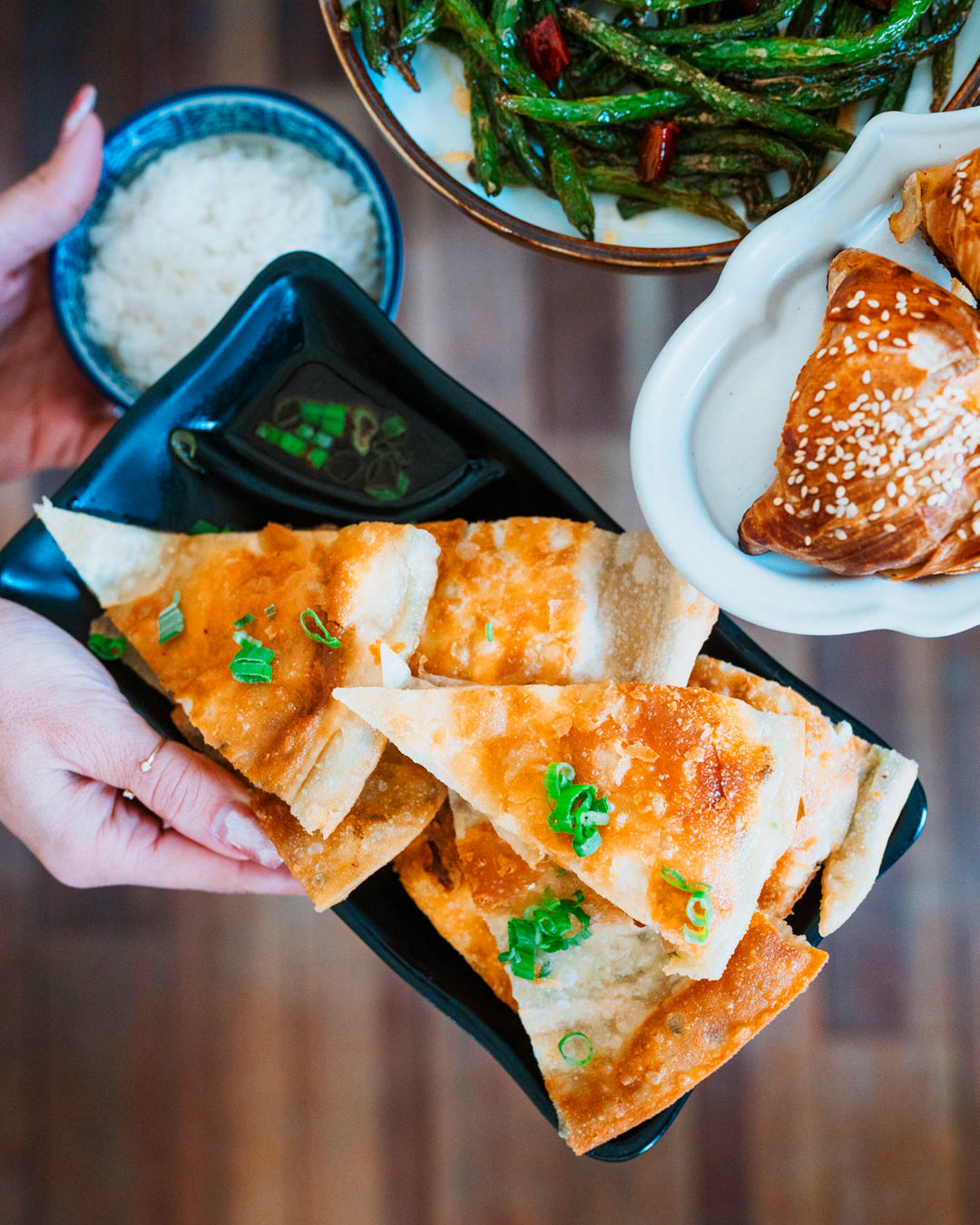
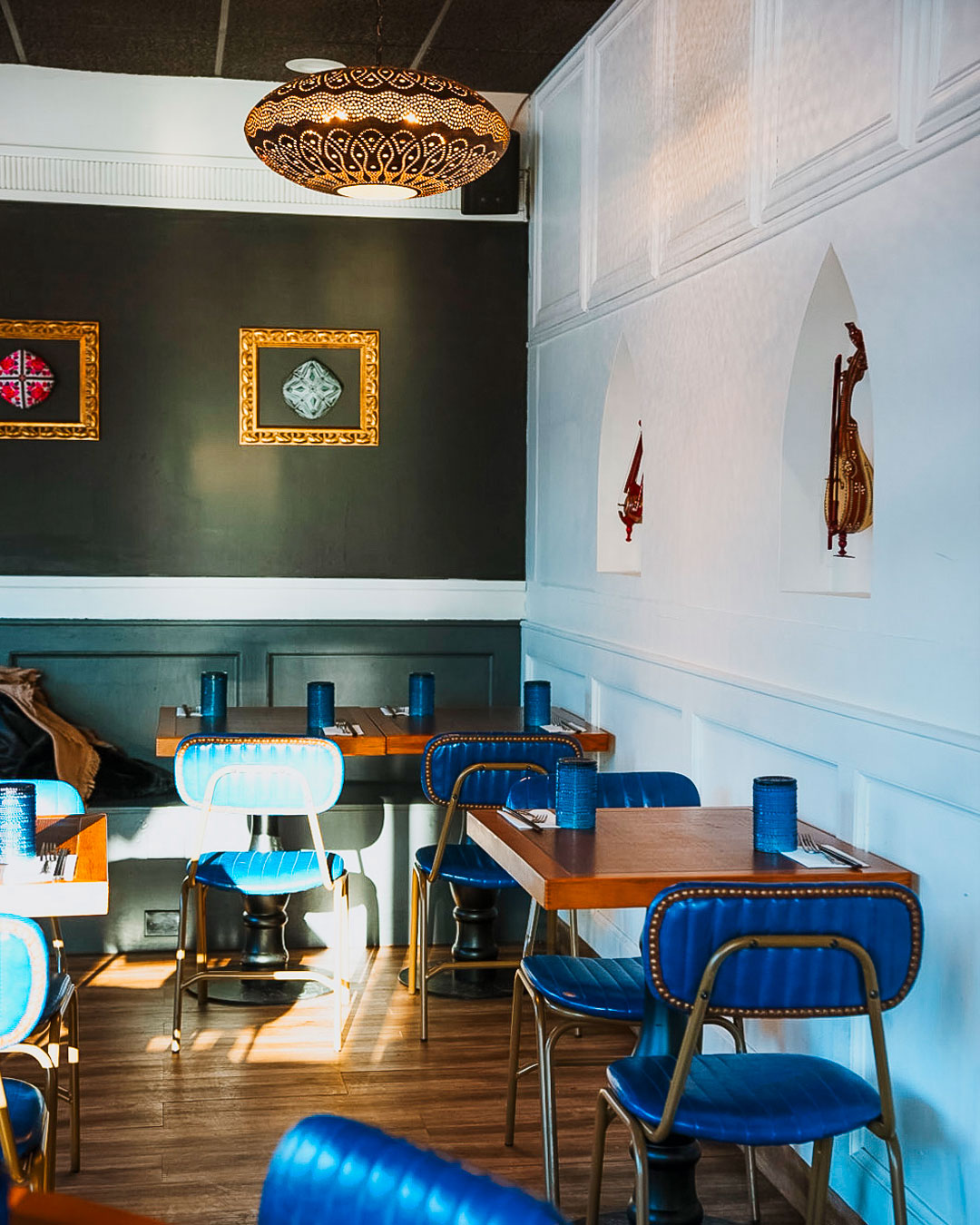
Signature Dishes, Flavors and Cultural Traditions at Jahunger
“The food is very bold, aromatic and complex in flavor,” says Chef Subat Dilmurat. He and his wife, Nadia Parhat, opened Jahunger in Cambridge, Massachusetts, in 2024 (their first Jahunger opened in Providence, Rhode Island, in 2017).
No dish is more central to Uyghur food and culture than polo, a pilaf of seasoned rice, meat and carrots slowly stewed in oil. Many Central Asian countries have their own version — Uzbeks call it plov; Afghans call it palau — but in Uyghur culture, it is both a staple and a ceremonial dish, often served at weddings and gatherings.
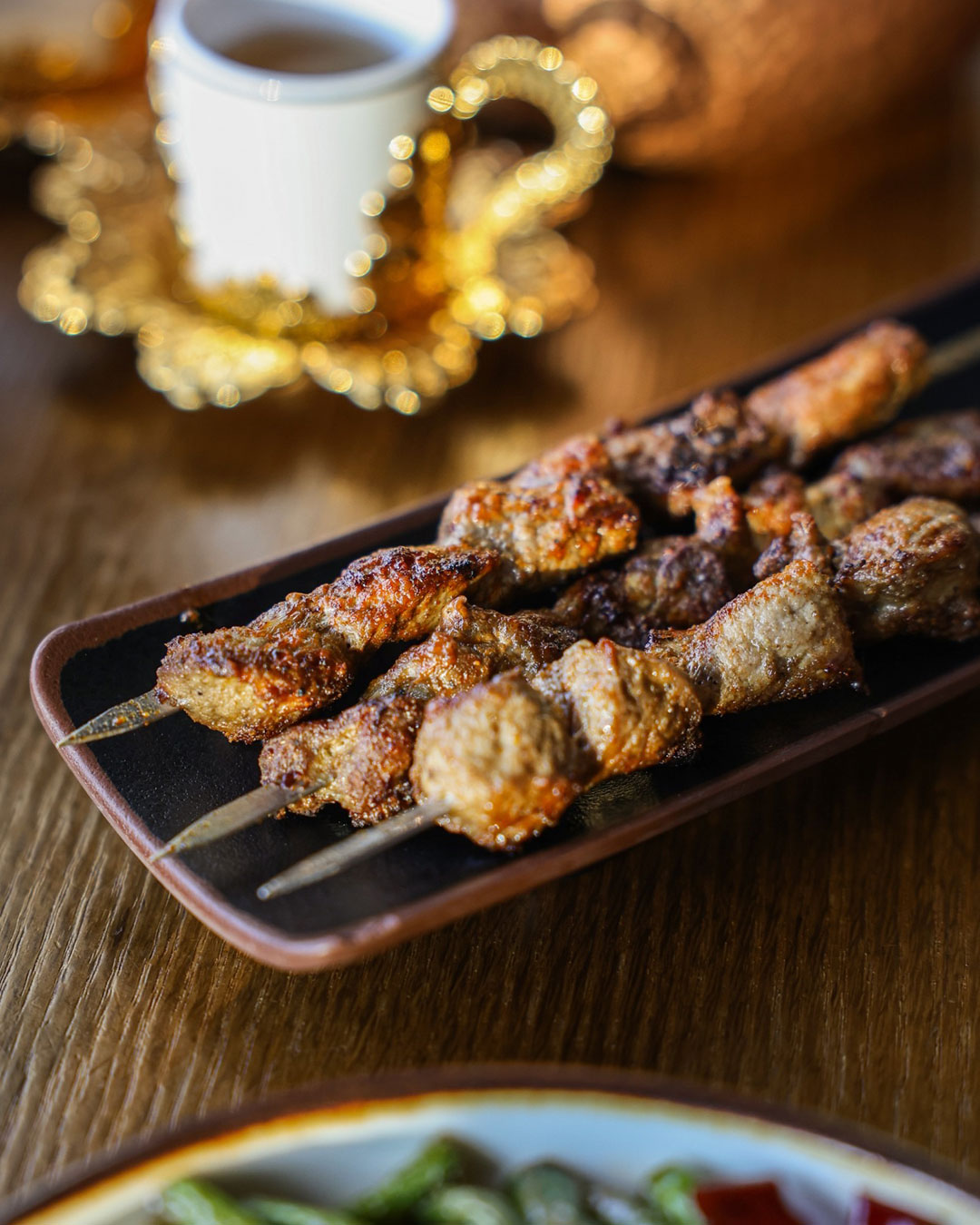
Another staple, and a favorite at Jahunger, is lamb kavap (kebabs). Uyghurs typically season the meat with cumin and pepper; at Jahunger, the lamb is marinated, then hand-cut and skewered before being grilled.
There are only about 15 dishes on the menu at Jahunger and Parhat says, “nothing tastes the same; each dish has its own distinct flavor.” Working in the front-of-house, Parhat is often called upon to explain the food to customers. She says that it’s meat-forward, with beef, chicken and lamb as staples, while seafood is uncommon.
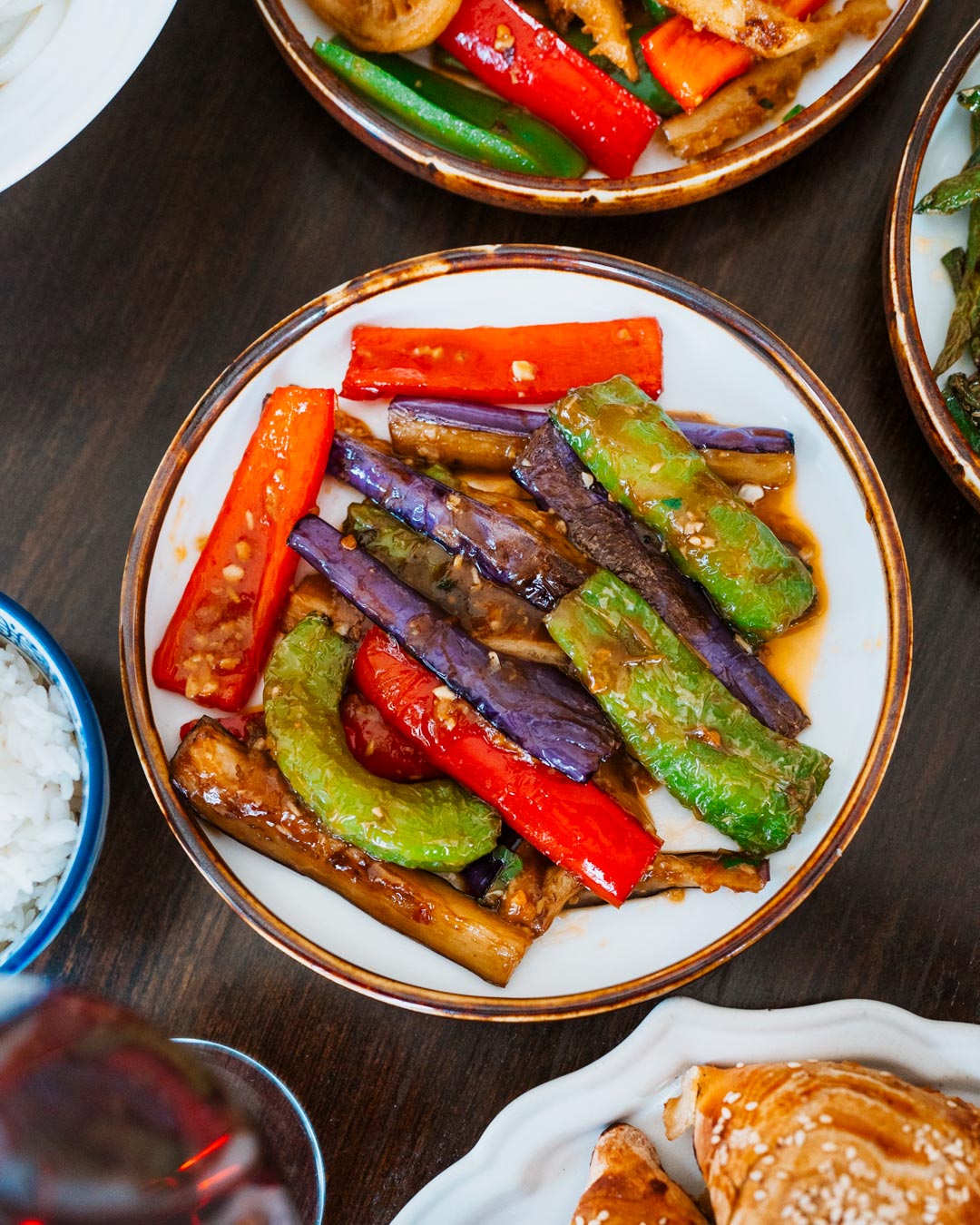
Hand-Pulled Uyghur Noodles and the Art of Laghman
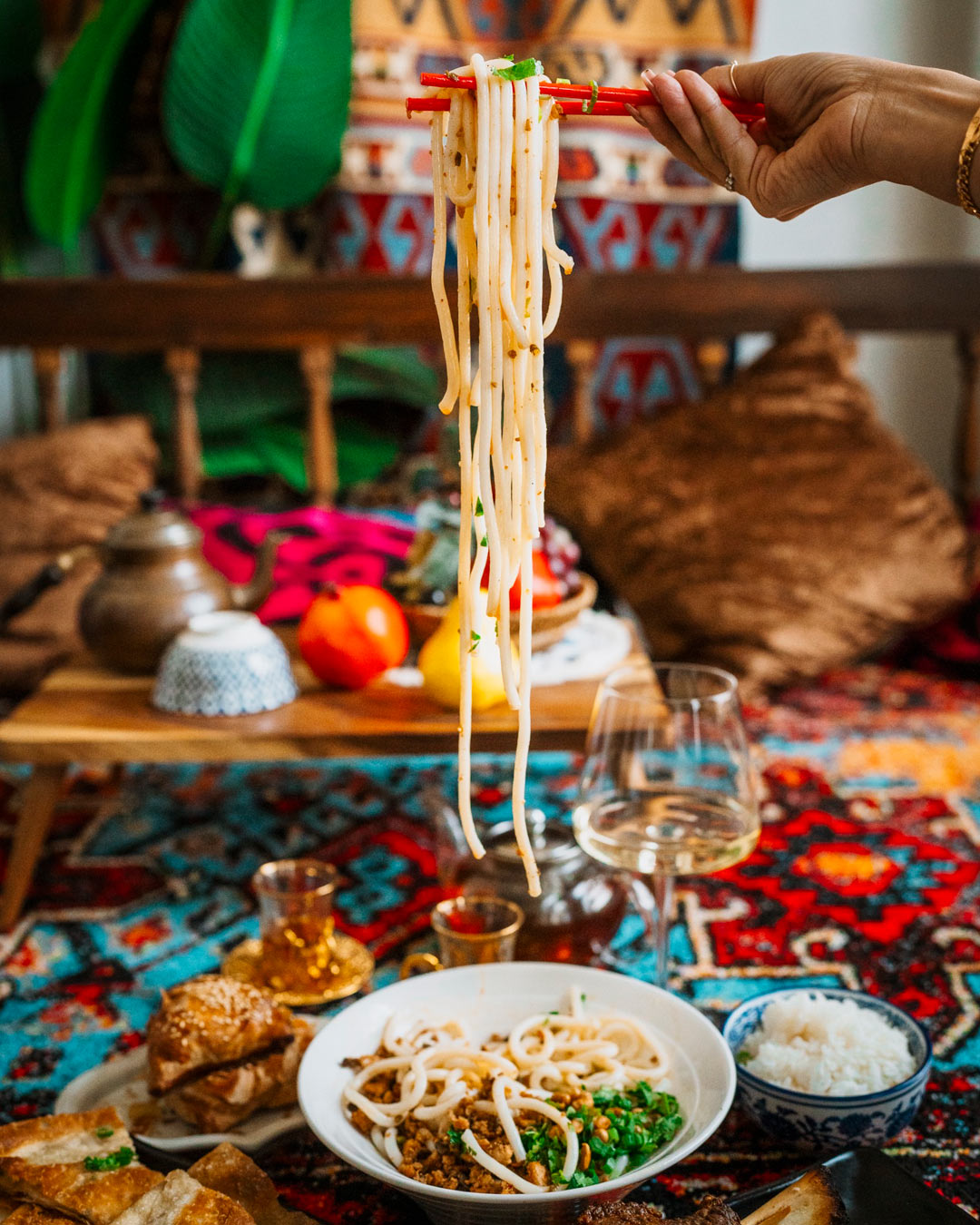
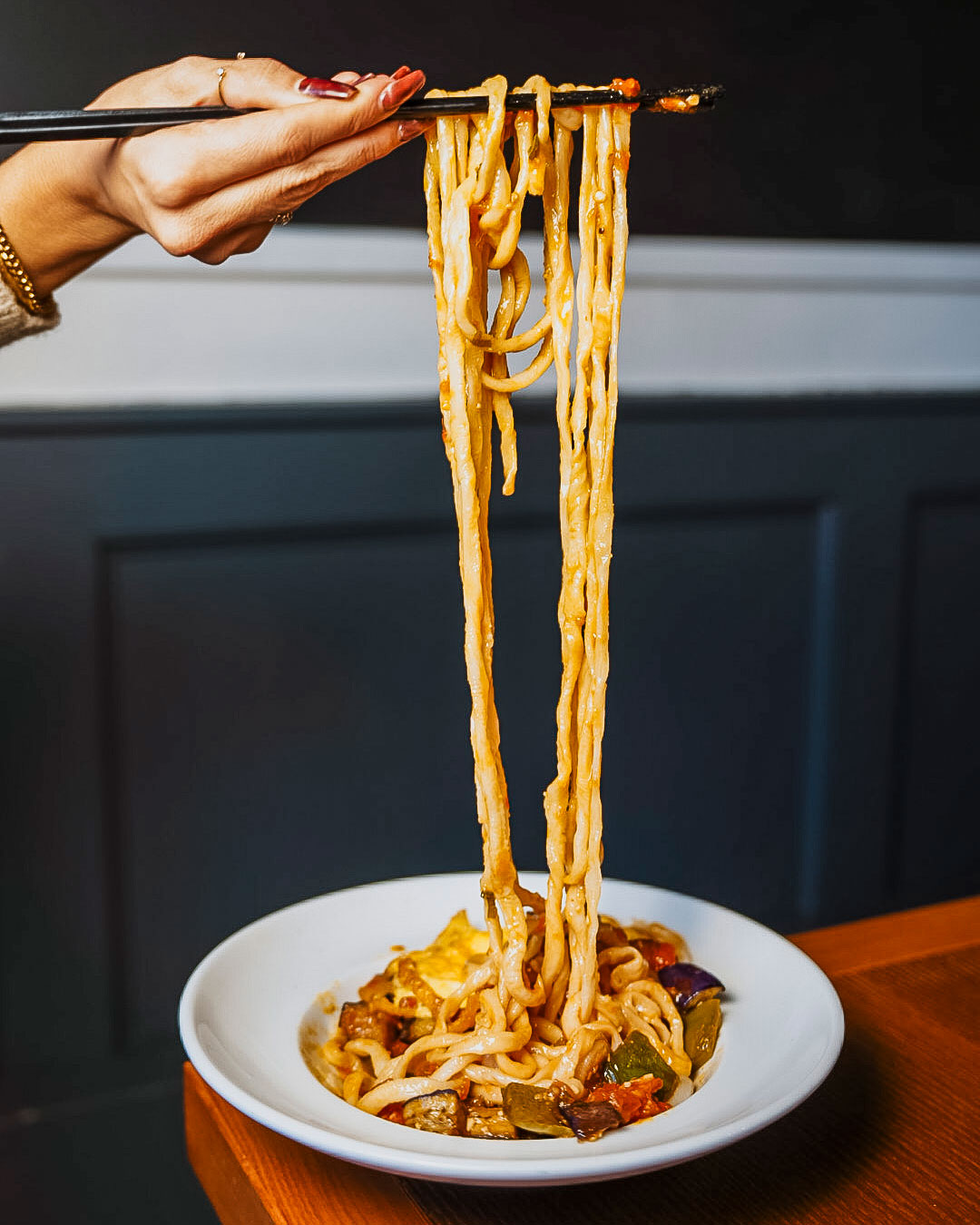
Noodles, however, are essential; each morning, a team comes into the restaurant to prepare fresh batches. One signature dish is the hand-pulled Jahunger noodle, created by Dilmurat’s father in 2012 at his restaurant of the same name in Ürümqi, China.
“He had this idea that every fried noodle dish was lacking in flavor,” says Dilmurat. “People don’t use chives on fried noodles, but he thought it was lacking them. So he put chives in the noodles, and everything just changed.”
The Jahunger noodle dish is made up of thick, chewy noodles wok-fried with marinated beef, onions, chives and a tingly chili sauce that includes Sichuan peppercorns.
Laghman noodles, by contrast, are thinner but equally beloved across the region and beyond. This stir-fry combines marinated beef with onion, garlic, chives, cilantro, spices, chilies, soy sauce and the hand-pulled noodles.
“Laghman is something you look for when you go to Uyghur restaurants,” says Parhat.“My parents, no matter where they go, how far they’re traveling, they’re like, ‘oh, as long as I have one plate of Laghman noodle, I’m satisfied,’” adds Dilmurat.
The dish, if done well, takes time. “You have to develop the flavor in three stages, building it step by step,” he says.
Beyond Noodles: Uyghur Comfort Dishes, Yanji Chili Flavors and Evolving Xinjiang Cuisine
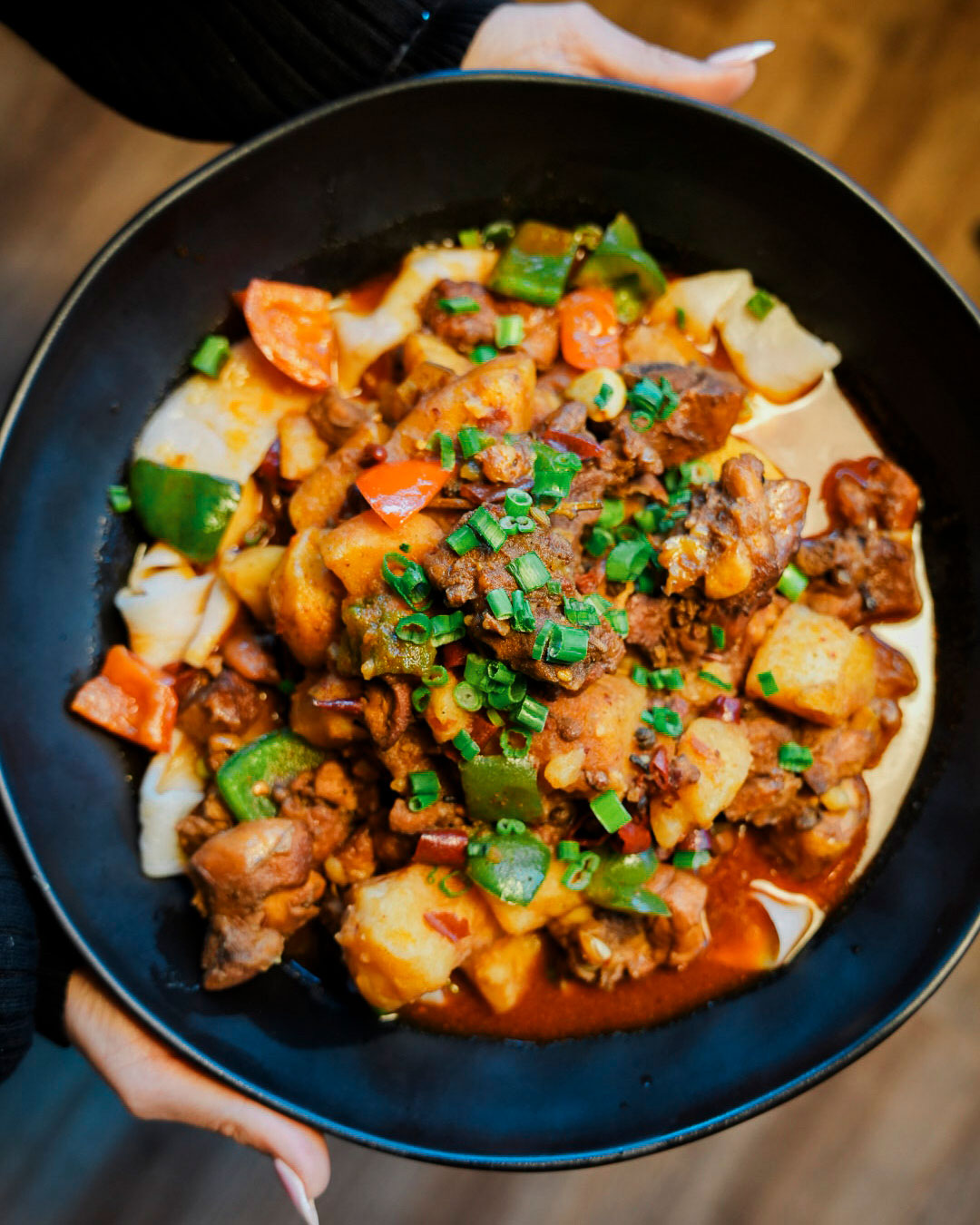
It’s not all noodles, however. At Jahunger, the bone-in chicken stew is pure comfort, laced with Yanji chiles — a sun-dried chili imported from the region of the same name in northeast China and essential to the dish.
“This is the only area that grows the chili used in this chicken stew. Nowhere else in the world has it. It’s not spicy, but it gives a kick; it just unifies the dish,” says Dilmurat.
Dilmurat updates the menu periodically, introducing dishes from his childhood as well as newer iterations popular in Xinjiang.
“I traveled to Xinjiang Province in February of last year, and I brought back three new dishes that I grew up with,” he says. “I wasn’t able to execute them here [before I went back to Xinjiang] because there was just so much to learn.”
“Every time I go, I bring back new ideas — foods people are embracing now, or dishes that are becoming popular,” he says. “It’s constant learning and discovery.” This, even in a cuisine that is centuries old.
Related Articles:
Hero Image: Polo © Jahunger
Thumb Image: Original Meefen © Jahunger