27 April 2026

Share


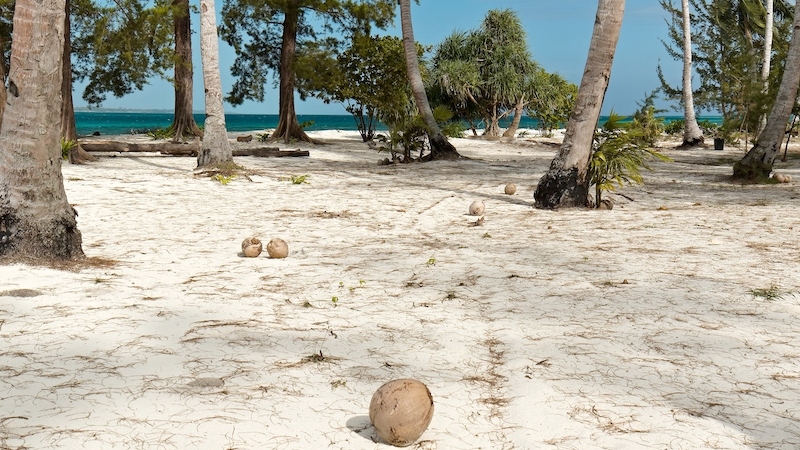
Jolo, the capital of the province of Sulu, is a small, peanut-shaped island 90 miles off the southernmost coast of the Zamboanga Peninsula. From Mang Sali Beach in Parang to Man’s Beach in Luuk, the sand is sugary white and the sea impossibly blue. On each corner of the island sits a volcano, or a cluster of them, forming tuff and cinder cones, deep and shallow crater lakes. The last recorded eruption was in 1897, but the ground remains packed with pyroclastic materials — and from this nutrient-rich soil, families harvest abundant crops: cassava, corn, coconut, all kinds of rice and tropical fruits like mangosteen, jackfruit and durian.
This is the Jolo that Chef Miguel Cabel Moreno remembers.
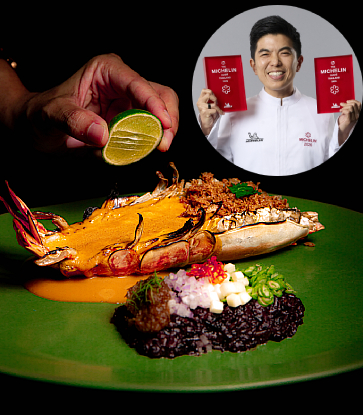
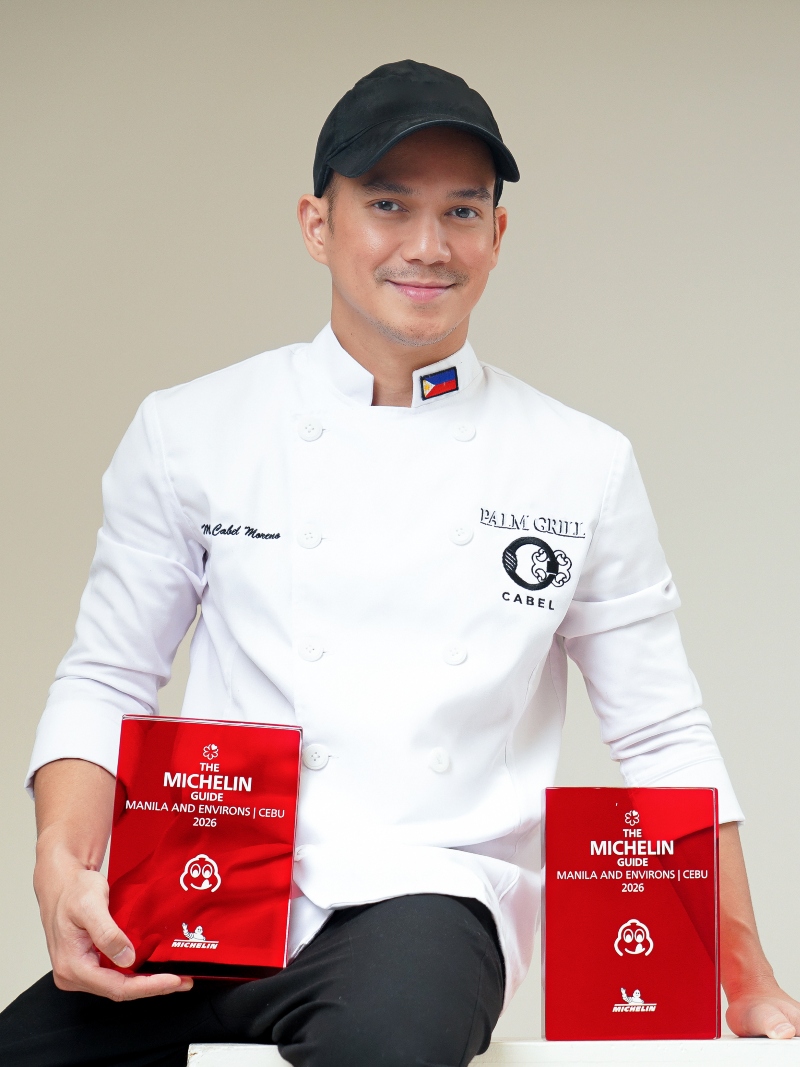
Before becoming the first Tausug chef to receive two MICHELIN Bib Gourmand awards — one for Palm Grill (Diliman) in Quezon City and another for Cabel, which stands right across from the Malacañang Palace — Moreno was a curious kid wandering into his grandmother’s kitchen, following the trail of burnt coconut wafting through the air.
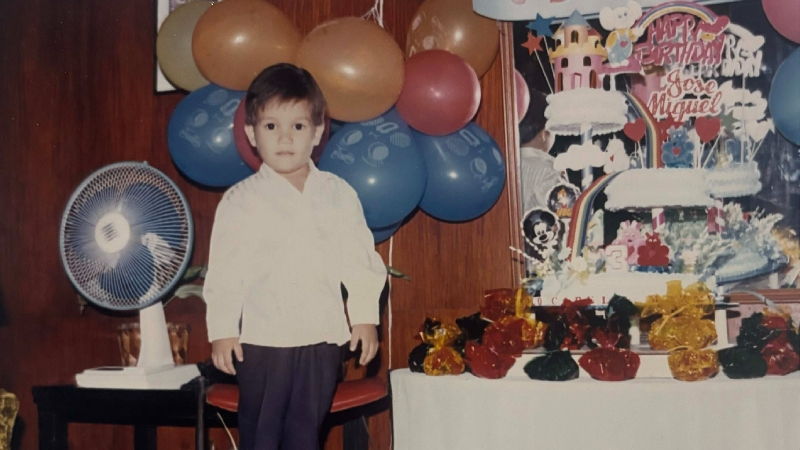
“I fell in love with cooking when I was 8 years old. In my grandmother’s ancestral home in Sulu, kids were allowed in the kitchen. It was an open kitchen. I was encouraged to ask questions.” While other households barred children from getting too close to fire or handling knives, the Cabel family kitchen was a sensory training ground.
Burnt coconut is a central device in Tausug cuisine. In the days before a special gathering, coconut flesh is scraped from the shell and held over flames until it darkens. Once it catches smoke, the charred flesh is then pounded into a powder and worked into a paste called the pamapa itum. When blended with aromatics like galangal, turmeric and spices, this black seasoning becomes the foundation for the deep flavors in the region’s most celebrated dishes.
Miggy Cabel Moreno © Darrel Pobre
“To me, the aroma of burnt coconut is like the smell of Christmas. It has that same effect,” Moreno says, recalling the festive mood of preparing the burnt coconut paste. “When I smell it, it signals a celebration and that people are coming over — and that we’d get to try all of these delicious dishes!”
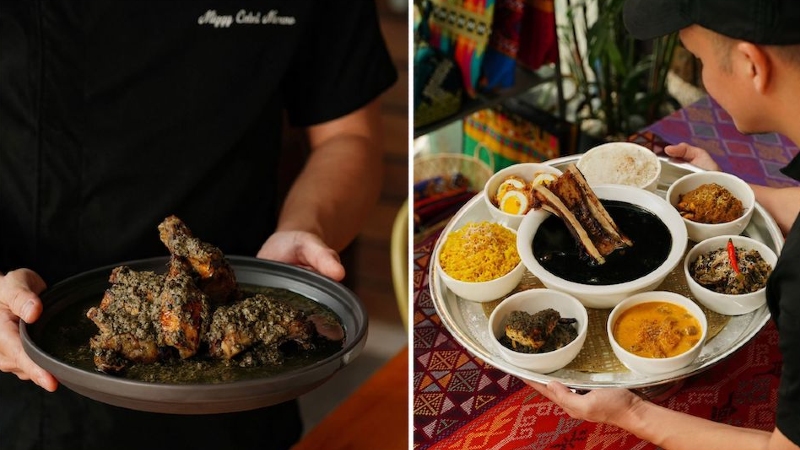
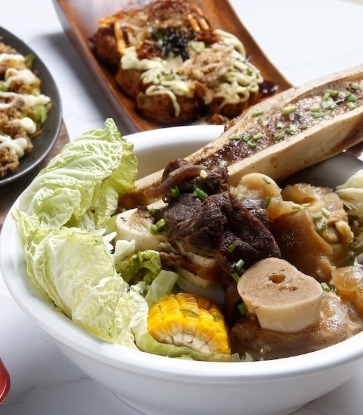
Piyanggang manok is curry-like, the chicken marinated in burnt coconut spice before cooking. Once reserved for royalty, tiyulang itum is a traditional beef soup, blackened by the pamapa itum.
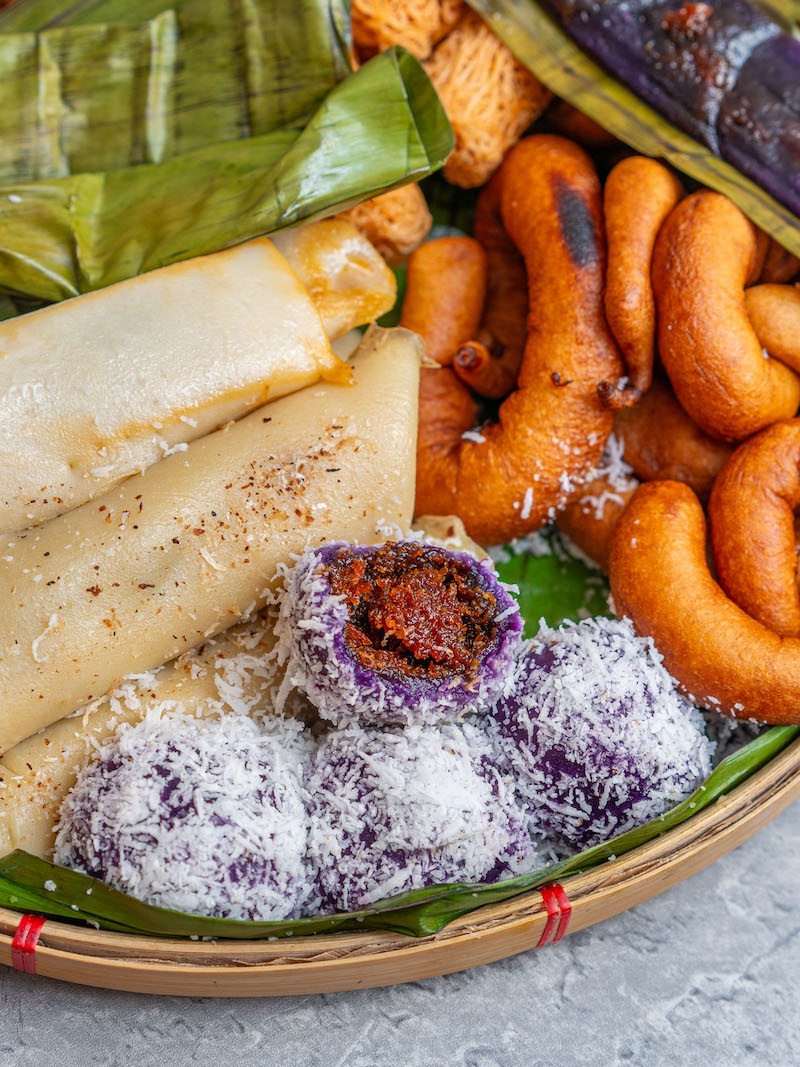
After the savory dishes, kids look forward to putli mandi (pictured on the left), purple rice balls filled with sweet coconut cream and coated in more shredded coconut, and daral, crêpes filled with hinti, a caramelized coconut filling.
It wasn’t until their family vacations in Manila that Moreno noticed the absence of these comfort foods from his childhood. “When we dined in Filipino restaurants, we couldn’t get those specialties. The menu was always a spread of Luzon and Visayas specialties. That’s when I felt that representation was lacking. That’s when I really felt the silence — and the wanting to be the voice [for Mindanaoan cuisine].”
Putli Mandi © Ching Dee
His search brought him to Quiapo in the heart of Manila, where clusters of Muslim-owned stalls sold halal products, to Dulang Restaurant in Ermita for a bite of chicken pastil, and to Maranao-owned kiosks in Greenhills Shopping Center for that familiar hit of spicy burnt coconut. He realized you could enjoy Mindanaoan food in Luzon — but you had to know where to look.
That stigma had a way of showing up even at the table. Moreno recalls a Sunday lunch at Palm Grill (Diliman) when a family eating at his restaurant for the first time loved everything so much that they called him out of the kitchen to say so. Then came the joke: “Chef, I hope you don’t feel offended, but if we ever get kidnapped in Jolo, will our kidnappers serve us the same meal you served us today?”
Moreno, with years of hospitality training behind him, composed himself and laughed. He told them he didn’t wish for anyone to get kidnapped — and joked that kidnappers had a selective clientele. The table found it funny, but Moreno walked back into the kitchen feeling the full weight of how much work was still ahead of him.
“What matters most to me is that I'll be able to change people’s perspectives. Even if it takes me repeating myself again and again.”
Sulu is a heartland of Islam in the Philippines, but it is also home to about 115,000 Christians, roughly 10% of the total population. In downtown Jolo, the Cathedral of Our Lady of Mount Carmel stands only 500 yards away from the Masjid Tulay, Sulu’s grand mosque. In the same town square, Filipinos go about their days, the white and green minarets of the mosque and the tall stained glass windows of the cathedral rising together in the background.
“Half of my family are Muslim, and half are Christian,” says Moreno, a Christian himself, and a living example of that harmony.
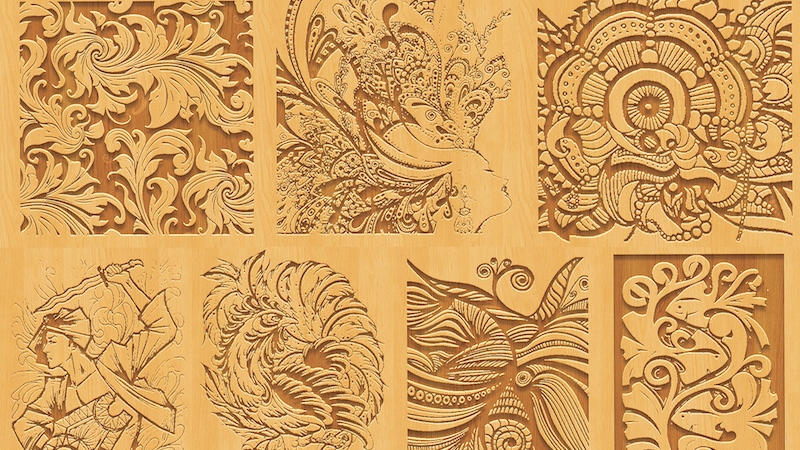
There are more than a dozen Lumad (Indigenous) and Muslim tribes across this second-largest island in the Philippines. Mindanao tells the story of the Maranao people along Lake Lanao, with traditional okir motifs curling across brass and wood and fabric. It is also about the Badjao, the “Sea Gypsies” of the Sulu Sea, known around the world for their free-diving abilities. It is also the Yakan of Basilan and their intricate weaving prowess. It is the Tausug, the Maguindanaon, the B’laan and the T’boli. Much remains to be explored and embraced about the many southern tribes that influence our language, enrich our culture and shape our national consciousness.
And, of course, feed our appetites.
“I look at all of these tribes like a giant weave: different colors of thread that come together to form a beautiful pattern. Every thread plays an important role, a unique character that adds something beautiful when you look at it as a whole.”
Moreno knows that this tapestry of taste is true for the archipelago as a whole. “And that’s no different from other Filipinos from Visayas and Luzon. Wherever you go in the Philippines, you’ll always find similarities in the food. That’s what binds us together.”
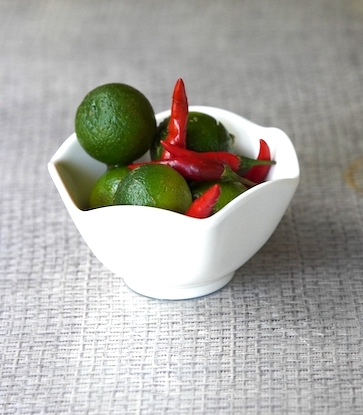
But step into any part of Mindanao and the flavor profile of Philippine cuisine takes a 180-degree turn, Moreno emphasizes. The difference is in the aromatics. Where a dish like adobo asks for a simple bay leaf, its faint note an echo underneath the vinegar, soy sauce, salt and pepper; the piyanggang manok asks for seven spices: lemongrass, turmeric, galangal, sakurab (a traditional Philippine vegetable similar to scallions) and a symphony of chilies that build on each other slowly, each one necessary.
“It’s so flavorful, so vibrant. That’s what sets Mindanaoan cuisine apart.”
The flavors that define Mindanaoan cooking today are the result of a conversation with the rest of Southeast Asia since the 13th century. Malaysian, Indonesian and Philippine palates find each other in sambal, galangal and other coconut-curry preparations.
“To me, it’s very simple. Authenticity is not diluting and erasing history. It’s sharing the stories behind the cuisine, the people, the culture, the heritage.” At Palm Grill (Diliman) and Cabel, the key ingredients — coconut, spices and some seafood — are sourced directly from Mindanao. The supply chain also supports the farming and fishing communities in Moreno’s hometowns.
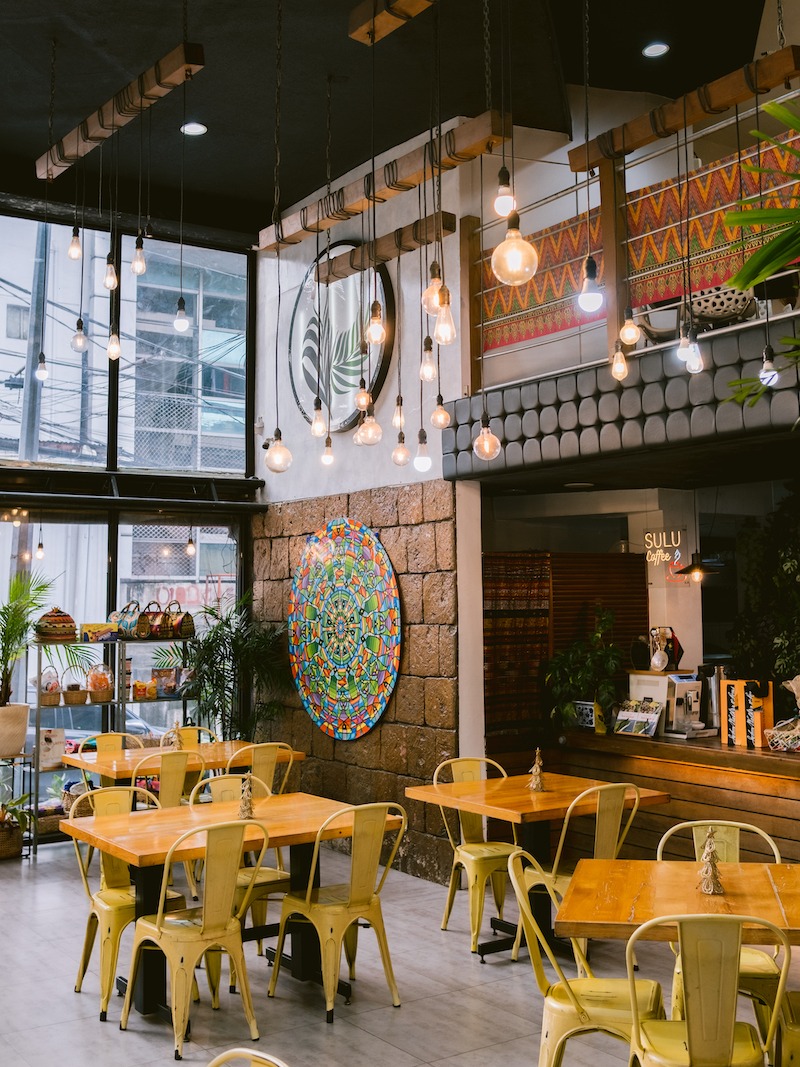
“In the Tausug culture, celebrations are theatrical and vibrant,” Moreno explains. “We wanted to present it in such a way that people feel that.” When the tiyulang itum arrives at the table, the bone marrow is torched in front of the guests, further whetting their appetites.
He understands that a palate unaccustomed to spice will require small adjustments. In his restaurants he offers guests the option to have dishes served spicy, mildly spicy, or not. To him, this does not erode authenticity because the goal is access, not alienation.
© Jayson Rangel
Some things, however, are not up for negotiation. To respect halal standards, no pork or alcohol is used in the kitchen. Cooking methods must follow tradition — marinating and dry rubs take days. Coconut is still charred, pounded and ground into paste.
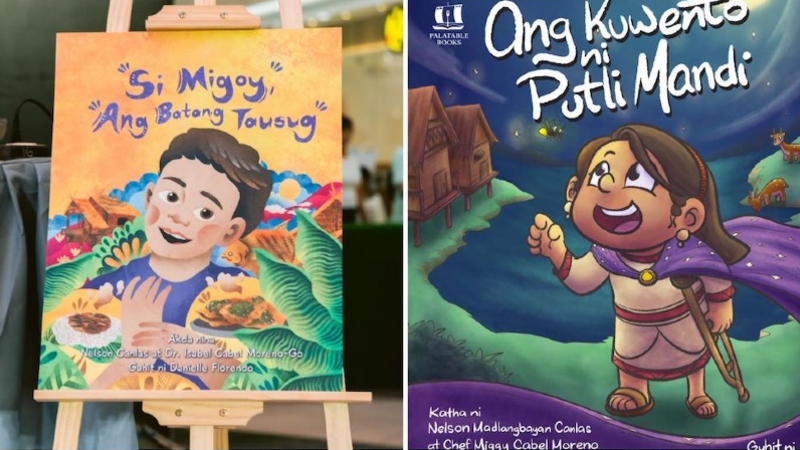
Moreno has also co-authored two children’s books — Si Migoy, Ang Batang Tausug and Ang Kwento ni Putli Mandi — with his husband and sister. By making Tausug culture accessible to the youth, a better-informed future may arrive.
In a country of several thousand islands speaking over a hundred tongues, it’s no wonder one can easily misplace Filipino-ness. But for Moreno, food is the fastest way to find it again.
“When I travel, I miss the taste of beef satti,” Moreno reminisces about the sweet and spicy flavors of another Tausug favorite, grilled beef skewers in a thick red sauce, eaten with soup and rice. “But I also really love pochero!” He grins, imagining the sweet, savory broth of the beef stew, flavored by saba (a variety of banana) and tomatoes, a comfort he developed in Luzon.
With Palm Grill (Diliman) and Cabel, Moreno is not introducing something new. Rather, he reminds his diners that the complex spices, the aromatic condiments, the sambal one enjoyed on vacation — they were all already part of Philippine cuisine, too. In the rush to simplify and map out regional cuisines, we miss a broader target: instead of talking about how we are different, we are urged to remember how we are the same.
“I’m happy to share and announce that after nine years, we’re finally opening our first branch in Zamboanga City. We’re coming home to our roots. We’re coming home to celebrate where we come from.”
This is the Mindanao that Moreno remembers. To talk about Mindanao, we must talk about food. And perhaps what the headlines don’t share, the dining table could.
-
Header Image © Fern Dy